 Bug FAQ
Diamond Comb-footed Spider
Cryptachaea veruculata · Order: Araneae · Family: Theridiidae
Also called: Cosmopolitan Cryptachaea
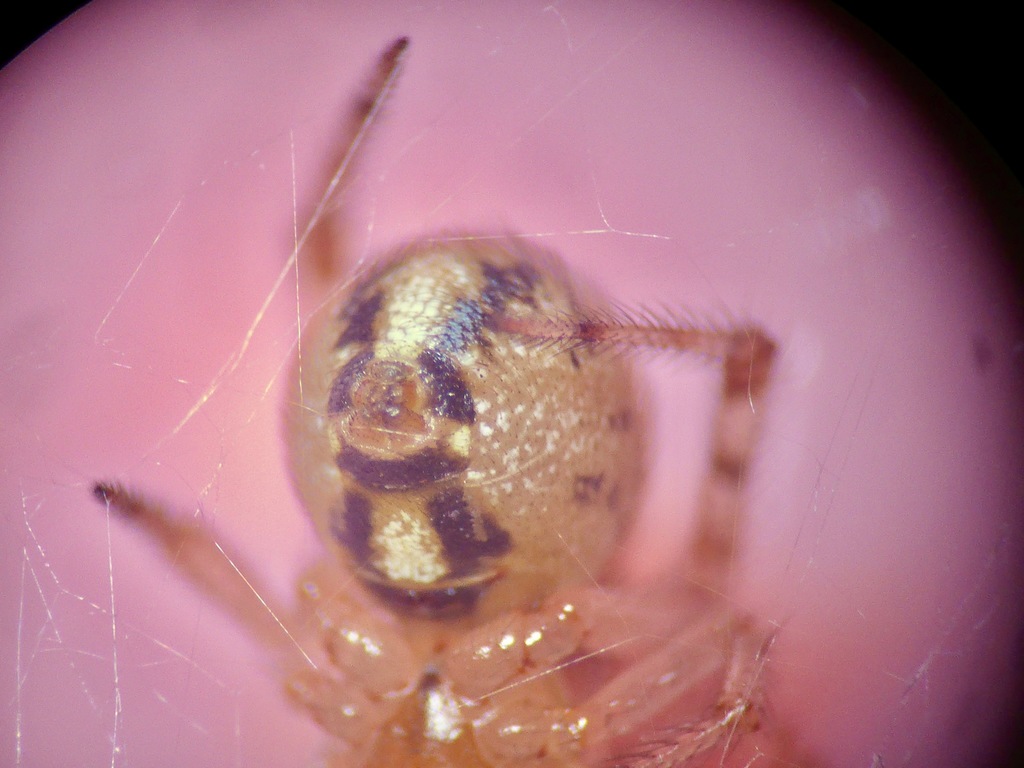
Females grow to about 4 mm and males to about 1.5 mm in length. It is native to Australia and New Zealand but has been introduced to England and Belgium. It spins small webs in flowers, vegetation, and corners of building walls.
Source: Wikipedia
Size
Females reach about 4 mm, while males are around 1.5 mm long.
Source: Wikipedia
Is it a pest in the house?
It sometimes builds webs in corners of outer walls of buildings.
Source: Wikipedia
Where it lives
It builds small webs in flowers, green vegetation, and corners of outer building walls.
Source: Wikipedia
What it eats
It can help control spider mites and leafroller caterpillars.
Source: Wikipedia
Where it comes from
It is native to Australia and New Zealand.
Source: Wikipedia
Lookalikes
Common names include Diamond Comb-footed Spider and, in New Zealand, “cobweb spider”.
Source: Wikipedia
Where it is found in the US
Recorded in 1 of 51 states and DC. Most records: Hawaii.
Darker = more records. Counts are museum and citizen-science records, not population size.
Source: GBIF
More photos
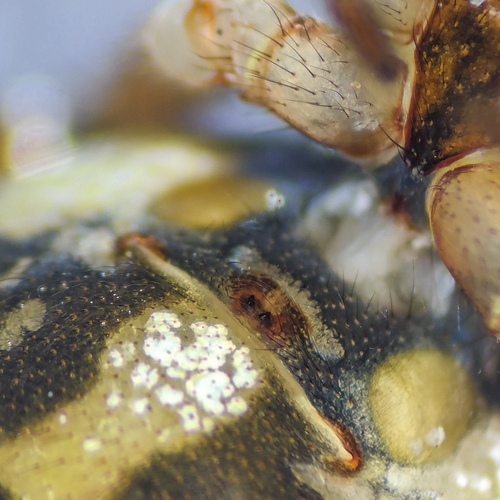
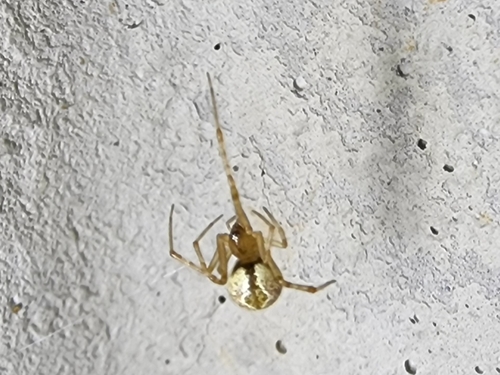
Questions people ask
Where is the Diamond Comb-footed Spider originally from?
It is native to Australia and New Zealand.
Source: Wikipedia
What kind of webs does it make and where?
It builds small webs in flowers, green vegetation, and corners of outer building walls.
Source: Wikipedia
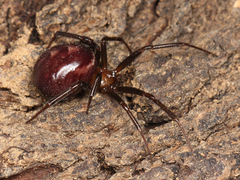
Same family (Theridiidae)

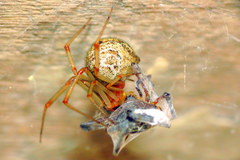
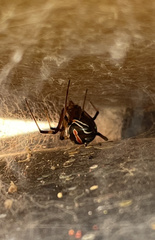

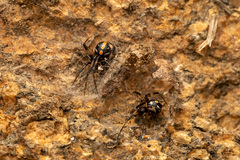
Sources
- Wikipedia: https://en.wikipedia.org/wiki/Cryptachaea_veruculata
Look it up elsewhere: GBIF · iNaturalist · BugGuide · ITIS · Wikipedia
Text written 2026-10-23 from the sources above and checked sentence by sentence against them. Data fetched 2026-10-22.