 Bug FAQ
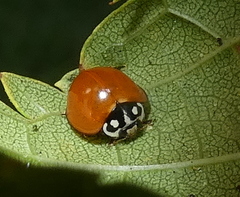
Cream-spotted Ladybird
Calvia quatuordecimguttata · Order: Coleoptera · Family: Coccinellidae
Also called: Cream-spot Ladybird, Polka-dotted Ladybird
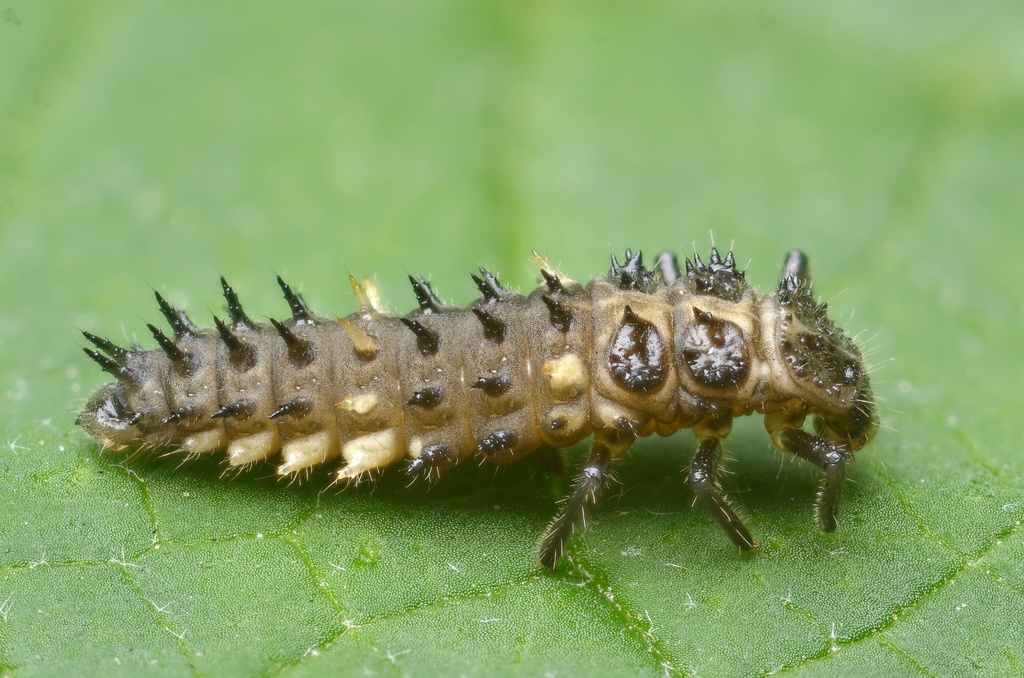
It is a small beetle about 4 to 5 mm long that lives on trees and in hedgerows. It feeds on aphids and other small insects, helping control garden pests.
Source: Wikipedia
How to recognize it
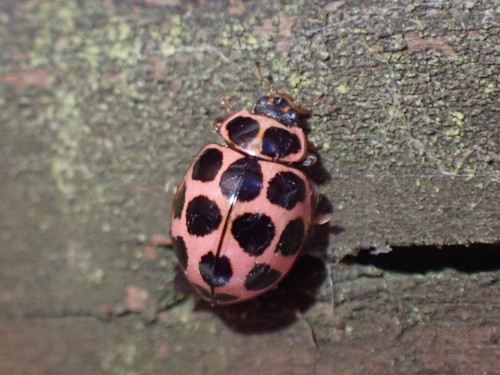
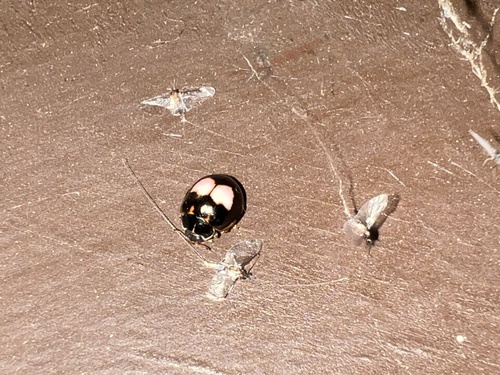
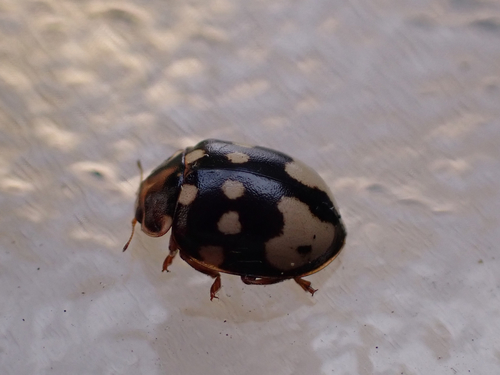
In Europe it is maroon-brown with fourteen cream spots; other colour forms occur in North America and eastern Asia.
Source: Wikipedia
Size
Adults measure about 4 to 5 mm in length and 3.2 to 4.5 mm in width.
Source: Wikipedia
Is it a pest in the house?
They are beneficial insects that feed on garden pests rather than damaging homes or food.
Source: Wikipedia
Where it lives
It is found in hedgerows, deciduous trees, mixed forests, parks, gardens and meadow vegetation.
Source: Wikipedia
What it eats
It eats aphids, whiteflies, scale insects and the eggs and larvae of some beetles and butterflies. Preferred aphid prey include species on aspen, willow, lime, birch and mugwort.
Source: Wikipedia
Life cycle
Adults overwinter in leaf litter or bark crevices, and the larvae are black with white markings and short legs.
Source: Wikipedia
When you see it
They are active feeding on aphids during the growing season and hide in protected sites to overwinter.
Source: Wikipedia
Where it comes from
Its range is holarctic, covering North America, Europe and much of temperate Asia to Japan.
Source: Wikipedia
Lookalikes
The beetle has a glossy pronotum and a thin red rim on the underside of its otherwise black abdomen. Larvae resemble those of Cycloneda but have shorter legs and blunt conical spines on each abdominal segment.
Source: Wikipedia
Where it is found in the US
Recorded in 26 of 51 states and DC. Most records: Alaska, Idaho, Vermont, Massachusetts, Montana, Minnesota, Washington, Oregon.
Darker = more records. Counts are museum and citizen-science records, not population size.
Source: GBIF
Status: native in North America; native in Canada; native in United States. Source: iNaturalist
Months it is reported in the US
Source: GBIF
More photos

Questions people ask
Are they harmful to garden plants?
No, they feed on aphids and other pests, so they are actually helpful for plants.
Source: Wikipedia
Same family (Coccinellidae)

Sources
- Wikipedia: https://en.wikipedia.org/wiki/Calvia_quatuordecimguttata
Look it up elsewhere: GBIF · iNaturalist · BugGuide · ITIS · Wikipedia
Text written 2026-10-22 from the sources above and checked sentence by sentence against them. Data fetched 2026-10-22.