 Bug FAQ
Cranberry Fruitworm Moth and Allies
Acrobasis vaccinii · Order: Lepidoptera · Family: Pyralidae
Also called: Cranberry Fruitworm, Cranberry Fruitworm Moth
Source: Wikipedia
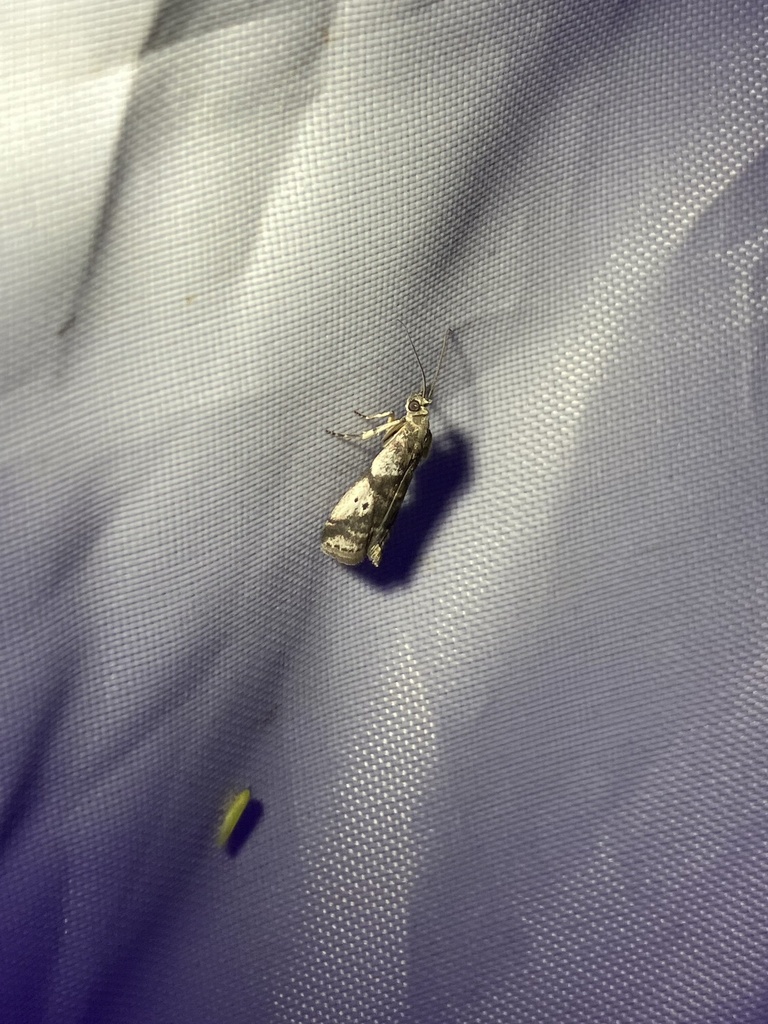
Larvae feed inside berries of several Vaccinium plants, eating the fruit’s interior and causing crop loss. One generation appears each year; full-grown larvae overwinter in cocoons and emerge as adults after bloom and fruit set. Infested berries can be removed by hand, and pheromone-trap monitoring helps time insecticide applications when needed.
Source: Wikipedia
How to recognize it
Their eggs are tiny, flat, white and scale-like, requiring a hand lens to see clearly.
Source: Wikipedia
Size
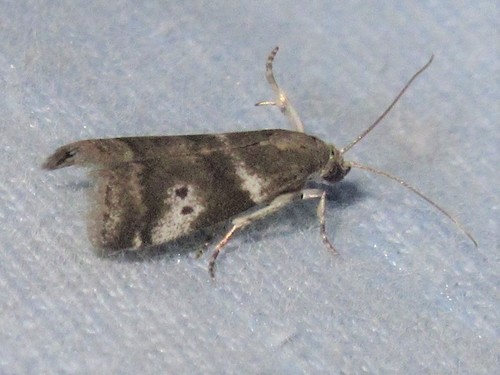
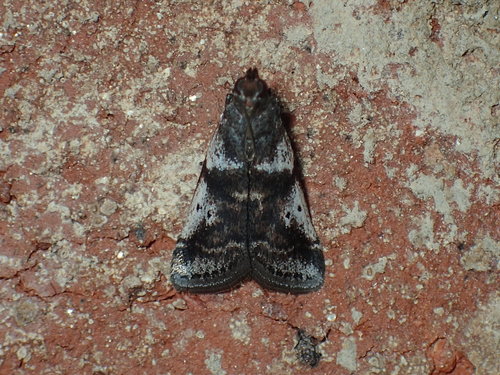
Adults have a wingspan of roughly 16 to 18 mm.
Source: Wikipedia
Is it a pest in the house?
A simple way to reduce damage is to pick off any berries that show signs of infestation.
Source: Wikipedia
How to get rid of it
- Using pheromone traps to monitor adult moth flight helps apply insecticides at the most effective time.
- Hand-picking infested berries is also an effective control measure.
Source: Wikipedia
Where it lives
It occurs from Nova Scotia down to Florida and from Wisconsin west to Texas, and it has been introduced in Washington state.
Source: Wikipedia
What it eats
Larvae feed on several Vaccinium species, including highbush blueberry, cranberry, lingonberry and lowbush blueberry. They develop by consuming the interior of the berries they inhabit.
Source: Wikipedia
Life cycle
One generation emerges each year, and a single larva may eat up to eight berries to complete its development.
Source: Wikipedia
Where it is found in the US
Recorded in 23 of 51 states and DC. Most records: New Jersey, Maine, Maryland, Massachusetts, Georgia, South Carolina, Arkansas, Michigan.
Darker = more records. Counts are museum and citizen-science records, not population size.
Source: GBIF
Months it is reported in the US
Source: GBIF
More photos

Questions people ask
How can I control cranberry fruitworm moth in my garden?
Remove any berries that look damaged by hand, and consider using pheromone traps to time any needed insecticide applications.
Source: Wikipedia
What plants does the cranberry fruitworm moth attack?
Its larvae feed on several Vaccinium berries such as highbush blueberry, cranberry, lingonberry and lowbush blueberry.
Source: Wikipedia
When does the cranberry fruitworm moth appear?
One generation emerges each year, with adults appearing after the plants have flowered and set fruit.
Source: Wikipedia
Same family (Pyralidae)
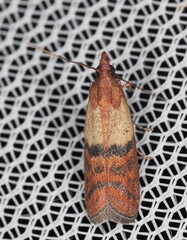 Indian-Meal MothPlodia interpunctellaCan damage your home
 Greater Wax MothGalleria mellonella
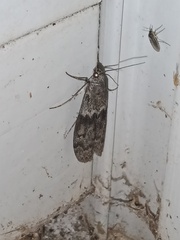 Mediterranean Flour MothEphestia kuehniellaCan damage your home
 Meal mothPyralis farinalisDamages trees, gardens or crops
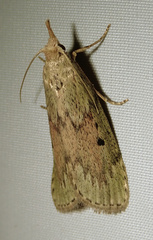 Bee MothAphomia sociellaNuisance, not dangerous
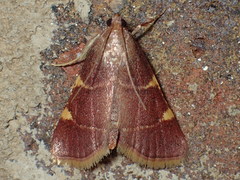 Yellow-fringed Dolichomia MothHypsopygia olinalis
Sources
- Wikipedia: https://en.wikipedia.org/wiki/Acrobasis_vaccinii
Look it up elsewhere: GBIF · iNaturalist · BugGuide · Wikipedia
Text written 2026-10-27 from the sources above and checked sentence by sentence against them. Data fetched 2026-10-27.