 Bug FAQ
Common six-spotted cobweaver
Rugathodes sexpunctatus · Order: Araneae · Family: Theridiidae
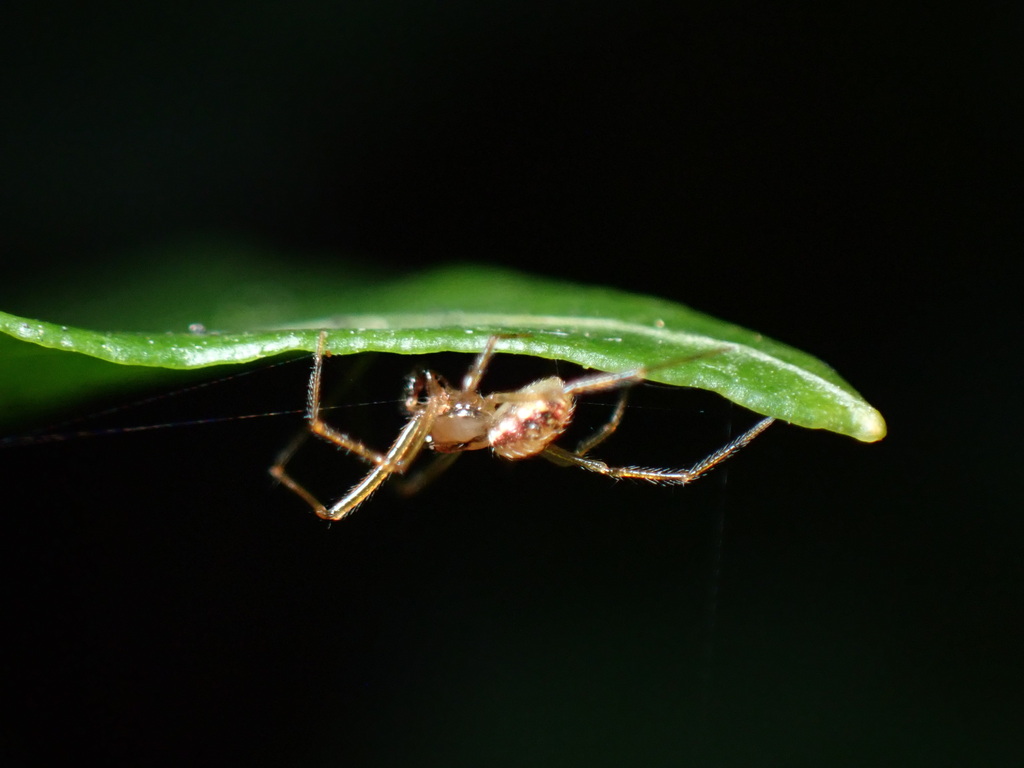
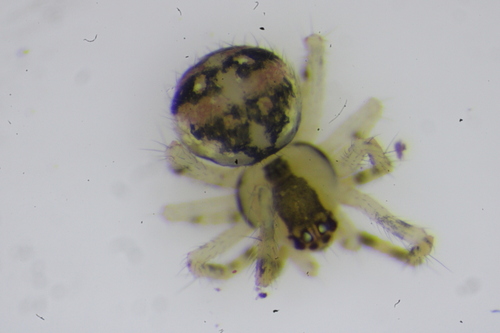
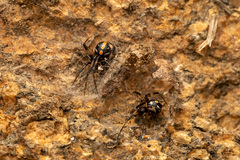
The common six-spotted cobweaver is a tiny spider, only 1.5 to 2.5 mm long, with a pale yellow-brown body marked by a dark median band on the cephalothorax and three pairs of black-white spots on the abdomen. It lives in coniferous forests across much of North America and Russia, overwintering in leaf litter and breeding in late spring, with females persisting into early fall.
Source: Wikipedia
Size
Body length, not counting legs, ranges from about 1.5 to 2.5 mm.
Source: Wikipedia
Where it lives
It is typically found in coniferous forests, both up in the trees and down in the understory vegetation. During winter the spiders hide in leaf litter.
Source: Wikipedia
Life cycle
It follows roughly an annual life cycle.
Source: Wikipedia
When you see it
Adults mature and breed in late spring; males often die soon after mating and are rarely seen past early summer. Adult females can be collected through early fall.
Source: Wikipedia
Where it is found in the US
Recorded in 14 of 51 states and DC. Most records: Alaska, Washington, Maine, Colorado, North Carolina, Wisconsin, Wyoming, Minnesota.
Darker = more records. Counts are museum and citizen-science records, not population size.
Source: GBIF
Status: native in North America; native in Canada. Source: iNaturalist
Months it is reported in the US
Source: GBIF
More photos
Questions people ask
How big is the common six-spotted cobweaver?
It measures only about 1.5 to 2.5 mm in body length, not counting the legs.
Source: Wikipedia
What does this spider look like?
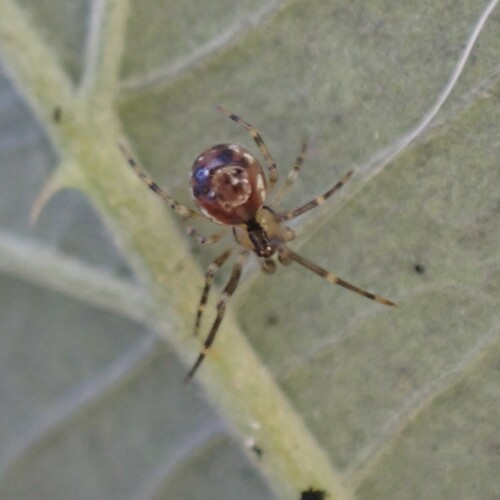
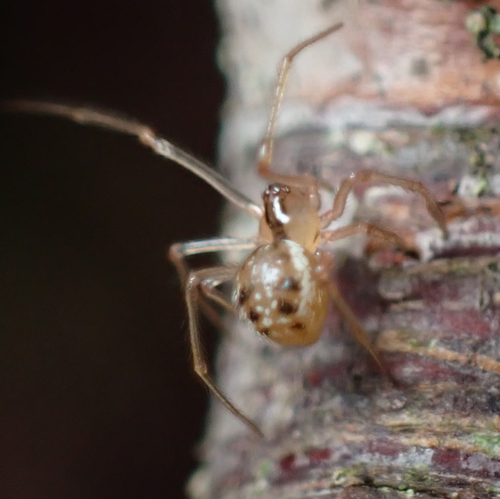
It has a pale yellow-brown cephalothorax with a dark median band and an abdomen marked with three pairs of black-white spots.
Source: Wikipedia
Same family (Theridiidae)


Sources
- Wikipedia: https://en.wikipedia.org/wiki/Rugathodes_sexpunctatus
Look it up elsewhere: GBIF · iNaturalist · BugGuide · ITIS · Wikipedia
Text written 2026-10-24 from the sources above and checked sentence by sentence against them. Data fetched 2026-10-24.