 Bug FAQ
Common grammoptera
Grammoptera ruficornis · Order: Coleoptera · Family: Cerambycidae
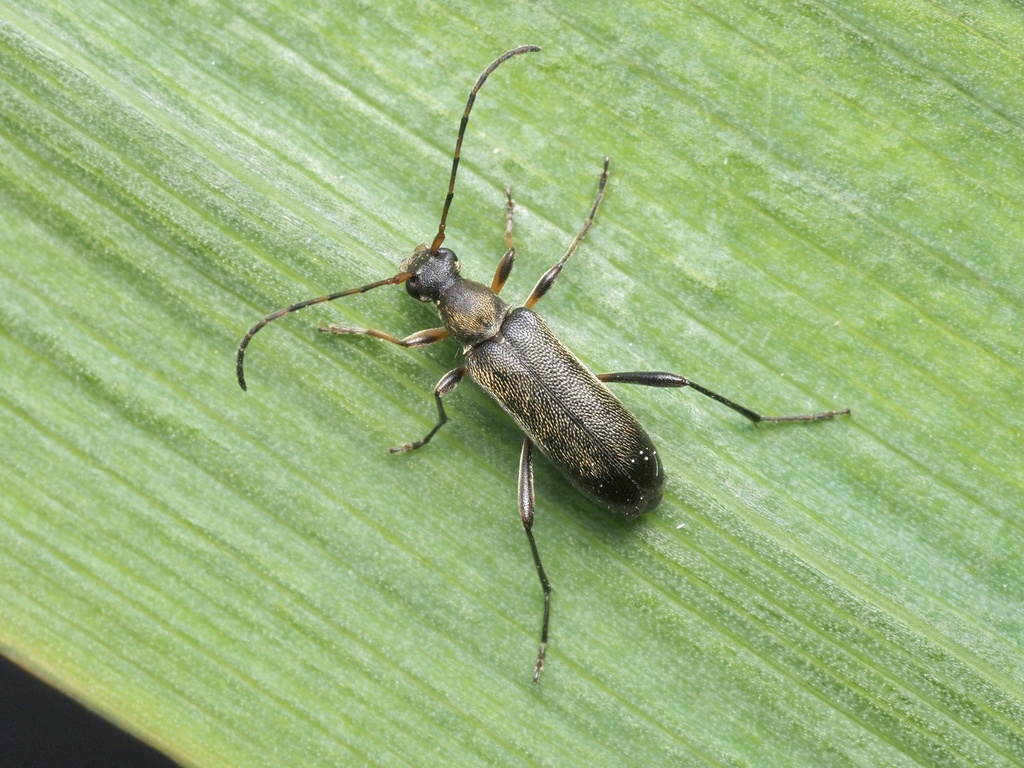
Grammoptera ruficornis is a tiny longhorn beetle, only 3 to 7 mm long, with a dark brown or black body covered in silky hairs. It lives in deciduous forests, glades and pastures, usually below 1 000 m in the Alps, and is widespread across most of Europe and parts of western Asia.
Source: Wikipedia
How to recognize it
Its legs are partly yellow-red with bicoloured, bulbous femora, while the hind femora can be completely black.
Source: Wikipedia
Size
Adults measure about 3 to 7 mm in length (0.12 to 0.28 in).
Source: Wikipedia
Where it lives
Found in deciduous forests, clearings, pastures and on old deciduous trees. In the Alps they are rarely seen above 1 000 m (3 300 ft).
Source: Wikipedia
What it eats
Adults feed on flowers of a variety of trees and plants such as buckthorn, beech, oak, ash, hawthorn, rowan, whitebeam, cow parsley and other Apiaceae in spring and summer. Larvae develop inside dead, fungus-infested branches of deciduous trees.
Source: Wikipedia
Life cycle
The larval stage lasts about a year, and adults emerge from late May to mid-June. Several parasitoid wasps, such as Dolichomitus agnoscendus and Cenocoelius aartseni, are associated with this beetle.
Source: Wikipedia
When you see it
Adults are most commonly observed on flowers during spring and summer.
Source: Wikipedia
Where it comes from
Its range covers the Palearctic realm, including most of Europe, the Caucasus, Turkey, Azerbaijan and Iran.
Source: Wikipedia
Lookalikes
Parasitoid wasps (Dolichomitus agnoscendus, Ichneumonidae, Cenocoelius aartseni) are often found near these beetles.
Source: Wikipedia
Questions people ask
When can I expect to see Grammoptera ruficornis?
Adults are usually seen from late May through mid-June, especially on flowers in spring and summer.
Source: Wikipedia
What plants do the adults visit?
They feed on the flowers of buckthorn, beech, oak, ash, hawthorn, rowan, whitebeam, cow parsley and other members of the Apiaceae family.
Source: Wikipedia
Where does this beetle live?
It inhabits deciduous forests, clearings and pastures, usually below 1 000 m in the Alps, and is widespread across most of Europe and parts of western Asia.
Source: Wikipedia
Same family (Cerambycidae)
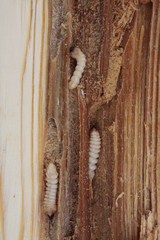 House LonghornHylotrupes bajulusCan damage your home
 Asian Longhorned BeetleAnoplophora glabripennisDamages trees, gardens or crops
 Red Milkweed BeetleTetraopes tetrophthalmus
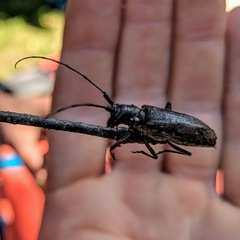 White-spotted SawyerMonochamus scutellatusCan damage your home
 Red Pine Longhorn BeetleStictoleptura rubra
 Spotted Longhorn BeetleRutpela maculataDamages trees, gardens or crops
Sources
- Wikipedia: https://en.wikipedia.org/wiki/Grammoptera_ruficornis
Look it up elsewhere: GBIF · iNaturalist · BugGuide · Wikipedia
Text written 2026-10-22 from the sources above and checked sentence by sentence against them. Data fetched 2026-10-22.