 Bug FAQ
Common Bark Spider
Caerostris sexcuspidata · Order: Araneae · Family: Araneidae
Also called: Horned Bark Spider
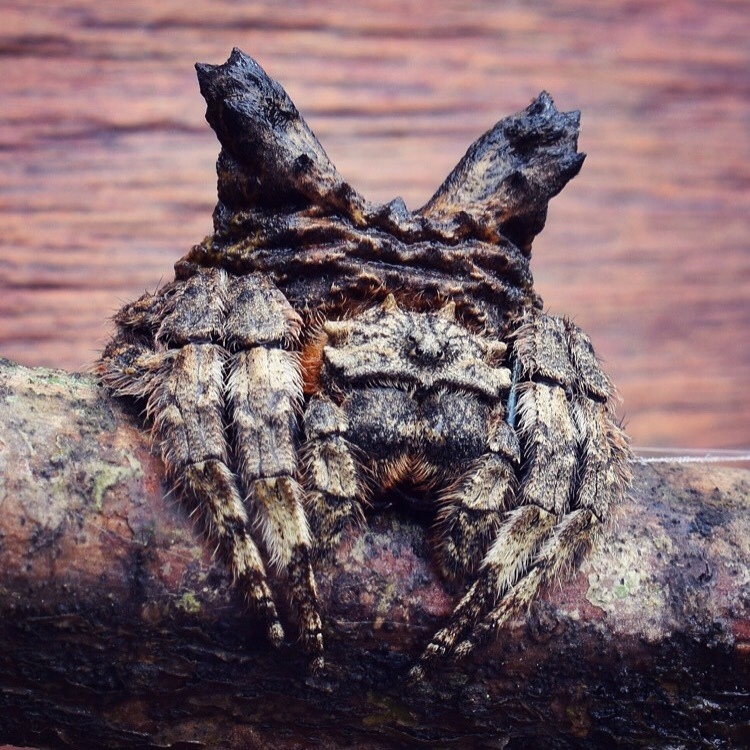
The common bark spider blends in with tree bark thanks to its grey-brown colour and horn-like bumps on its body. It spins large orb webs between trees and rests on bark during the day, being mainly active at night. It occurs across much of Africa, the Seychelles, Comoros and Madagascar, and has been found on crops such as apple, citrus, pine and tomato.
Source: Wikipedia
How to recognize it
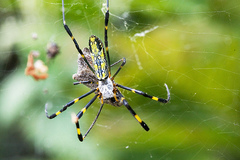
The carapace has a transverse row of four cone-shaped bumps, and the dorsal side shows cryptic colour with horny projections; legs look drab from above and zebra-striped from below.
Source: Wikipedia
Size
The spider’s body is grey or brown with leathery protuberances that make it look like bark.
Source: Wikipedia
Where it lives
It builds large orb webs between trees and rests on bark during daylight hours.
Source: Wikipedia
What it eats
Specimens have been collected from apple, citrus, pine plantations and tomato crops.
Source: Wikipedia
Lookalikes
It is the most widespread bark spider in Southern Africa and shows a lot of variation in abdomen shape.
Source: Wikipedia
More photos

Same family (Araneidae)


Sources
- Wikipedia: https://en.wikipedia.org/wiki/Caerostris_sexcuspidata
Look it up elsewhere: GBIF · iNaturalist · BugGuide · ITIS · Wikipedia
Text written 2026-10-23 from the sources above and checked sentence by sentence against them. Data fetched 2026-10-23.