 Bug FAQ
Common Asian Yellowjacket
Vespula flaviceps · Order: Hymenoptera · Family: Vespidae
Also called: Common Asiatic Yellowjacket
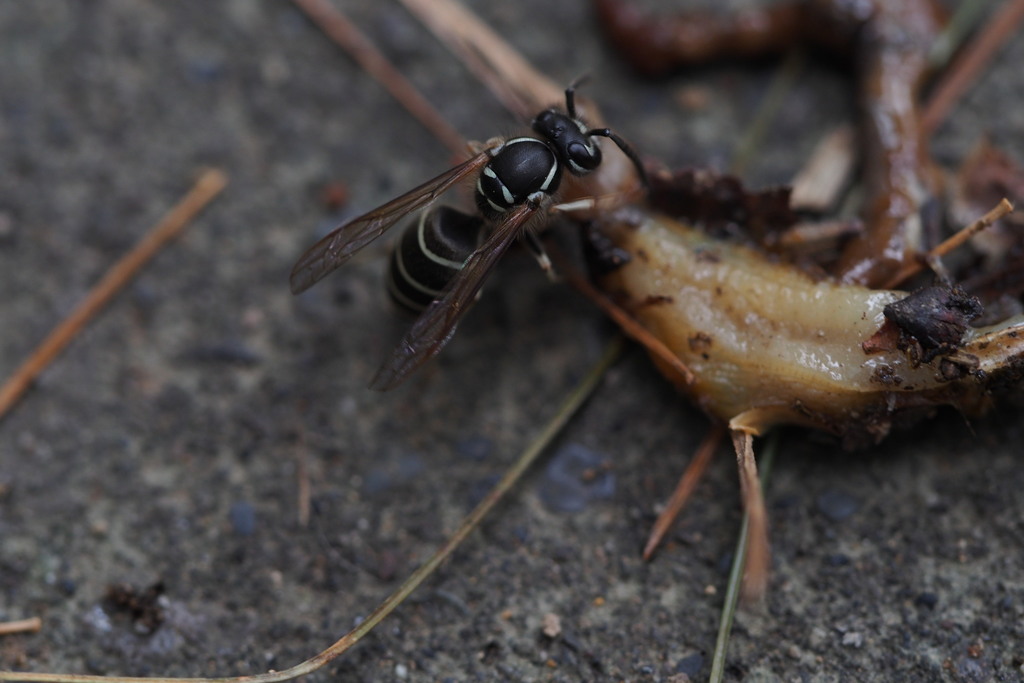
The common Asian yellowjacket lives in forests, especially deciduous forests of northern Kanto, Japan. It is native to eastern Asia and Japan, and its numbers may be reduced by raccoons that eat them in summer and autumn. People in central Japan eat all life stages of this wasp, with the larvae considered a delicacy.
Source: Wikipedia
Where it lives
Found in forest habitats. Predominant in natural deciduous forests of northern Kanto, Japan.
Source: Wikipedia
What it eats
Consumed as food in central Japan. All stages are eaten, with larvae regarded as a special delicacy.
Source: Wikipedia
Where it comes from
Native to eastern Asia and Japan. Population may be threatened by invasive raccoons that prey on it in summer and autumn.
Source: Wikipedia
Lookalikes
Has been described under several other scientific names.
Source: Wikipedia
Where it is found in the US
Recorded in 1 of 51 states and DC. Most records: Ohio.
Darker = more records. Counts are museum and citizen-science records, not population size.
Source: GBIF
Same family (Vespidae)


Sources
- Wikipedia: https://en.wikipedia.org/wiki/Vespula_flaviceps
Look it up elsewhere: GBIF · iNaturalist · BugGuide · Wikipedia
Text written 2026-10-23 from the sources above and checked sentence by sentence against them. Data fetched 2026-10-23.