 Bug FAQ
Common Aerial Yellowjacket
Dolichovespula arenaria · Order: Hymenoptera · Family: Vespidae
Also called: Aerial Yellowjacket, Common Yellow Hornet, Sandhills Hornet
Source: Wikipedia
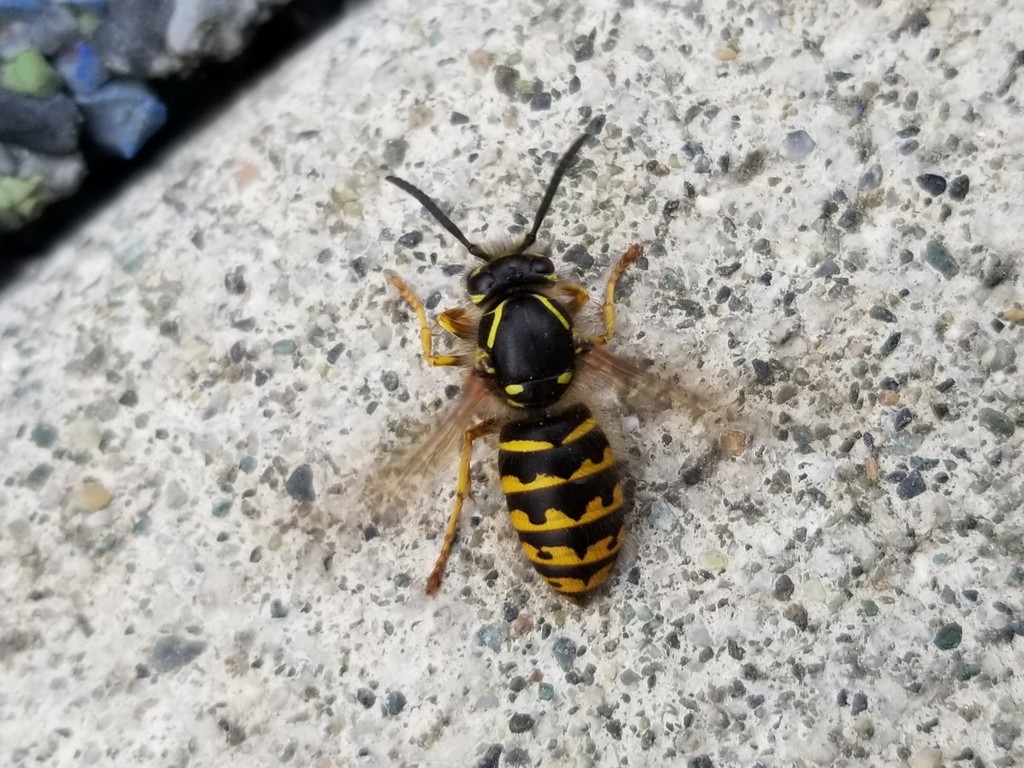
These yellow wasps build paper nests in trees, shrubs, or on buildings and are found across Canada and the United States. Workers hunt live insects such as grasshoppers, caterpillars, spiders and even young hummingbirds, and they may spray venom when they sting.
Source: Wikipedia
How to recognize it
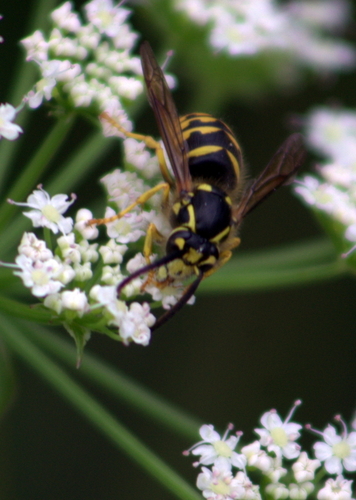
They have a broken or cut-away yellow band on the first two abdominal segments and lack black marks in the eye area.
Source: Wikipedia
Size
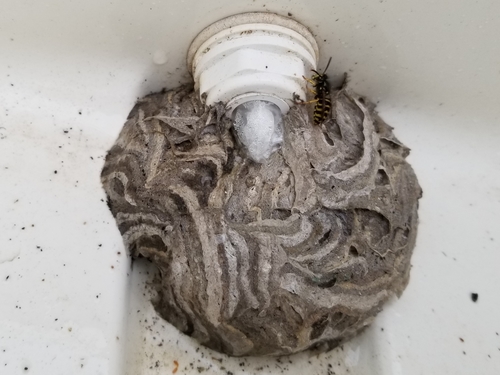
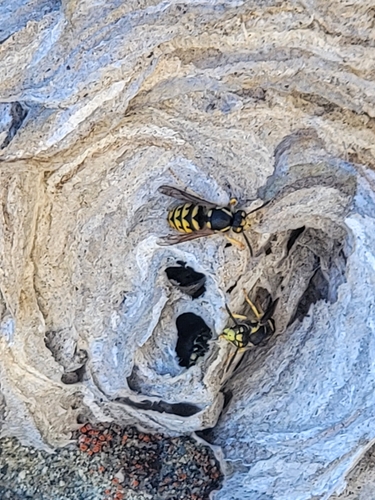
Nests contain one to six combs made of dull grey paper.
Source: Wikipedia
Is it a pest in the house?
In urban areas nests are often found on buildings.
Source: Wikipedia
Does it bite or sting?
When they sting, workers can spray venom from their stingers, a behavior called the spray sting type.
Source: Wikipedia
How to get rid of it
Smaller colonies tend to be less aggressive than larger ones.
Source: Wikipedia
Where it lives
Nests are built from paper-like material in trees, shrubs, or on the sides of buildings.
Source: Wikipedia
What it eats
Workers prey on a wide range of live arthropods, including grasshoppers, crickets, caterpillars, spiders, flies, lacewings, lady beetles, fall webworm larvae, and even young hummingbirds.
Source: Wikipedia
Life cycle
In spring a queen starts a colony by building a small paper nest and laying eggs, and the colony lasts about a year before dying off in winter.
Source: Wikipedia
When you see it
Colonies are founded in spring and decline as winter approaches, lasting roughly one year.
Source: Wikipedia
Where it comes from
They occur from north-central Alaska down to New Mexico and Arizona throughout Canada and the United States.
Source: Wikipedia
Lookalikes
They look similar to other yellow Dolichovespula species but can be told apart by the missing black eye-area markings.
Source: Wikipedia
Where it is found in the US
Recorded in 40 of 51 states and DC. Most records: New York, California, Massachusetts, Minnesota, Alaska, Vermont, Michigan, Pennsylvania.
Darker = more records. Counts are museum and citizen-science records, not population size.
Source: GBIF
Status: native in North America; native in United States; native in Canada. Source: iNaturalist
Months it is reported in the US
Source: GBIF
More photos
Questions people ask
How can I identify a common aerial yellowjacket?
Look for a yellow wasp with a broken yellow band on the first two abdominal segments and no black marks in the eye area.
Source: Wikipedia
Where are their nests usually found?
They build paper nests in trees, shrubs, or on the sides of buildings in urban areas.
Source: Wikipedia
What do they eat?
Workers hunt live insects such as grasshoppers, caterpillars, spiders, flies, and even young hummingbirds.
Source: Wikipedia
Same family (Vespidae)


Sources
- Wikipedia: https://en.wikipedia.org/wiki/Dolichovespula_arenaria
Look it up elsewhere: GBIF · iNaturalist · BugGuide · ITIS · Wikipedia
Text written 2026-10-23 from the sources above and checked sentence by sentence against them. Data fetched 2026-10-22.