 Bug FAQ
Clover Hayworm Moth
Hypsopygia costalis · Order: Lepidoptera · Family: Pyralidae
Also called: Clover Hayworm, Gold Triangle
Source: Wikipedia
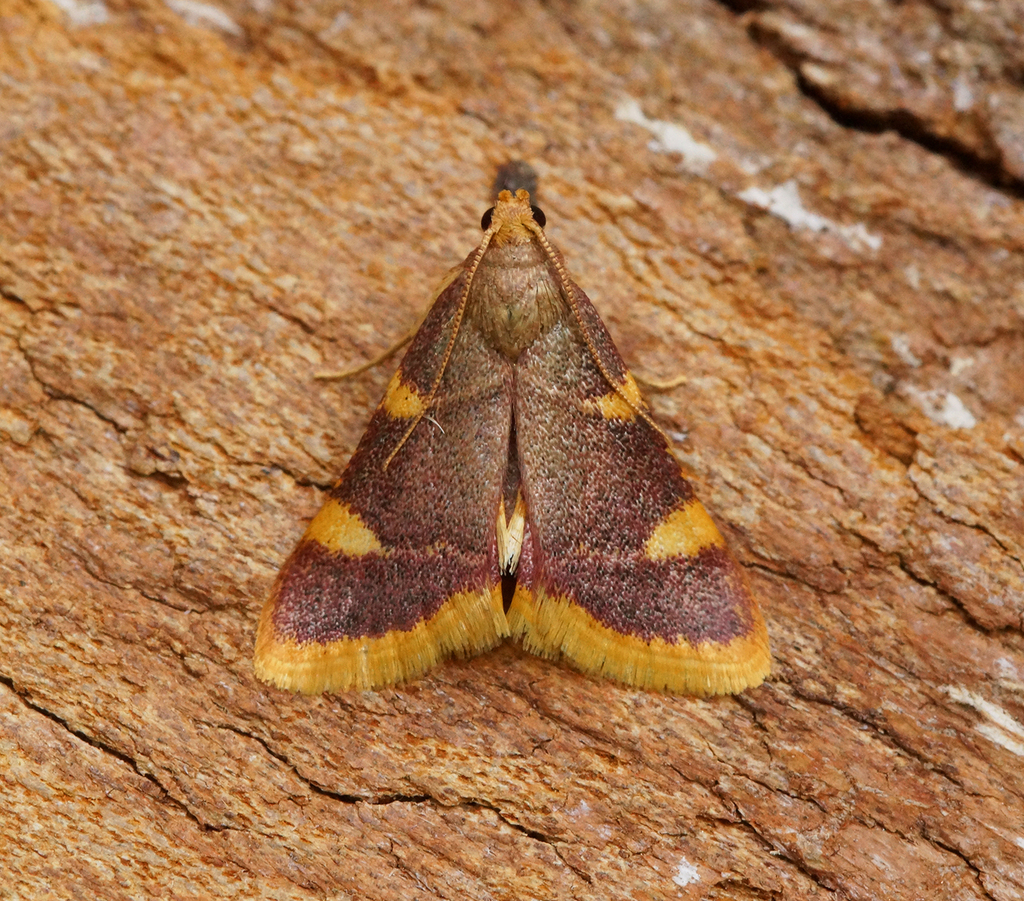
Adult Clover Hayworm Moths have a wingspan of 16 to 23 mm and fly from May to July. The caterpillars feed on dry vegetable matter, especially clover hay, and breed in moist, matted parts of haystacks. Keeping hay dry and well-ventilated prevents damage; burned webbed material and thorough cleaning remove infestations.
Source: Wikipedia
How to recognize it
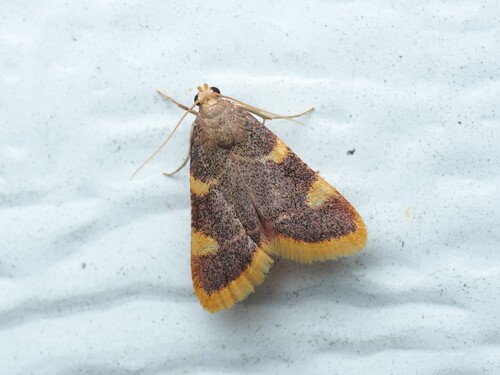
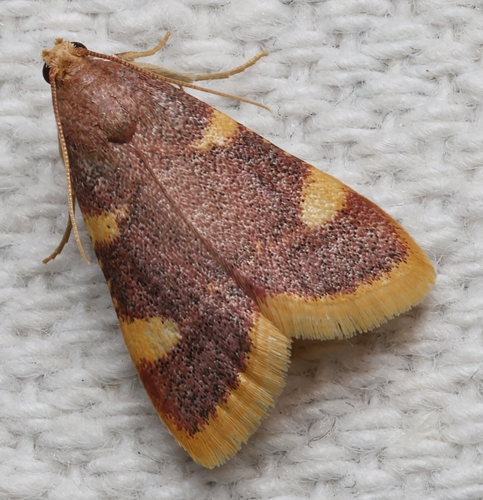
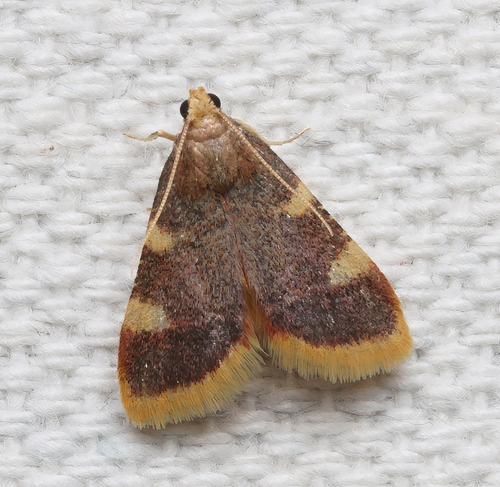
Forewings are purple, sometimes speckled with black, with yellow dots on the middle of the leading edge and yellow lines that form large spots on the edge; the terminal line and fringe are also yellow. Hindwings look like the forewings but the yellow lines are closer together, irregularly curved, and do not make costal spots.
Source: Wikipedia
Size
The moth’s wingspan ranges from 16 to 23 mm.
Source: Wikipedia
Is it a pest in the house?
Damage can be avoided by keeping hay dry and well ventilated; the insect thrives in moist, matted hay where webs and droppings make the feed unusable. If infestation occurs, burn the webbed material and clean the area thoroughly.
Source: Wikipedia
How to get rid of it
Prevent damage by keeping hay dry and ventilated. Treat infestations by burning the webbed material and cleaning the site.
Source: Wikipedia
Where it lives
They are found in haystacks, thatching, and in chicken or magpie nests. They prefer to breed in moist, matted material in the lower parts of haystacks.
Source: Wikipedia
What it eats
Caterpillars eat dry vegetable matter. They are harmful to clover hay and to other hay mixed with clover.
Source: Wikipedia
Life cycle
Adult moths are on the wing from May to July, depending on location.
Source: Wikipedia
When you see it
Adults fly during the months of May, June and July, varying with region.
Source: Wikipedia
Where it comes from
Described by Fabricius in 1775, this species occurs in Europe.
Source: Wikipedia
Lookalikes
The species H. aurotaenialis is listed here pending further study.
Source: Wikipedia
Where it is found in the US
Recorded in 44 of 51 states and DC. Most records: Michigan, Ohio, Wisconsin, Pennsylvania, Virginia, New York, Vermont, Massachusetts.
Darker = more records. Counts are museum and citizen-science records, not population size.
Source: GBIF
Status: introduced in Canada; introduced in United States. Source: iNaturalist
Months it is reported in the US
Source: GBIF
More photos

Questions people ask
How can I stop them from ruining my hay?
Store hay dry and well-ventilated; if webs appear, burn the affected material and clean the storage area.
Source: Wikipedia
When are the adult moths active?
Adults are active from May through July, varying with location.
Source: Wikipedia
Same family (Pyralidae)
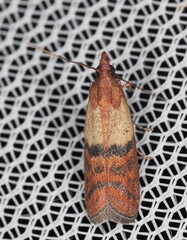 Indian-Meal MothPlodia interpunctellaCan damage your home
 Greater Wax MothGalleria mellonella
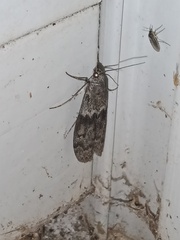 Mediterranean Flour MothEphestia kuehniellaCan damage your home
 Meal mothPyralis farinalisDamages trees, gardens or crops
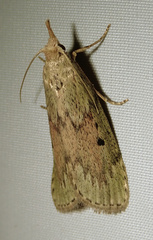 Bee MothAphomia sociellaNuisance, not dangerous
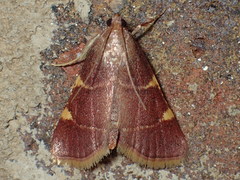 Yellow-fringed Dolichomia MothHypsopygia olinalis
Sources
- Wikipedia: https://en.wikipedia.org/wiki/Hypsopygia_costalis
Look it up elsewhere: GBIF · iNaturalist · BugGuide · Wikipedia
Text written 2026-10-22 from the sources above and checked sentence by sentence against them. Data fetched 2026-10-22.