 Bug FAQ
Clasping Twig Gall Wasp
Disholcaspis prehensa · Order: Hymenoptera · Family: Cynipidae
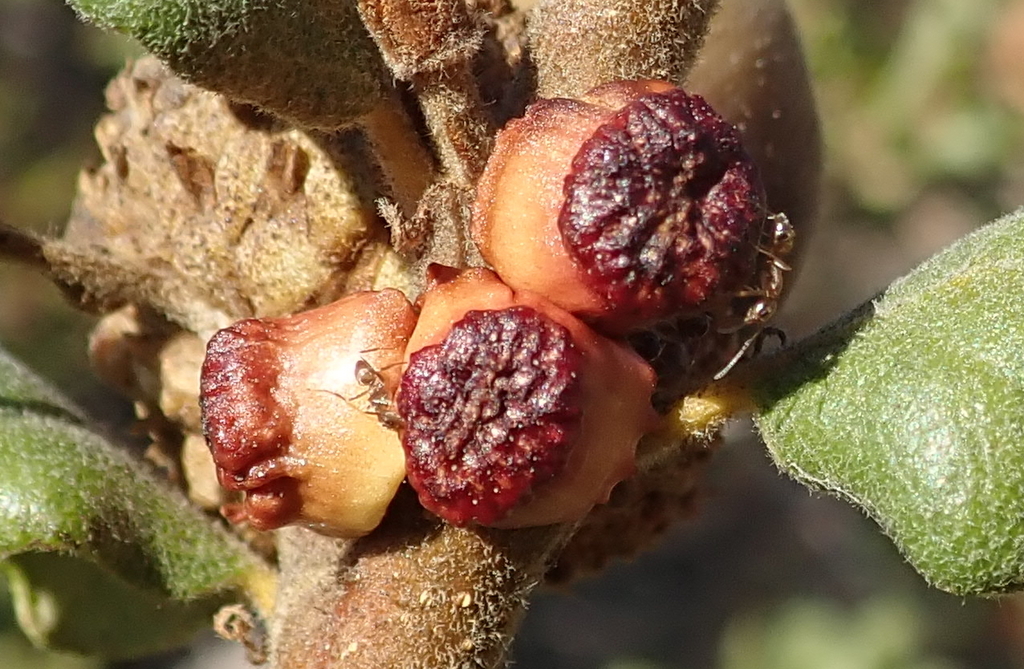
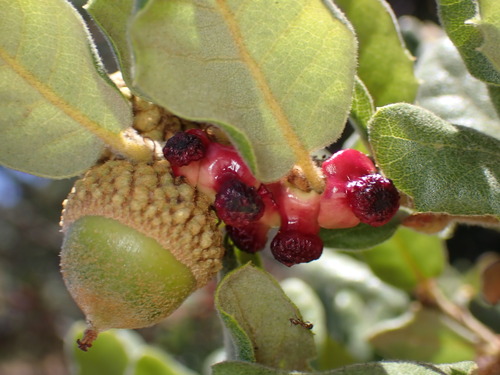
Clasping twig gall wasps make mushroom-shaped galls that are 7 to 10 mm tall and about 10 mm wide at the base, with red sun-facing sides and yellow shaded sides that brown with age. The wasp has two generations each year: an asexual generation creates galls in spring that mature by early summer, and a sexual generation emerges from holes near the gall tips in late spring.
Source: Wikipedia
How to recognize it
The gall’s base wraps tightly around the twig with sharp edges. The side facing the sun is more red, while the shaded side is more yellow, turning brown as it ages.
Source: Wikipedia
Size
Galls are 7 to 10 mm high and roughly 10 mm wide at the base.
Source: Wikipedia
Where it lives
It occurs in California on scrub oak and leather oak.
Source: Wikipedia
What it eats
Larvae live in an elliptical chamber at the gall base. Young galls can cause the host tree to exude honey-dew-like sap that attracts ants, yellowjackets, and bees.
Source: Wikipedia
Where it comes from
The species is native to California.
Source: Wikipedia
Where it is found in the US
Recorded in 1 of 51 states and DC. Most records: California.
Darker = more records. Counts are museum and citizen-science records, not population size.
Source: GBIF
Months it is reported in the US
Source: GBIF
More photos
Questions people ask
What do the galls look like?
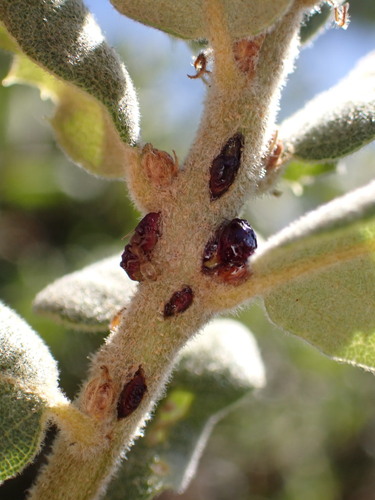
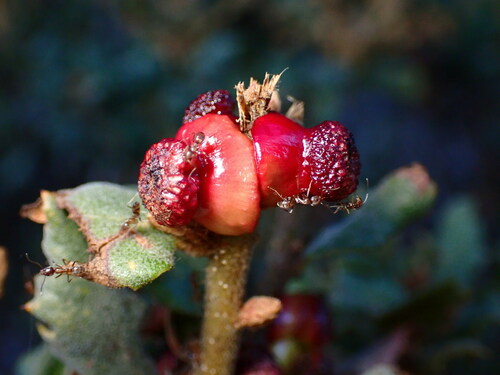
They are mushroom-shaped, 7 to 10 mm tall, about 10 mm wide at the base, red on the sun side, yellow on the shade side, and brown with age.
Source: Wikipedia
When do the wasps emerge?
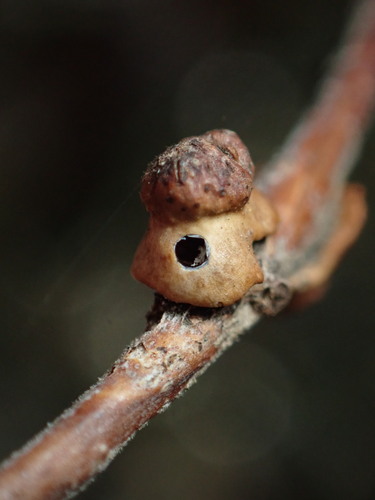
Adults emerge from the sides of the galls in late winter or early spring, and the sexual generation appears from holes near the gall tips by late spring.
Source: Wikipedia
Where is this wasp found?
It is native to California and forms galls on scrub oak and leather oak there.
Source: Wikipedia
Same family (Cynipidae)


Sources
- Wikipedia: https://en.wikipedia.org/wiki/Disholcaspis_prehensa
Look it up elsewhere: GBIF · iNaturalist · BugGuide · Wikipedia
Text written 2026-10-24 from the sources above and checked sentence by sentence against them. Data fetched 2026-10-24.