 Bug FAQ
Citrus Longhorn Beetle
Anoplophora chinensis · Order: Coleoptera · Family: Cerambycidae
Also called: Citrus Longhorned Beetle, Citrus long-horned beetle
Source: Wikipedia
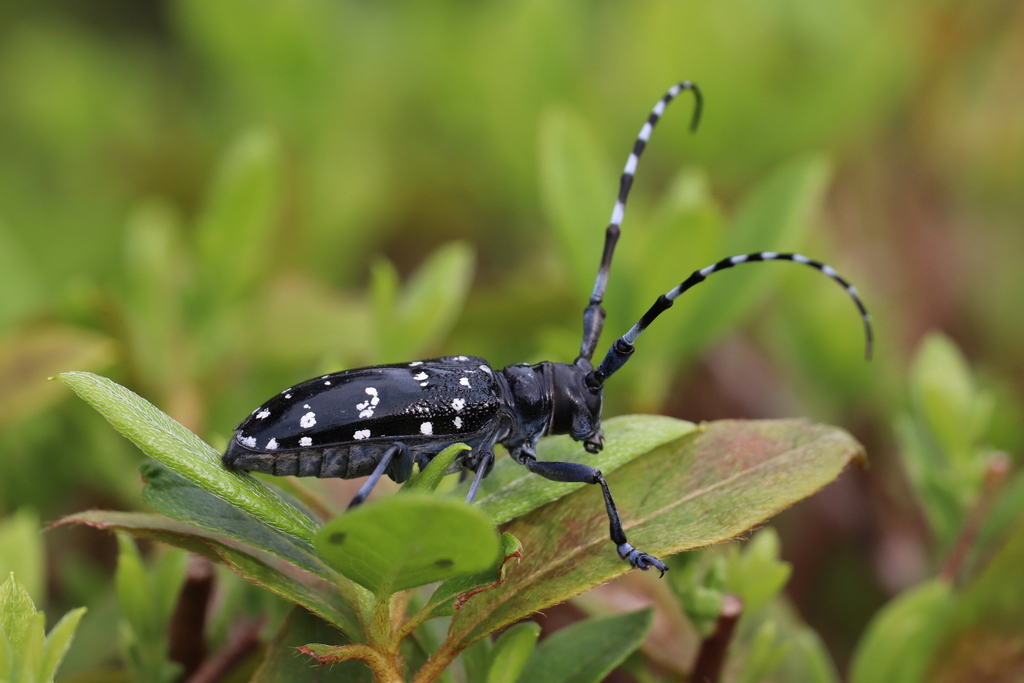
Adult beetles eat many kinds of plants and lay eggs inside the roots and vascular tissue of trees. The larvae develop inside the host plant, which can kill the tree.
Source: Wikipedia
How to recognize it
Anoplophora chinensis, also called the citrus longhorn beetle, is a long-horned beetle.
Source: Wikipedia
Is it a pest in the house?
Infestations can kill many hardwood trees such as citrus, pecan, apple, oak and others.
Source: Wikipedia
How to get rid of it
It was first found in the U.S. in 2001 on bonsai maple trees shipped from Korea. Officials asked residents not to move firewood to limit spread.
Source: Wikipedia
Where it lives
It prefers warm, temperate areas but not extremely hot climates. It lives in plants, laying its eggs in the roots and vascular system.
Source: Wikipedia
What it eats
Adults feed on many different plant species.
Source: Wikipedia
Life cycle
Eggs are deposited in the roots and vascular tissue of the host plant. Larvae and pupae develop inside the plant’s vascular system. Newly emerged adults feed on twigs before becoming fully sexually mature.
Source: Wikipedia
Lookalikes
It is sometimes listed as Anoplophora malasiaca and may consist of two subspecies.
Source: Wikipedia
Where it is found in the US
Recorded in 1 of 51 states and DC. Most records: California.
Darker = more records. Counts are museum and citizen-science records, not population size.
Source: GBIF
More photos
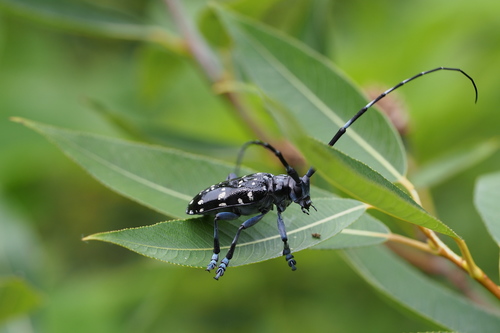
Questions people ask
How does the beetle damage trees?
Adults lay eggs in roots and the larvae feed inside the vascular system, eventually killing the tree.
Source: Wikipedia
What trees are at risk?
Citrus, pecan, apple, oak, willow, poplar and many other hardwoods can be killed.
Source: Wikipedia
Where did it first appear in the United States?
It was first detected in a Washington nursery in 2001 on imported bonsai maples.
Source: Wikipedia
Same family (Cerambycidae)
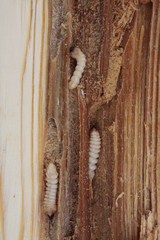 House LonghornHylotrupes bajulusCan damage your home
 Asian Longhorned BeetleAnoplophora glabripennisDamages trees, gardens or crops
 Red Milkweed BeetleTetraopes tetrophthalmus
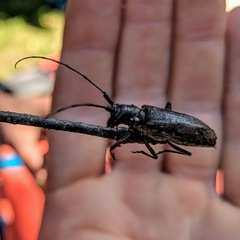 White-spotted SawyerMonochamus scutellatusCan damage your home
 Red Pine Longhorn BeetleStictoleptura rubra
 Spotted Longhorn BeetleRutpela maculataDamages trees, gardens or crops
Sources
- Wikipedia: https://en.wikipedia.org/wiki/Citrus_long-horned_beetle
Look it up elsewhere: GBIF · iNaturalist · BugGuide · Wikipedia
Text written 2026-10-23 from the sources above and checked sentence by sentence against them. Data fetched 2026-10-22.