 Bug FAQ
Chestnut-footed Click Beetle
Melanotus castanipes · Order: Coleoptera · Family: Elateridae
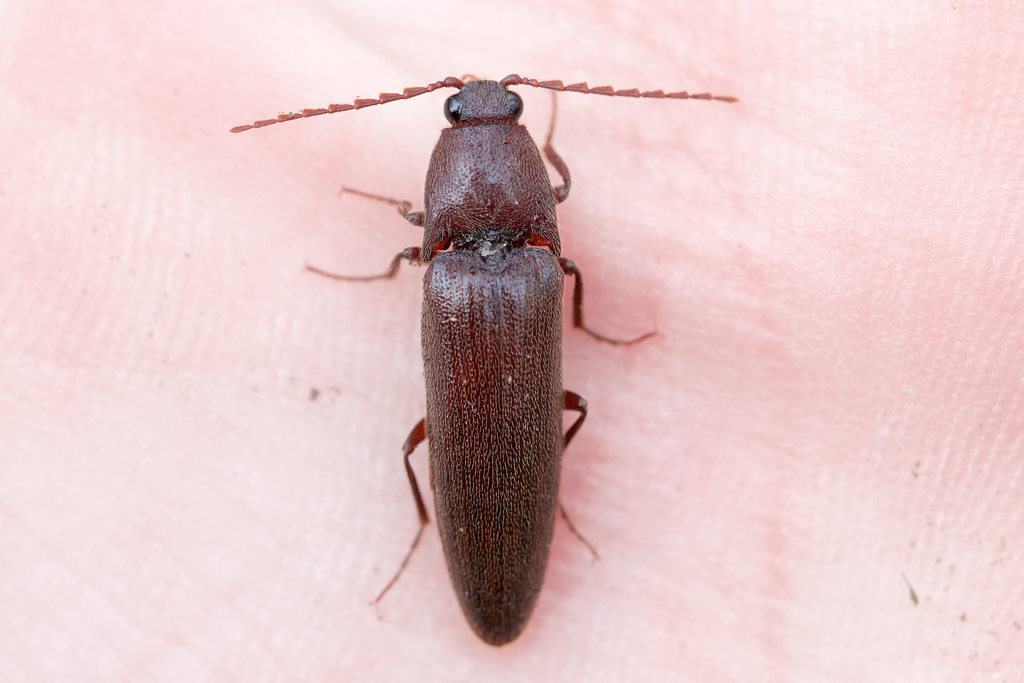
The chestnut-footed click beetle measures about 13 to 19 mm in length. It is uniformly black, sometimes with a slightly browner head, has an elongated body, tapering wing covers, and distinct rows of pits on its back and pronotum. Its long black antennae extend well beyond the rear edge of the pronotum, and the legs are also black.
Source: Wikipedia
How to recognize it
The beetle is uniformly black, sometimes with a slightly browner head, and has an elongated body with tapering elytra. Longitudinal rows of pits are prominent on the back, and the pronotum is covered with many scattered pits. Both legs and antennae are black; the antennae are long, reaching well past the pronotum’s rear edge and are slightly shorter in females.
Source: Wikipedia
Size
Adults range from 13 to 19 mm long.
Source: Wikipedia
Where it comes from
Melanotus castanipes belongs to the click-beetle family Elateridae.
Source: Wikipedia
Where it is found in the US
Recorded in 20 of 51 states and DC. Most records: New Mexico, Vermont, Massachusetts, New York, Pennsylvania, Arizona, Michigan, Colorado.
Darker = more records. Counts are museum and citizen-science records, not population size.
Source: GBIF
Status: native in North America; native in Canada. Source: iNaturalist
Months it is reported in the US
Source: GBIF
More photos
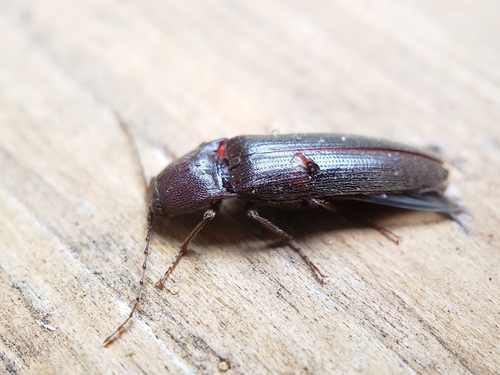
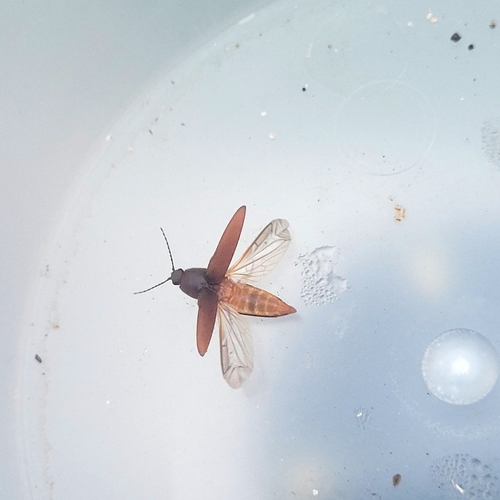
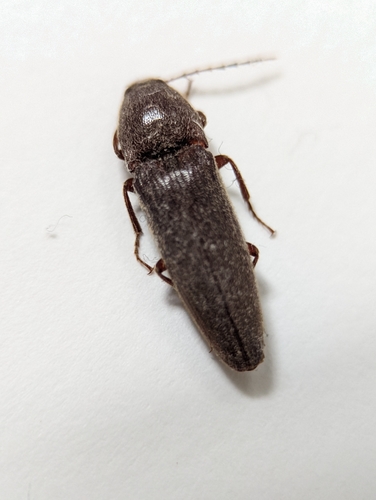
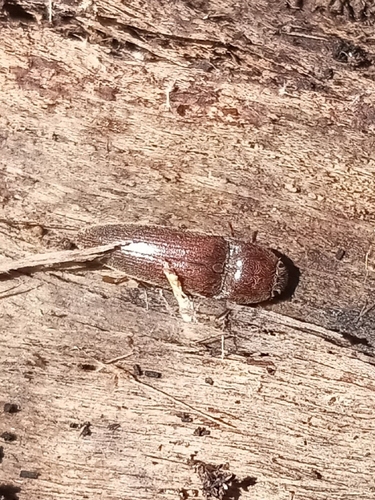
Same family (Elateridae)
 Eastern Eyed Click BeetleAlaus oculatus
 Mottled dingy-brown click beetleAgrypnus murinusDamages trees, gardens or crops
 Common brown click beetleAthous haemorrhoidalisDamages trees, gardens or crops
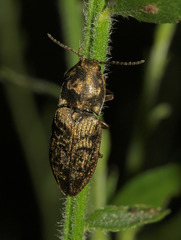 Chequered click beetleProsternon tessellatum
 Pasture WirewormConoderus exsul
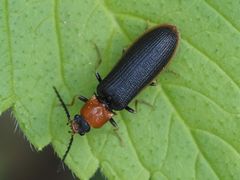 Bordered click beetleDenticollis linearis
Sources
- Wikipedia: https://en.wikipedia.org/wiki/Melanotus_castanipes
Look it up elsewhere: GBIF · iNaturalist · BugGuide · Wikipedia
Text written 2026-10-28 from the sources above and checked sentence by sentence against them. Data fetched 2026-10-28.