 Bug FAQ
Chequered click beetle
Prosternon tessellatum · Order: Coleoptera · Family: Elateridae
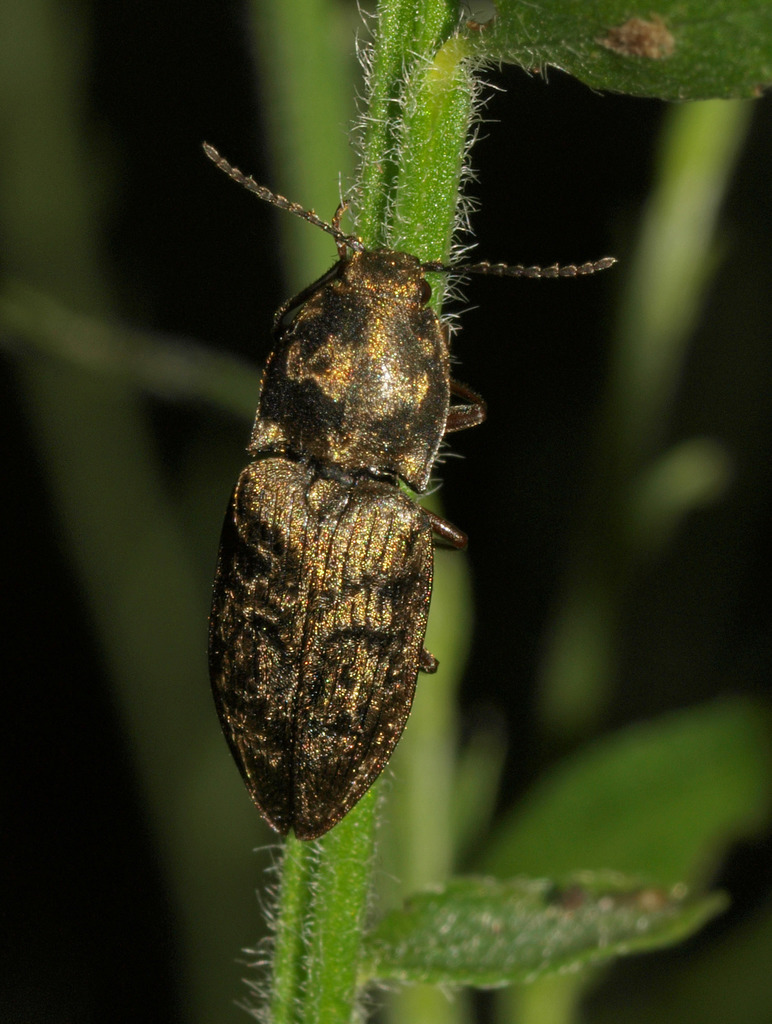
The chequered click beetle grows to about 10 to 12 mm long and shows a blackish-brown, hairy pronotum with striped elytra that have pale, silky-goldish markings. It lives in mountainous and forested areas across Europe, Asia and the Nearctic, and can also be found in heathland, dunes and gardens.
Source: Wikipedia
How to recognize it
They have a hairy blackish-brown pronotum and striped wing covers with pale, silky-goldish stains.
Source: Wikipedia
Size
Body length is about 10 to 12 mm (0.39 to 0.47 in).
Source: Wikipedia
Where it lives
Found in mountain areas, coniferous forests, dry forest edges, forest meadows, heathland, moors, dunes and gardens.
Source: Wikipedia
What it eats
Adults feed on flowers, shrubs and low vegetation from May to early August. Larvae live in conifer stumps and humus, preying on pine-tree lappet and pine sawfly cocoons.
Source: Wikipedia
Life cycle
Larvae develop in conifer stumps and humus, acting as predators of pine-tree lappet and pine sawfly cocoons.
Source: Wikipedia
When you see it
Adults are present from May to early August.
Source: Wikipedia
Where it comes from
Widespread in Europe, Asia and the Nearctic realm.
Source: Wikipedia
Lookalikes
They resemble the smaller Agrypnus murinus.
Source: Wikipedia
Questions people ask
How can I tell a chequered click beetle apart from similar beetles?
Look for a 10 to 12 mm beetle with a hairy blackish-brown pronotum, striped elytra and pale silky-goldish spots; the similar Agrypnus murinus is smaller.
Source: Wikipedia
When are adult chequered click beetles active?
Adults are active from May through early August, feeding on flowers and low vegetation.
Source: Wikipedia
What habitats do chequered click beetles prefer?
They live in mountain and forest areas, including coniferous woods, forest edges, meadows, heathland, dunes and gardens.
Source: Wikipedia
Same family (Elateridae)


Sources
- Wikipedia: https://en.wikipedia.org/wiki/Prosternon_tessellatum
Look it up elsewhere: GBIF · iNaturalist · BugGuide · Wikipedia
Text written 2026-10-23 from the sources above and checked sentence by sentence against them. Data fetched 2026-10-22.