 Bug FAQ
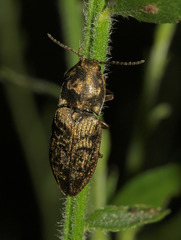
Mottled dingy-brown click beetle
Agrypnus murinus · Order: Coleoptera · Family: Elateridae
Source: Wikipedia

Adults are 10 to 17 mm long and have a grey-brown body with reddish or dark-brown legs and antennae. They are most often seen from late April through June in open, mountainous, low-forest or grassland areas across most of Europe and nearby regions.
Source: Wikipedia
How to recognize it
The beetle’s whole body is grey-brown with greyish spots and a thick covering of fine hairs; legs and antennae are reddish or dark-brown.
Source: Wikipedia
Size
Adults grow to 10 to 17 mm (0.39 to 0.67 in) in length.
Source: Wikipedia
Where it lives
They are found in open or mountain areas, low forests and grasslands, mainly from late April to June.
Source: Wikipedia
What it eats
Larvae live in soil and eat plant roots, earthworms and other insect larvae.
Source: Wikipedia
Life cycle
The dark-brown larvae develop underground, feeding on roots, worms and other insect larvae.
Source: Wikipedia
When you see it
Adults are most commonly encountered from late April through June.
Source: Wikipedia
Where it comes from
The species occurs throughout most of Europe, the eastern Palearctic, the Near East and the Nearctic realms.
Source: Wikipedia
Lookalikes
Agrypnus murinus is a click beetle in the family Elateridae, subfamily Agrypninae.
Source: Wikipedia
More photos

Questions people ask
Are they a problem for gardens?
Yes, the soil-dwelling larvae feed on plant roots and can harm garden plants and crops.
Source: Wikipedia
Same family (Elateridae)


Sources
- Wikipedia: https://en.wikipedia.org/wiki/Agrypnus_murinus
Look it up elsewhere: GBIF · iNaturalist · BugGuide · Wikipedia
Text written 2026-10-22 from the sources above and checked sentence by sentence against them. Data fetched 2026-10-22.