 Bug FAQ
Ceiba Borer
Euchroma giganteum · Order: Coleoptera · Family: Buprestidae
Also called: Giant Metallic Ceiba Borer, Ceiba Borer Beetle
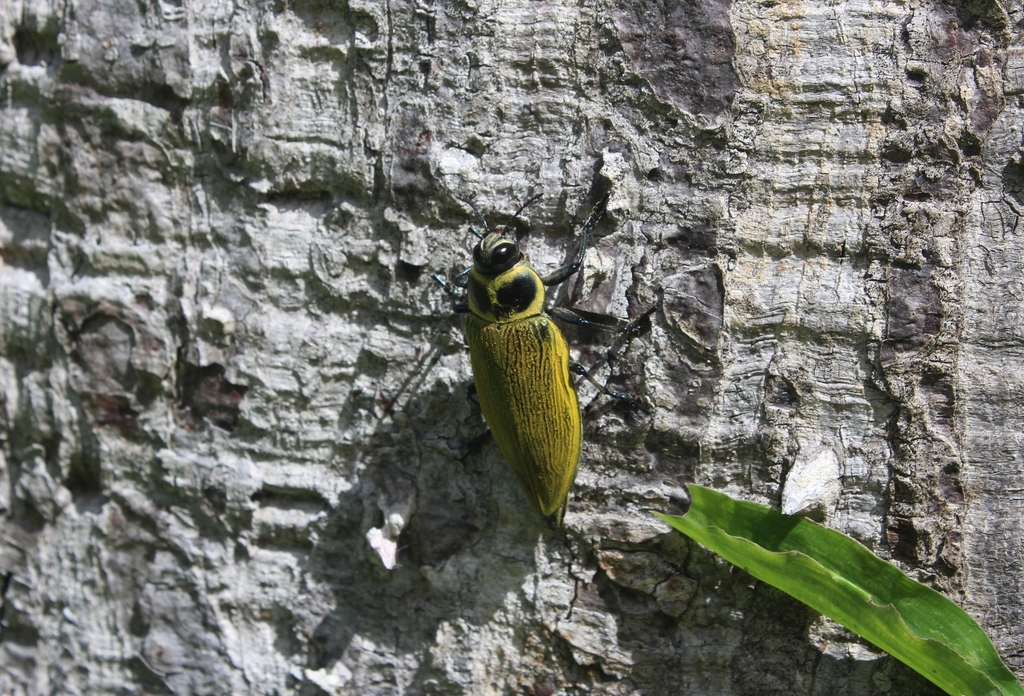
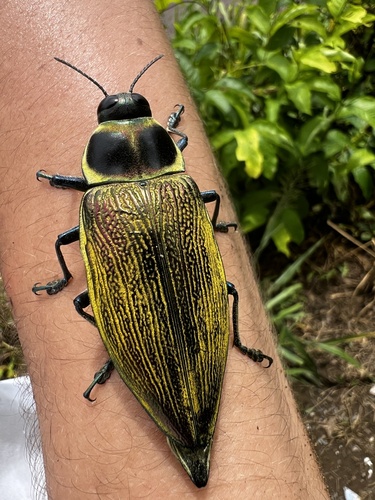
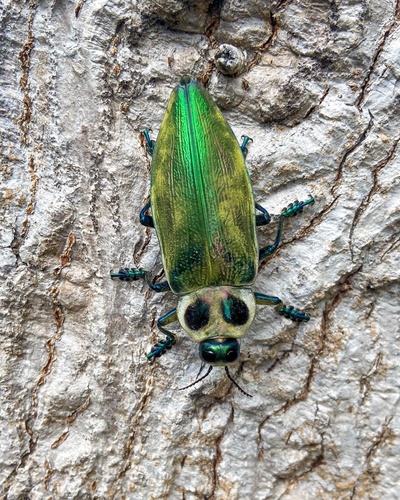
The Ceiba borer is a very large metallic-green beetle, 5 to 8 cm long, with wrinkled elytra and dark spots on each side of the pronotum. Its larvae grow to about 12 to 15 cm and live in decaying wood of ceiba and related trees in warm Amazonian regions up to 1,200 m elevation.
Source: Wikipedia
How to recognize it
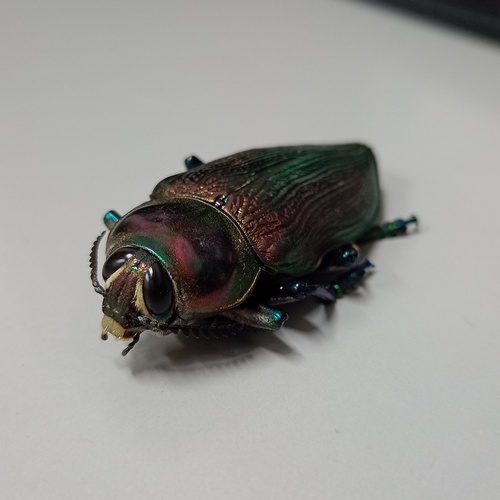
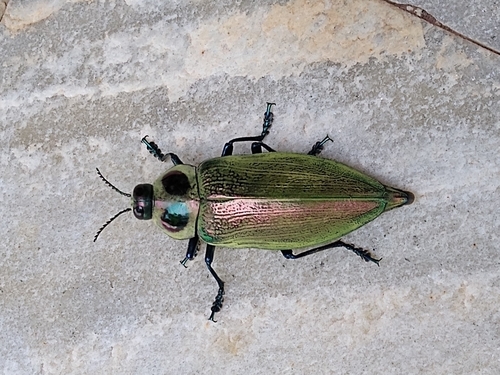
The adult’s body is robust, elongated, metallic green with reddish-purple tinges, and each pronotum side bears a dark spot.
Source: Wikipedia
Size
Adults reach 50 to 80 mm in length, making them among the largest buprestid beetles. Larvae can grow to 12 to 15 cm long.
Source: Wikipedia
Where it lives
It lives in warm Amazon regions, from lowlands up to about 1,200 m altitude. Adults are commonly seen walking on tree trunks.
Source: Wikipedia
What it eats
Larvae feed on decaying timber, especially of ceiba and other Bombacaceae trees, as well as Araucaria and Ficus species. Adults are typically found walking on tree trunks rather than feeding.
Source: Wikipedia
Life cycle
Males attract females by producing a clicking sound with their elytra. Mating usually occurs in August.
Source: Wikipedia
When you see it
The species generally mates in August.
Source: Wikipedia
Lookalikes
Other large buprestids such as Catoxantha and Megaloxantha can be confused with it.
Source: Wikipedia
More photos
Questions people ask
How do males attract females?
Males produce a clicking sound with their elytra to draw females.
Source: Wikipedia
Same family (Buprestidae)
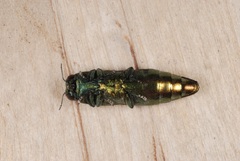 Emerald Ash BorerAgrilus planipennisDamages trees, gardens or crops
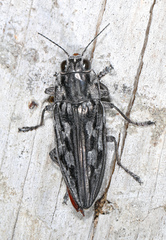 Sculptured Pine BorerChalcophora virginiensisDamages trees, gardens or crops
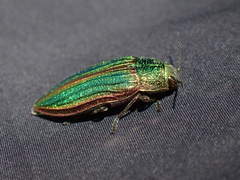 Golden Buprestid BeetleBuprestis aurulenta
 Anthaxia nitidulaAnthaxia nitidulaDamages trees, gardens or crops
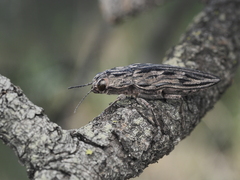 Western Sculptured Pine BorerChalcophora angulicollis
 Anthaxia quadripunctataAnthaxia quadripunctata
Sources
- Wikipedia: https://en.wikipedia.org/wiki/Euchroma_giganteum
Look it up elsewhere: GBIF · iNaturalist · BugGuide · Wikipedia
Text written 2026-10-23 from the sources above and checked sentence by sentence against them. Data fetched 2026-10-22.