 Bug FAQ
Cat-faced Orbweaver
Araneus gemmoides · Order: Araneae · Family: Araneidae
Also called: Plains Orbweaver, Cat-Faced Spider
Source: Wikipedia

The cat-faced orbweaver is a common outdoor spider in Canada and the United States. It builds webs near lights, on building sides, under wood, overhangs, and in guarded spots such as animal burrows. It catches flies, mosquitoes and other small spiders for food and has a low-toxicity venom that is harmless to people.
Source: Wikipedia
How to recognize it
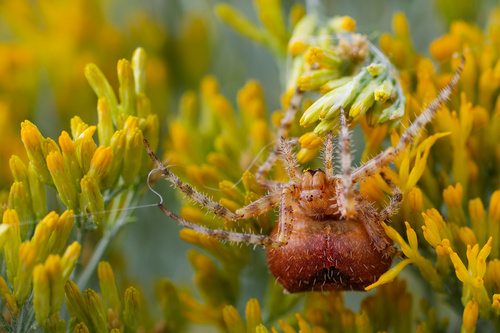
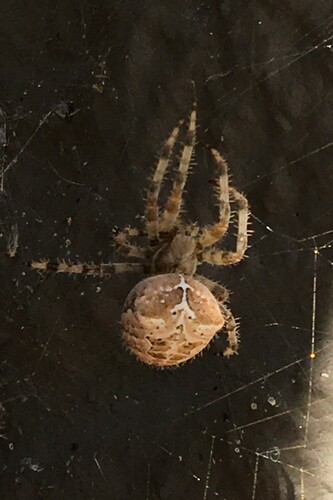
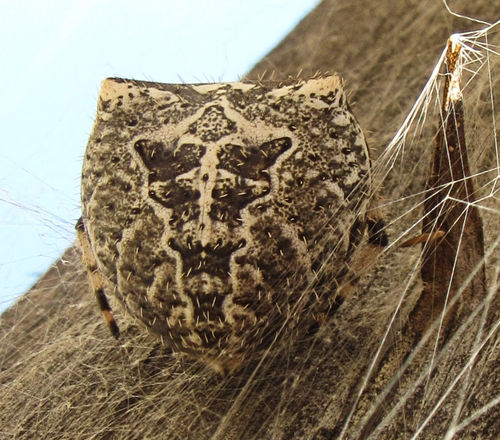
They have two horn-shaped bumps on a relatively large abdomen, which help identify them.
Source: Wikipedia
Does it bite or sting?
Their venom is low-toxicity and considered harmless to people.
Source: Wikipedia
Where it lives
They build webs near lights, in closed spaces, on building sides, under wood, overhangs, or in guarded spots like animal burrows.
Source: Wikipedia
What it eats
They catch and eat insects such as flies, mosquitoes, and even other small spiders.
Source: Wikipedia
Life cycle
Egg sacs can survive the winter, and the spiderlings may eat their siblings after hatching.
Source: Wikipedia
When you see it
Their body color changes between summer and winter.
Source: Wikipedia
Where it comes from
The cat-faced orbweaver is common outdoors across Canada and the United States.
Source: Wikipedia
Lookalikes
They share the common names ‘jewel spider’ and ‘cat-faced spider’ with other species such as Austracantha minax and Araneus gemma.
Source: Wikipedia
Where it is found in the US
Recorded in 20 of 51 states and DC. Most records: Colorado, Washington, Utah, California, Minnesota, Idaho, Montana, North Dakota.
Darker = more records. Counts are museum and citizen-science records, not population size.
Source: GBIF
Status: native in North America; native in Canada; native in United States. Source: iNaturalist
Months it is reported in the US
Source: GBIF
More photos
Questions people ask
Where are they found?
They are found near lights, on building sides, under wood, overhangs, and in animal burrows.
Source: Wikipedia
How can I tell them apart from similar spiders?
The two horn-shaped growths on the abdomen distinguish them.
Source: Wikipedia
Same family (Araneidae)


Sources
- Wikipedia: https://en.wikipedia.org/wiki/Araneus_gemmoides
Look it up elsewhere: GBIF · iNaturalist · BugGuide · ITIS · Wikipedia
Text written 2026-10-23 from the sources above and checked sentence by sentence against them. Data fetched 2026-10-23.