 Bug FAQ
Capricorn beetle
Cerambyx scopolii · Order: Coleoptera · Family: Cerambycidae
Source: Wikipedia
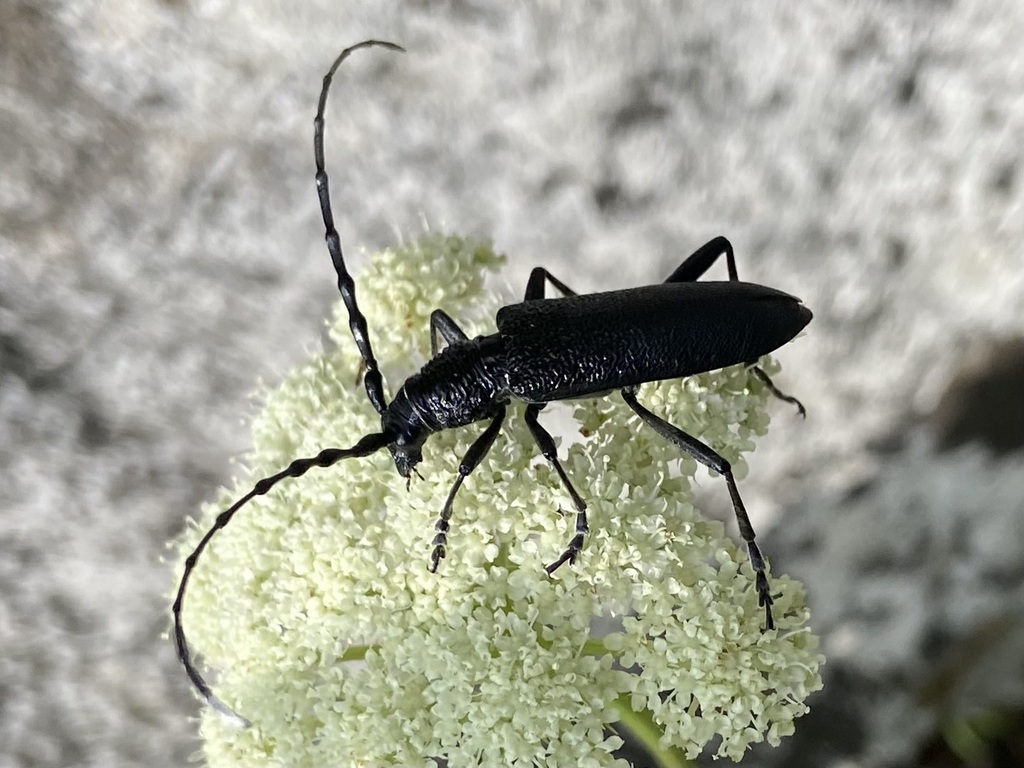
The larvae develop inside oak, willow and chestnut, and in large numbers they can kill the host tree. It is native to Europe.
Source: Wikipedia
How to recognize it
Cerambyx scopolii belongs to the long-horn beetle family.
Source: Wikipedia
Is it a pest in the house?
When present in sufficient density, the larvae can kill a tree, which may affect timber or garden trees.
Source: Wikipedia
Where it lives
Its wood-boring larvae live in oak, willow and chestnut trees.
Source: Wikipedia
What it eats
The larvae feed on the wood of oak, willow and chestnut.
Source: Wikipedia
Life cycle
Larvae grow inside the wood of oak, willow and chestnut and can kill the tree when present in high numbers.
Source: Wikipedia
Where it comes from
The species is native to Europe.
Source: Wikipedia
More photos
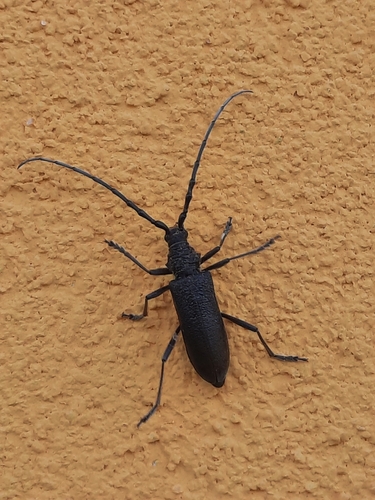
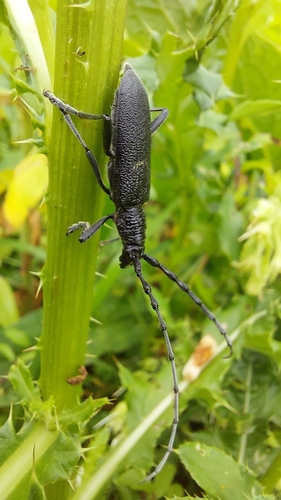
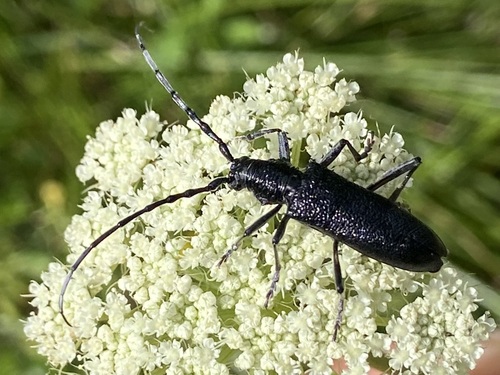
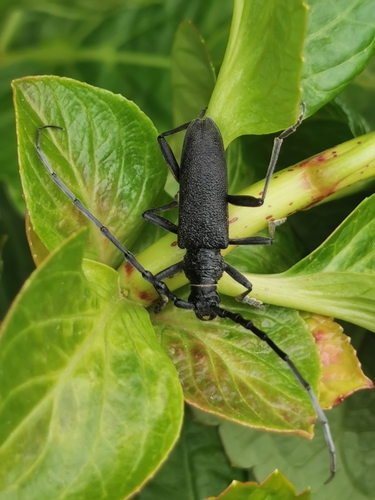
Questions people ask
Which trees are affected by Capricorn beetle larvae?
The larvae bore into oak, willow and chestnut trees and can kill them if many are present.
Source: Wikipedia
Same family (Cerambycidae)
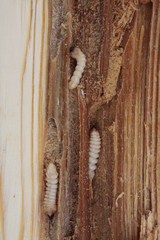 House LonghornHylotrupes bajulusCan damage your home
 Asian Longhorned BeetleAnoplophora glabripennisDamages trees, gardens or crops
 Red Milkweed BeetleTetraopes tetrophthalmus
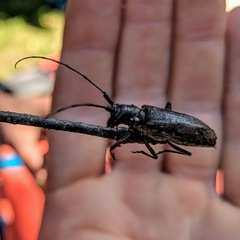 White-spotted SawyerMonochamus scutellatusCan damage your home
 Red Pine Longhorn BeetleStictoleptura rubra
 Spotted Longhorn BeetleRutpela maculataDamages trees, gardens or crops
Sources
- Wikipedia: https://en.wikipedia.org/wiki/Cerambyx_scopolii
Look it up elsewhere: GBIF · iNaturalist · BugGuide · Wikipedia
Text written 2026-10-22 from the sources above and checked sentence by sentence against them. Data fetched 2026-10-22.