 Bug FAQ
Burnt pine longhorn
Arhopalus ferus · Order: Coleoptera · Family: Cerambycidae
Source: Wikipedia
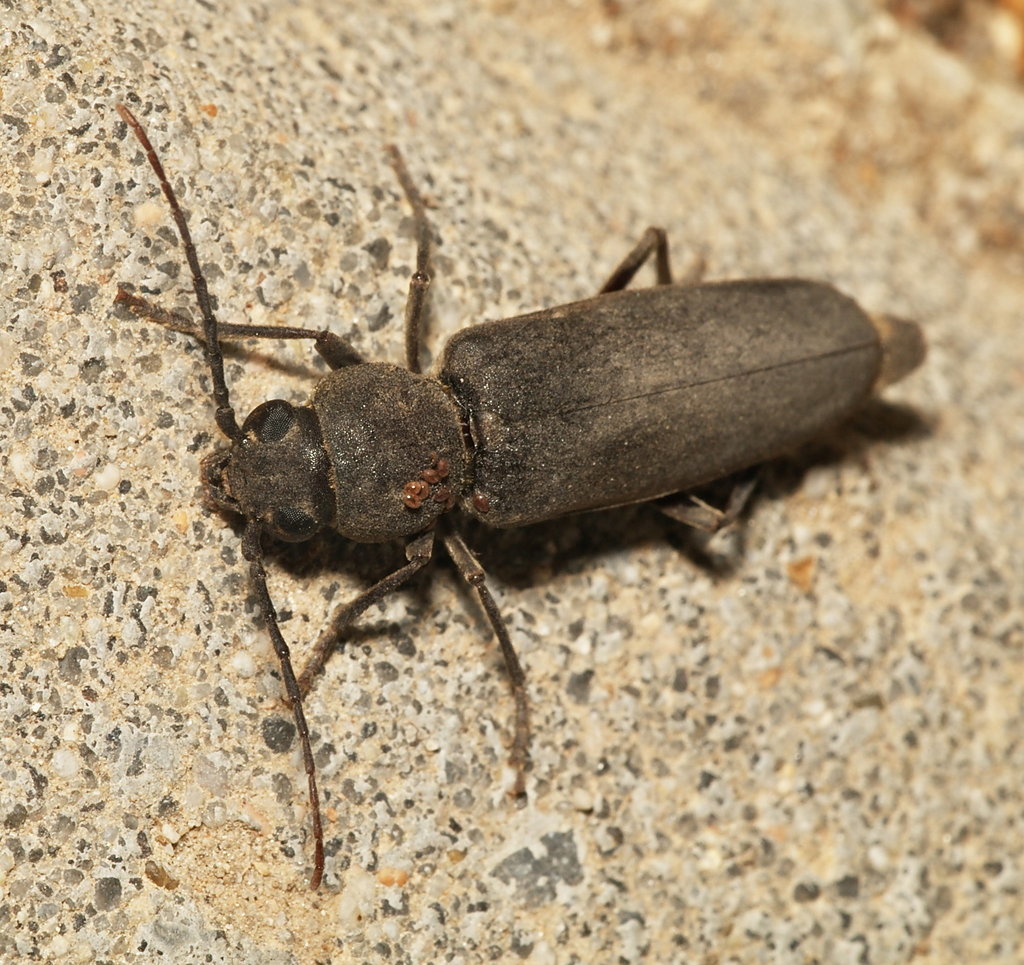
Females are drawn to the smell of burnt wood and lay eggs in bark cracks soon after a fire. The larvae bore into phloem, cambium and sometimes sapwood of fire-damaged pine and spruce, taking several years to develop.
Source: Wikipedia
How to recognize it
Body is elongated and oval; head points forward; antennae are thread-like and half to three-quarters of body length, longer in males; prothorax is smoothly curved and narrower than the elytra, which have four ridges.
Source: Wikipedia
Size
Adults measure 8 to 30 mm, reddish-brown to black; males are generally smaller and lighter.
Source: Wikipedia
Where it lives
Prefers dead or dying pine and spruce that have been burned or otherwise damaged, but will rarely use healthy trees.
Source: Wikipedia
What it eats
Feeds on dead or dying pine and spruce injured by fire, rarely on healthy trees.
Source: Wikipedia
Life cycle
Completes its life cycle in 3 to 4 years in its native range, but in New Zealand it may finish in 1 to 2 years.
Source: Wikipedia
When you see it
Adults live for several weeks and emerge from spring to autumn.
Source: Wikipedia
Questions people ask
How can I tell if I have burnt pine longhorn beetles?
Look for 8 to 30 mm reddish-brown to black beetles with elongated oval bodies, forward-pointing heads, and long, thread-like antennae; males have longer antennae.
Source: Wikipedia
Do they damage living trees?
They mainly attack dead or fire-damaged pine and spruce, rarely infesting healthy trees.
Source: Wikipedia
When are the adults active?
Adults are active for several weeks from spring through autumn.
Source: Wikipedia
Same family (Cerambycidae)
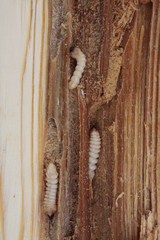 House LonghornHylotrupes bajulusCan damage your home
 Asian Longhorned BeetleAnoplophora glabripennisDamages trees, gardens or crops
 Red Milkweed BeetleTetraopes tetrophthalmus
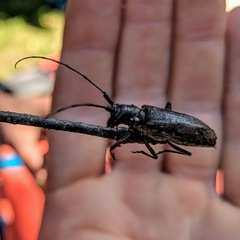 White-spotted SawyerMonochamus scutellatusCan damage your home
 Red Pine Longhorn BeetleStictoleptura rubra
 Spotted Longhorn BeetleRutpela maculataDamages trees, gardens or crops
Sources
- Wikipedia: https://en.wikipedia.org/wiki/Arhopalus_ferus
Look it up elsewhere: GBIF · iNaturalist · BugGuide · Wikipedia
Text written 2026-10-23 from the sources above and checked sentence by sentence against them. Data fetched 2026-10-22.