 Bug FAQ
Brown shield bug
Dictyotus caenosus · Order: Hemiptera · Family: Pentatomidae
Source: Wikipedia
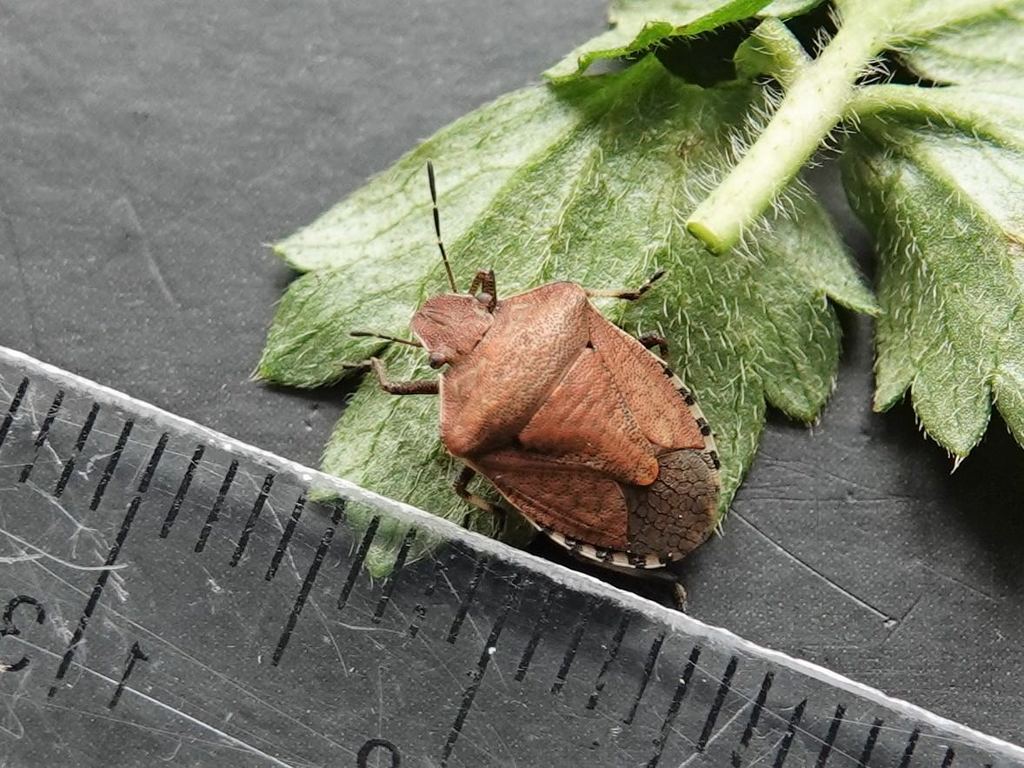
Adult brown shield bugs are about 8-10 mm long and are mostly brown with a yellow side stripe broken by black bars. They live on herbaceous plants and grasses, especially in New Zealand, and eat many common crops such as beans, peas, corn, potatoes and grapes. Adults appear most often from January to March and the ones that survive the season hide at plant bases or under stones over winter.
Source: Wikipedia
How to recognize it
The bug is mainly brown and has a yellow edge on the abdomen that is interrupted by black bars. Eggs are about 0.9 mm, start pale yellow-green, turn lemon yellow, and become pink just before hatching.
Source: Wikipedia
Size
Adults measure between 8 and 10 mm in length.
Source: Wikipedia
Where it lives
In New Zealand it is commonly found on herbaceous plants and grasses in many habitats.
Source: Wikipedia
What it eats
It feeds on a wide variety of plants including brassicas, strawberries, alfalfa, peas, raspberries, nightshades, clover, corn, fodder beet, grapes, turnips and potatoes.
Source: Wikipedia
Life cycle
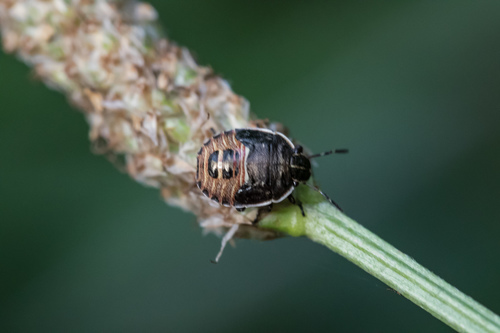
Its life cycle follows the typical pattern of shield bugs. All nymphs hatch together, stay near the egg mass, and molt to the second instar before dispersing.
Source: Wikipedia
When you see it
Adults are most abundant from January through March, and survivors overwinter at plant bases or under stones.
Source: Wikipedia
Where it comes from
The species is native to Australia where it is common in grassy areas.
Source: Wikipedia
More photos
Questions people ask
What plants does the brown shield bug damage?
It feeds on many garden and field crops such as beans, peas, corn, potatoes, grapes and various leafy vegetables.
Source: Wikipedia
When are brown shield bugs most common?
They are most abundant from January to March, with survivors overwintering near plant bases or under stones.
Source: Wikipedia
Same family (Pentatomidae)
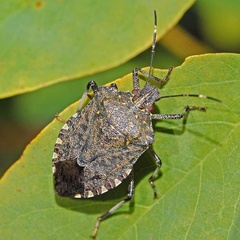 Brown Marmorated Stink BugHalyomorpha halysDamages trees, gardens or crops
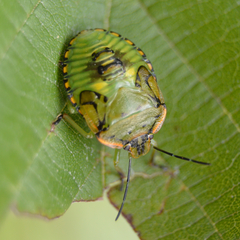 Green Stink BugChinavia hilarisDamages trees, gardens or crops
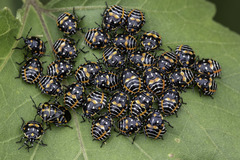 Harlequin BugMurgantia histrionicaDamages trees, gardens or crops
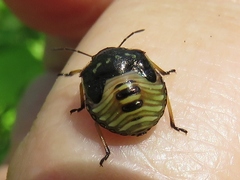 Brown Stink BugEuschistus servusDamages trees, gardens or crops
 Green Shield BugPalomena prasina
 European Striped Shield BugGraphosoma italicum
Sources
- Wikipedia: https://en.wikipedia.org/wiki/Dictyotus_caenosus
Look it up elsewhere: GBIF · iNaturalist · BugGuide · Wikipedia
Text written 2026-10-23 from the sources above and checked sentence by sentence against them. Data fetched 2026-10-23.