 Bug FAQ
Bronze Shield Bug
Troilus luridus · Order: Hemiptera · Family: Pentatomidae
Also called: Bronze Shieldbug
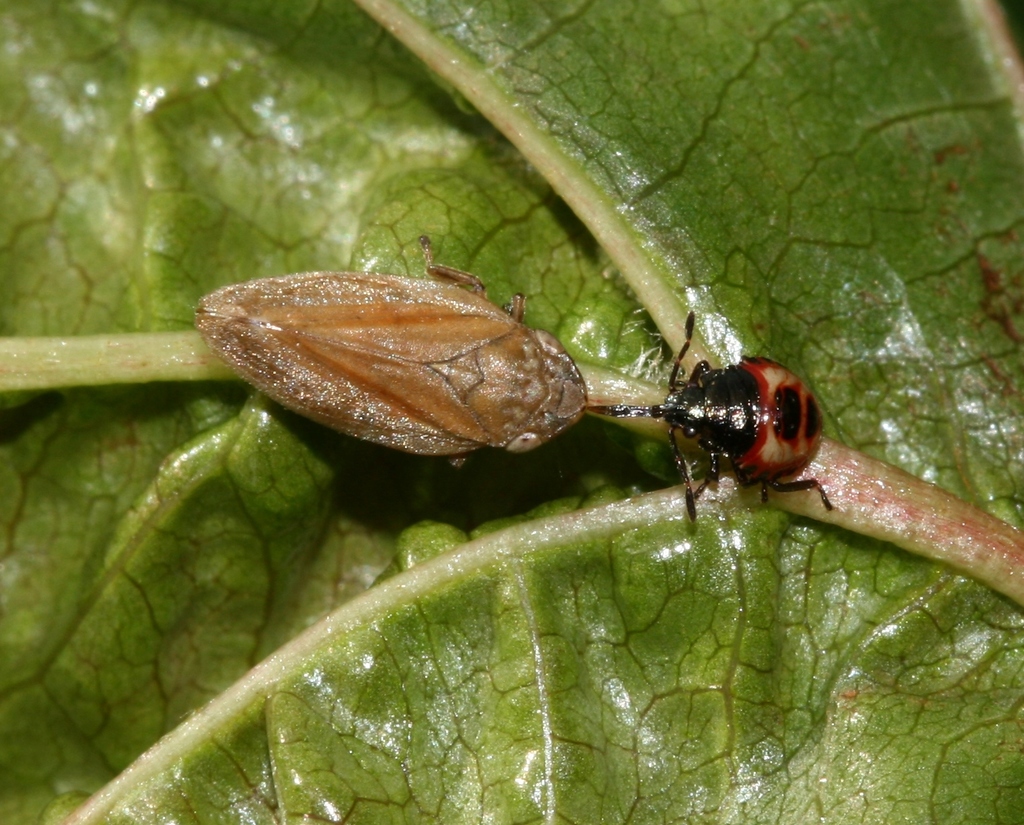
The bronze shield bug is about 1 to 1.2 cm long and lives on trees, though only a few are found in the lower branches. It feeds on plant sap and also hunts live insect larvae such as beetles, moths and sawflies, which it needs for development. Adults survive the winter, emerge in spring, lay eggs in early summer and new adults appear from July onward, depending on temperature and prey availability.
Source: Wikipedia
Size
Adults measure roughly 10 to 12 mm in length.
Source: Wikipedia
Where it lives
They are found on trees. Only a small part of the population lives in the lower branches.
Source: Wikipedia
What it eats
They feed on plant sap and also prey on live insect larvae, especially beetles, lepidoptera and sawflies.
Source: Wikipedia
Life cycle
Adults overwinter and usually become active in April, depending on temperature. Eggs are laid in May to June in batches that start around 21 and shrink to one or two per batch. At about 19 to 20 °C, eggs develop in 10 to 12 days. First-instar nymphs are plant-feeding and live together; there are five nymphal stages. New adults appear from July onward, with timing affected by temperature, humidity and prey availability.
Source: Wikipedia
When you see it
Adults survive the winter and emerge in spring, with new adults visible from July onward.
Source: Wikipedia
Questions people ask
What does the bronze shield bug eat?
It drinks plant sap and also hunts live insect larvae such as beetles, moths and sawflies, which are essential for its development.
Source: Wikipedia
When do bronze shield bugs appear?
Adults emerge from overwintering in April, lay eggs in May to June, and new adults can be seen from July onward, depending on weather and food.
Source: Wikipedia
Same family (Pentatomidae)
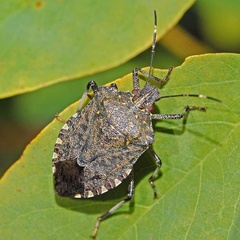 Brown Marmorated Stink BugHalyomorpha halysDamages trees, gardens or crops
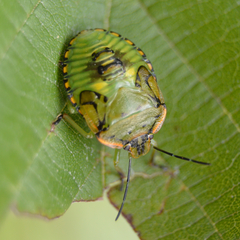 Green Stink BugChinavia hilarisDamages trees, gardens or crops
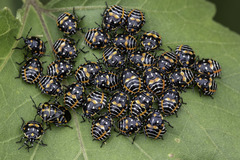 Harlequin BugMurgantia histrionicaDamages trees, gardens or crops
 Brown Stink BugEuschistus servusDamages trees, gardens or crops
 Green Shield BugPalomena prasina
 European Striped Shield BugGraphosoma italicum
Sources
- Wikipedia: https://en.wikipedia.org/wiki/Troilus_luridus
Look it up elsewhere: GBIF · iNaturalist · BugGuide · Wikipedia
Text written 2026-10-23 from the sources above and checked sentence by sentence against them. Data fetched 2026-10-22.