 Bug FAQ
Brachiacantha dentipes
Brachiacantha dentipes · Order: Coleoptera · Family: Coccinellidae
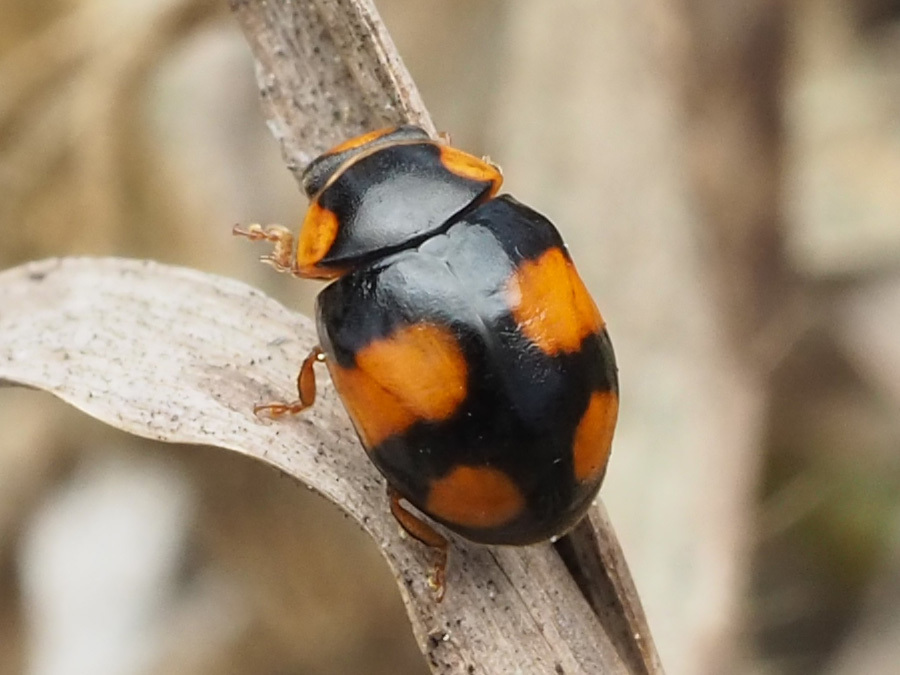
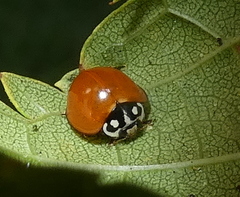
Adult Brachiacantha dentipes are tiny beetles, measuring roughly 5 to 6 mm in length. Males have a black pronotum with yellow or orange edges, and their wing covers are black with an orange or yellow spot near the tip and a middle band.
Source: Wikipedia
How to recognize it
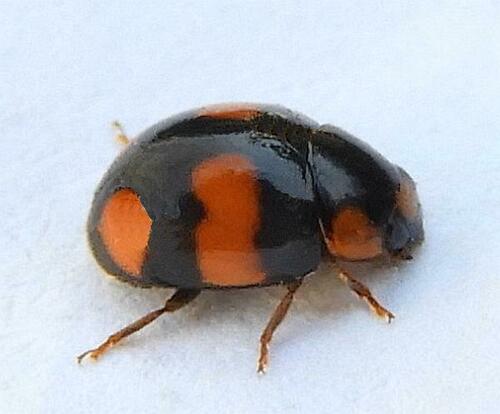
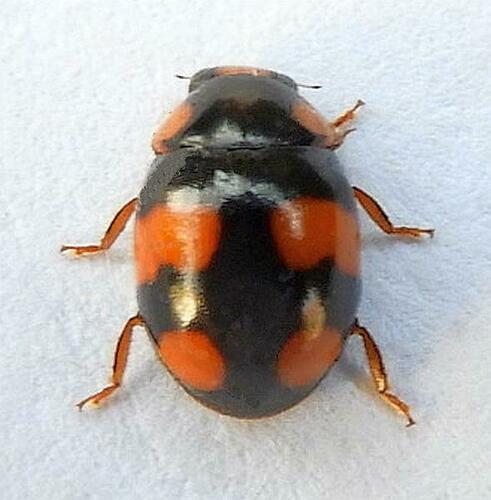
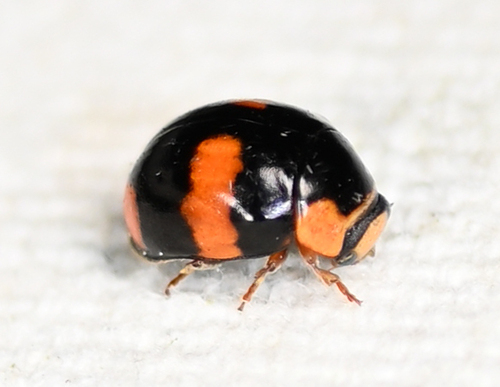
Male pronotum is black with yellow or orange front edge and sides. Elytra are black with an orange or yellow tip spot and a median band.
Source: Wikipedia
Size
Adults are about 4.75 to 6.30 mm long.
Source: Wikipedia
Where it comes from
Found in North America from New England and Ontario to Florida, and west to Colorado and New Mexico. Its southern range extends into Costa Rica and the Bahamas.
Source: Wikipedia
Where it is found in the US
Recorded in 17 of 51 states and DC. Most records: Florida, Kansas, Colorado, Oklahoma, South Carolina, Louisiana, Ohio, Georgia.
Darker = more records. Counts are museum and citizen-science records, not population size.
Source: GBIF
Status: native in North America; native in Canada. Source: iNaturalist
Months it is reported in the US
Source: GBIF
More photos

Questions people ask
Where is Brachiacantha dentipes found?
It lives across much of North America, from New England and Ontario down to Florida and west to Colorado and New Mexico, and also in Costa Rica and the Bahamas.
Source: Wikipedia
How can I tell a male Brachiacantha dentipes apart?
Males have a black pronotum with yellow or orange front edge and sides, and their elytra show a black background with an orange or yellow tip spot and a middle band.
Source: Wikipedia
Same family (Coccinellidae)

Sources
- Wikipedia: https://en.wikipedia.org/wiki/Brachiacantha_dentipes
Look it up elsewhere: GBIF · iNaturalist · BugGuide · ITIS · Wikipedia
Text written 2026-10-26 from the sources above and checked sentence by sentence against them. Data fetched 2026-10-26.