 Bug FAQ
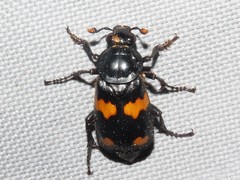
Boreal Burying Beetle
Nicrophorus defodiens · Order: Coleoptera · Family: Staphylinidae
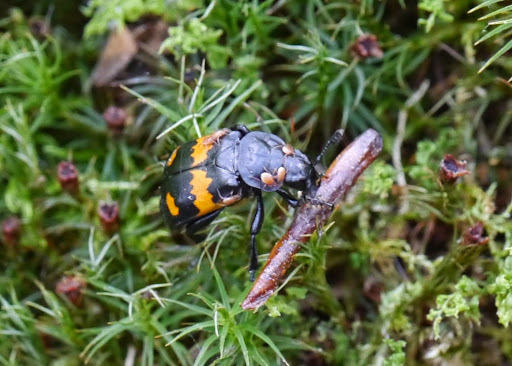
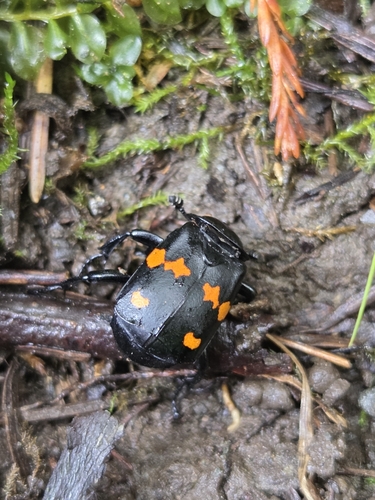
The boreal burying beetle (Nicrophorus defodiens) is a burying beetle species first described by Carl Gustaf Mannerheim in 1846. It can breed high in the forest canopy and females may bite males during mating. Males attract mates with a pheromone and the species lays about 24 eggs, roughly twice as many as related beetles.
Source: Wikipedia
Where it lives
It is one of at least two burying beetles known to breed in the forest canopy.
Source: Wikipedia
What it eats
It is a burying beetle, a group that typically feeds on carrion.
Source: Wikipedia
Life cycle
Males use a pheromonal signal to attract females for mating. Females lay roughly 24 eggs, about twice as many as some related species.
Source: Wikipedia
Where it comes from
The species was described by Carl Gustaf Mannerheim in 1846.
Source: Wikipedia
Where it is found in the US
Recorded in 30 of 51 states and DC. Most records: Washington, Oregon, California, Alaska, Tennessee, Idaho, South Dakota, North Carolina.
Darker = more records. Counts are museum and citizen-science records, not population size.
Source: GBIF
Status: native in North America; native in Canada; native in United States. Source: iNaturalist
Months it is reported in the US
Source: GBIF
More photos
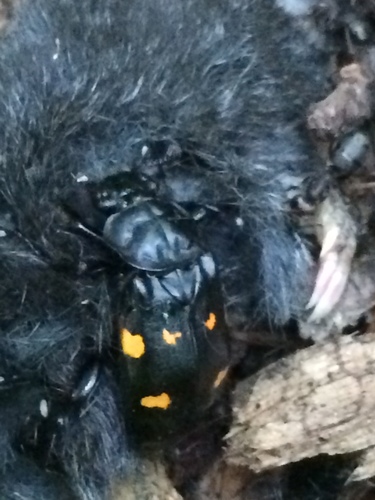
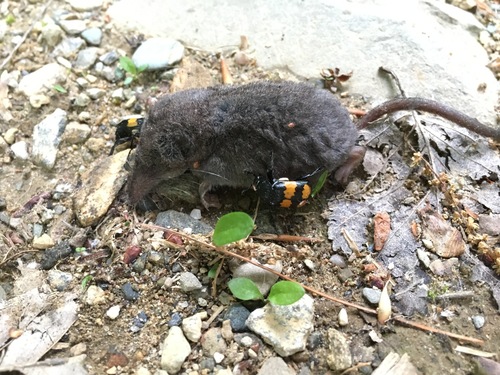
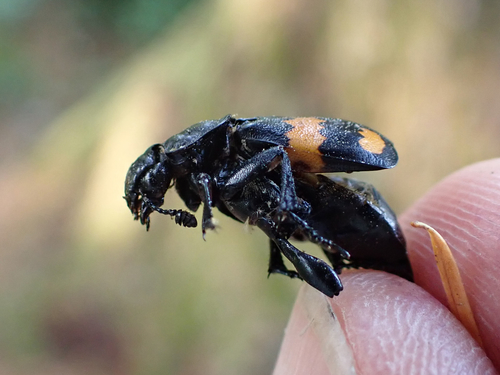
Questions people ask
How do boreal burying beetles find mates?
Males release a pheromone that attracts females for mating.
Source: Wikipedia
How many eggs does a female boreal burying beetle lay?
A female typically lays about 24 eggs, roughly twice the number of some related beetles.
Source: Wikipedia
Same family (Staphylinidae)


Sources
- Wikipedia: https://en.wikipedia.org/wiki/Nicrophorus_defodiens
Look it up elsewhere: GBIF · iNaturalist · BugGuide · ITIS · Wikipedia
Text written 2026-10-23 from the sources above and checked sentence by sentence against them. Data fetched 2026-10-23.