 Bug FAQ
Bombylius incanus
Bombylius incanus · Order: Diptera · Family: Bombyliidae
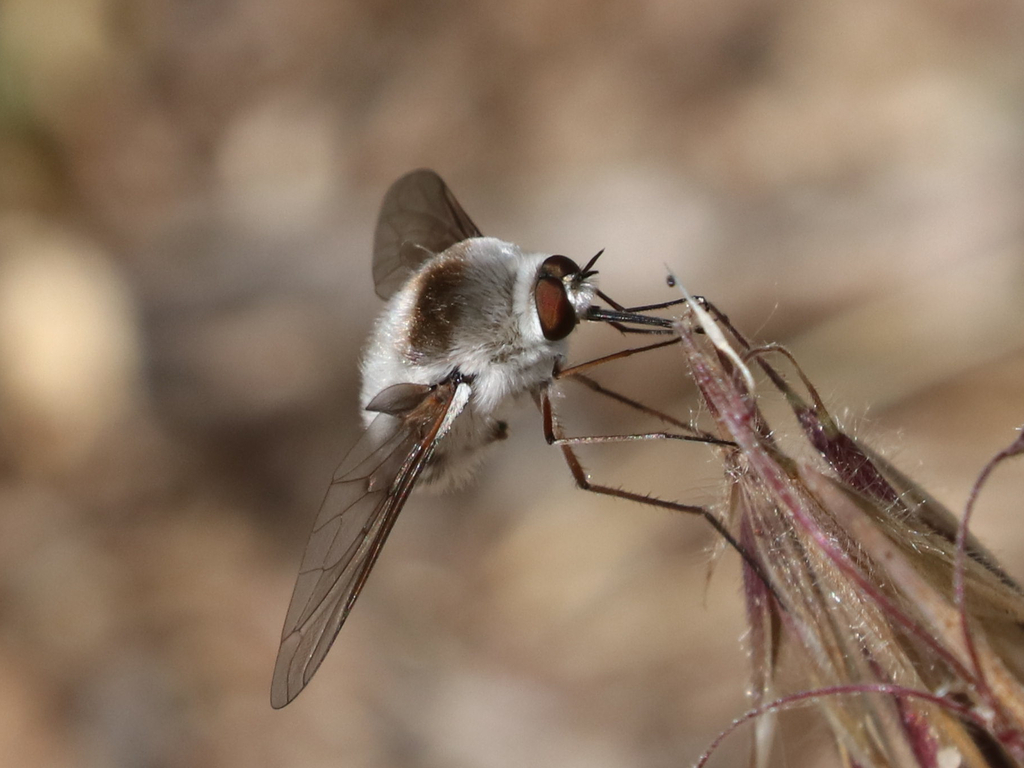
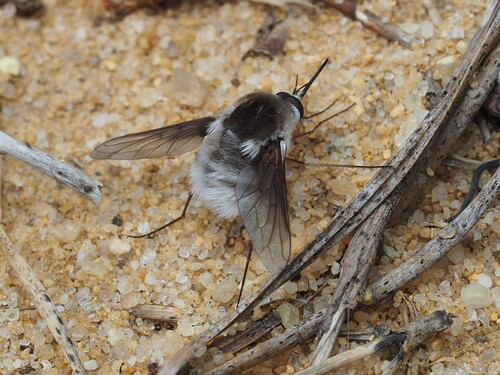
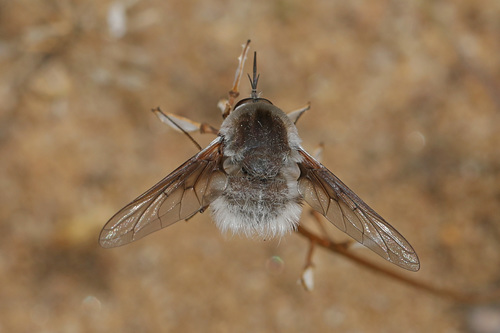
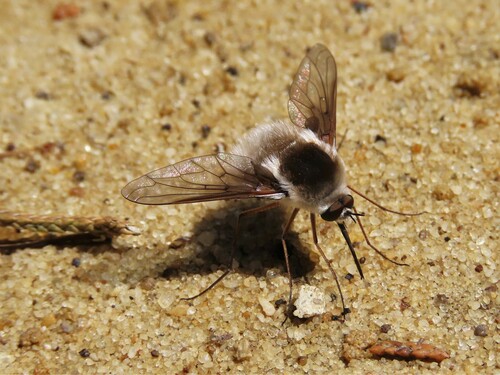
Adult Bombylius incanus are about 8 to 10 mm long. They are pale bee flies with white hair on the face, cheeks, and most of the body, while the back and abdomen have scattered dark hairs. They live near shores, especially in coastal dunes, and are native to the eastern United States.
Source: Wikipedia
How to recognize it
The fly’s wings have no spots and are dark near the base, fading to clearer tips. Its mostly white hair distinguishes it from other eastern North American Bombylius species that have darker facial hair or more yellowish body hair.
Source: Wikipedia
Size
Adults measure about 8 to 10 mm in length.
Source: Wikipedia
Where it lives
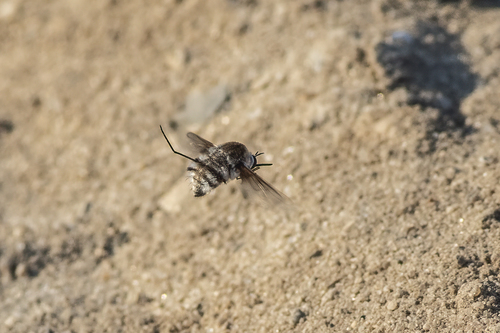
It is associated with shore environments, especially coastal dunes.
Source: Wikipedia
Where it comes from
Bombylius incanus is a Nearctic species native to the eastern United States.
Source: Wikipedia
Where it is found in the US
Recorded in 13 of 51 states and DC. Most records: New York, New Jersey, Massachusetts, North Carolina, Connecticut, Maine, Maryland, New Hampshire.
Darker = more records. Counts are museum and citizen-science records, not population size.
Source: GBIF
Status: native in North America; native in United States; native in Canada. Source: iNaturalist
Months it is reported in the US
Source: GBIF
More photos
Questions people ask
Where is Bombylius incanus found?
It is native to the eastern United States and lives in coastal or dune habitats.
Source: Wikipedia
How can I tell Bombylius incanus apart from similar bee flies?
It has mostly white hair on the face, cheeks, and body, while other similar species have darker facial hair or more yellowish body hair.
Source: Wikipedia
Same family (Bombyliidae)



Sources
- Wikipedia: https://en.wikipedia.org/wiki/Bombylius_incanus
Look it up elsewhere: GBIF · iNaturalist · BugGuide · ITIS · Wikipedia
Text written 2026-10-28 from the sources above and checked sentence by sentence against them. Data fetched 2026-10-28.