 Bug FAQ
Blue Shield Bug
Zicrona caerulea · Order: Hemiptera · Family: Pentatomidae
Also called: Blue Bug, Blue Shieldbug
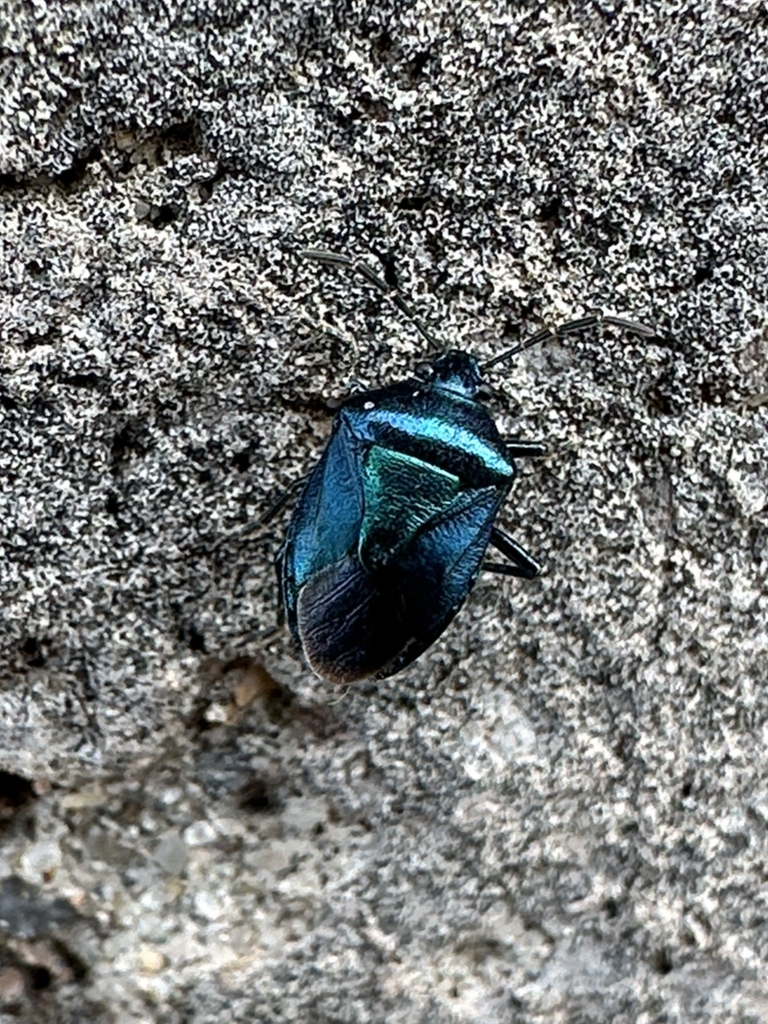
The Blue Shield Bug is a small true bug about 5 to 8 mm long, with a shiny metallic blue-green body as an adult.
Source: Wikipedia
How to recognize it
Adults are uniformly metallic blue-green, while immature bugs have a red abdomen with black markings.
Source: Wikipedia
Size
Adults reach about 5 to 8 mm (0.20 to 0.31 in) in length.
Source: Wikipedia
What it eats
They are useful predators of leaf beetles (Altica), beetle larvae and moth caterpillars, but they also feed on plants.
Source: Wikipedia
Life cycle
Eggs are laid in spring, the bugs overwinter as adults, and new adults appear from July onward.
Source: Wikipedia
When you see it
New adults can be found from July onward each year.
Source: Wikipedia
Where it comes from
The species occurs throughout Eurasia and also in North America.
Source: Wikipedia
Where it is found in the US
Recorded in 11 of 51 states and DC. Most records: California, Nevada, New Mexico, Alaska, Colorado, Texas, Utah, Oklahoma.
Darker = more records. Counts are museum and citizen-science records, not population size.
Source: GBIF
Status: native in North America; native in Canada. Source: iNaturalist
Months it is reported in the US
Source: GBIF
Questions people ask
What does the Blue Shield Bug look like?
Adults are a uniform metallic blue-green, about 5 to 8 mm long; immature bugs have a red abdomen with black spots.
Source: Wikipedia
When are they active?
They overwinter as adults and new adults emerge from July onward each year.
Source: Wikipedia
What do they eat?
They prey on leaf beetles, beetle larvae and moth caterpillars, and they also feed on some plant material.
Source: Wikipedia
Same family (Pentatomidae)
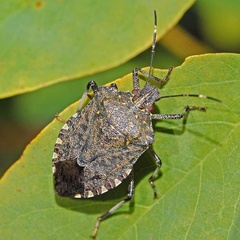 Brown Marmorated Stink BugHalyomorpha halysDamages trees, gardens or crops
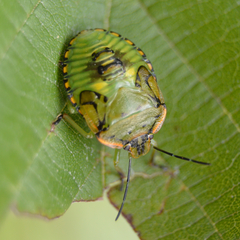 Green Stink BugChinavia hilarisDamages trees, gardens or crops
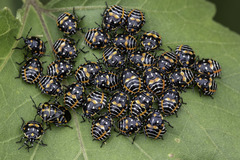 Harlequin BugMurgantia histrionicaDamages trees, gardens or crops
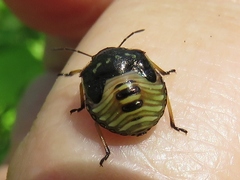 Brown Stink BugEuschistus servusDamages trees, gardens or crops
 Green Shield BugPalomena prasina
 European Striped Shield BugGraphosoma italicum
Sources
- Wikipedia: https://en.wikipedia.org/wiki/Zicrona_caerulea
Look it up elsewhere: GBIF · iNaturalist · BugGuide · ITIS · Wikipedia
Text written 2026-10-23 from the sources above and checked sentence by sentence against them. Data fetched 2026-10-22.