 Bug FAQ
Blue Ringtail
Austrolestes annulosus · Order: Odonata · Family: Lestidae
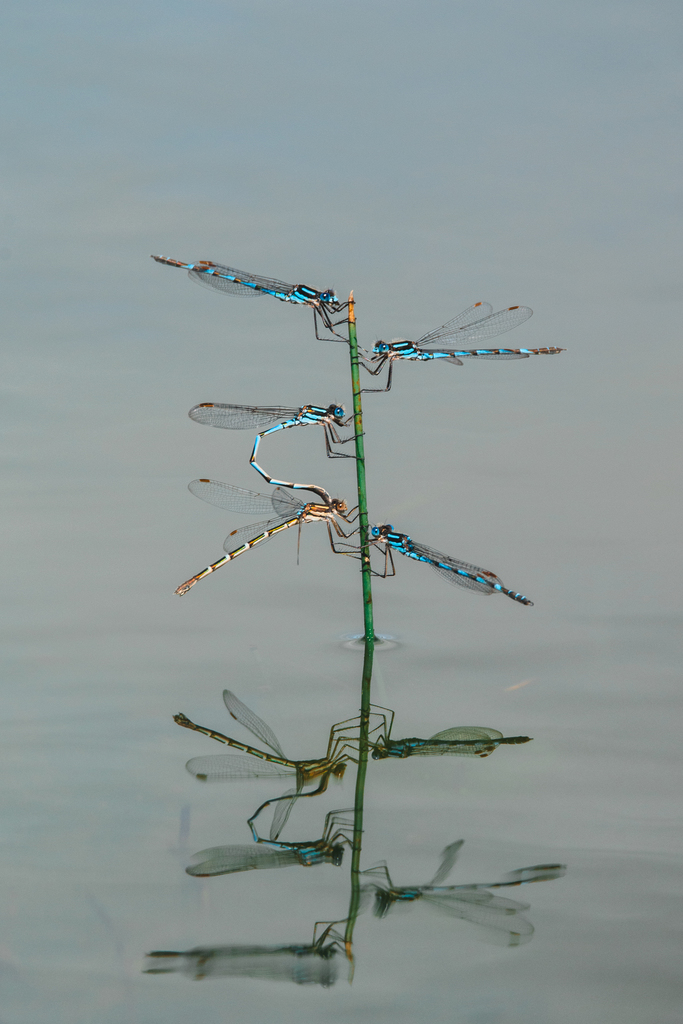
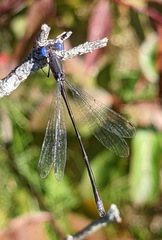
The blue ringtail is a thin, medium-sized damselfly that is usually bright blue with few black marks. Females are a bit sturdier and show black and white or pale-blue colours. Its abdomen measures about 3 cm long.
Source: Wikipedia
How to recognize it
Adults are generally striking blue with minimal black markings; females are slightly more robust and display black and white or pale-blue tones.
Source: Wikipedia
Size
The abdomen is roughly 3 cm in length.
Source: Wikipedia
Where it lives
It lives near still water such as river pools, lakes, ponds and temporary pools.
Source: Wikipedia
When you see it
Adults are active from September through April.
Source: Wikipedia
Where it comes from
The species occurs across most of Australia, except the far north and north-east.
Source: Wikipedia
Same family (Lestidae)

Sources
- Wikipedia: https://en.wikipedia.org/wiki/Blue_ringtail
Look it up elsewhere: GBIF · iNaturalist · BugGuide · Wikipedia
Text written 2026-10-23 from the sources above and checked sentence by sentence against them. Data fetched 2026-10-22.