 Bug FAQ
Blue Damselfly
Austrolestes colensonis · Order: Odonata · Family: Lestidae
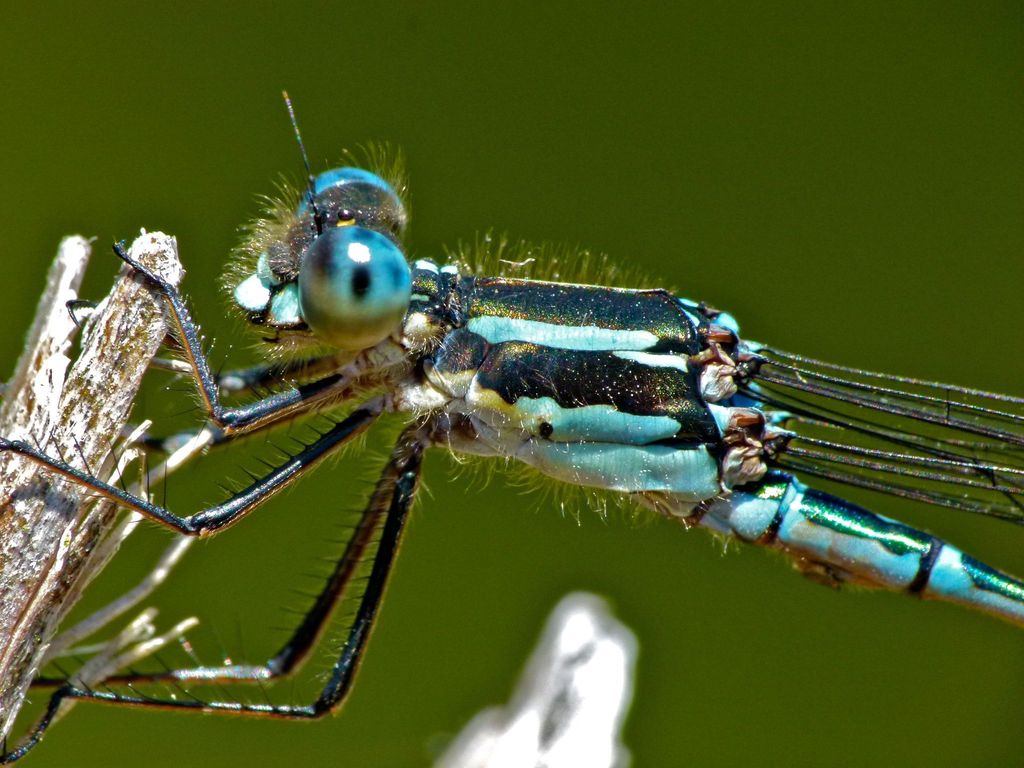
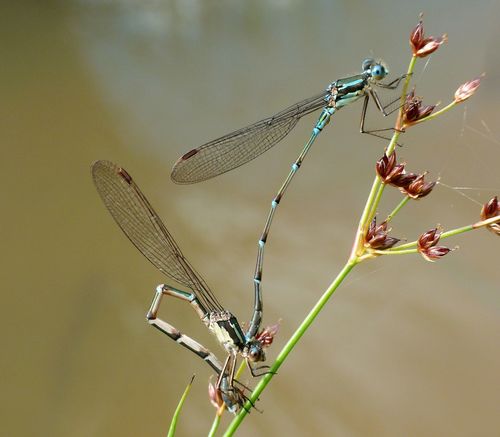
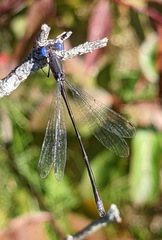
Adult males are dark purplish-black with bright blue markings, including three metallic blue stripes on the thorax separated by black.
Source: Wikipedia
How to recognize it
Males are dark purplish-black with brilliant blue markings and three metallic blue thoracic stripes separated by black.
Source: Wikipedia
Size
Wing span is about 2 ¼ inches and body length about 1¾ inches.
Source: Wikipedia
Where it lives
Seen near water year-round, especially from November to April. Main damselfly in mountain tarns, indicating tolerance of cold water.
Source: Wikipedia
What it eats
Adults eat a variety of small aquatic organisms such as oligochaetes, rotifers, copepods, ostracods, water mites, water bugs, other damselfly larvae and chironomid larvae. Larvae are also cannibalistic.
Source: Wikipedia
Life cycle
The species has a two-year life cycle. Eggs hatch in about 20 to 21 days at 20 °C; nymphs live 1 to 1½ years before metamorphosing.
Source: Wikipedia
When you see it
Adults can be seen near water any time, but are most common November to April. Emergence occurs during daylight from October to February, peaking in January.
Source: Wikipedia
Where it comes from
Endemic to New Zealand, occurring throughout the main islands, Stewart Island and the Chatham Islands.
Source: Wikipedia
More photos
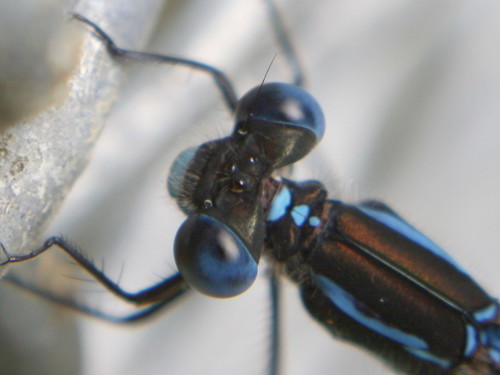
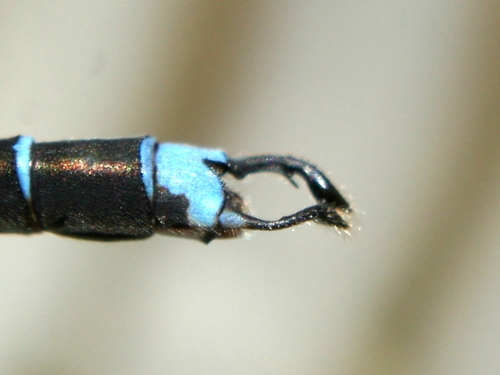
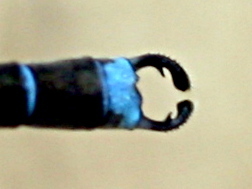
Questions people ask
What does the blue damselfly look like?
Males are dark purplish-black with bright blue markings, three metallic blue stripes on the thorax, and have a wing span of about 2 ¼ inches and a body length of 1¾ inches.
Source: Wikipedia
Where can I find blue damselflies in New Zealand?
They are found near water throughout New Zealand, especially in mountain tarns and from November to April.
Source: Wikipedia
What do blue damselfly larvae eat?
Larvae eat small aquatic creatures and are also cannibalistic.
Source: Wikipedia
How long does it take for blue damselfly eggs to hatch?
At 20 °C, eggs hatch in about 20 to 21 days.
Source: Wikipedia
Same family (Lestidae)

Sources
- Wikipedia: https://en.wikipedia.org/wiki/Austrolestes_colensonis
Look it up elsewhere: GBIF · iNaturalist · BugGuide · Wikipedia
Text written 2026-10-23 from the sources above and checked sentence by sentence against them. Data fetched 2026-10-22.