 Bug FAQ
Blackjacket
Vespula consobrina · Order: Hymenoptera · Family: Vespidae
Also called: Cousin Yellowjacket

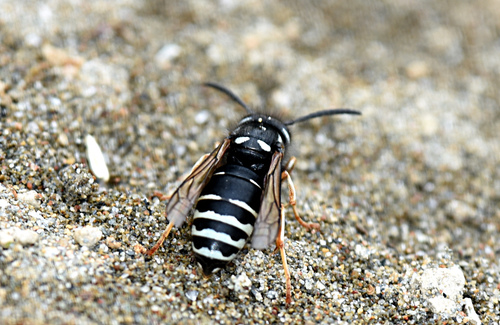
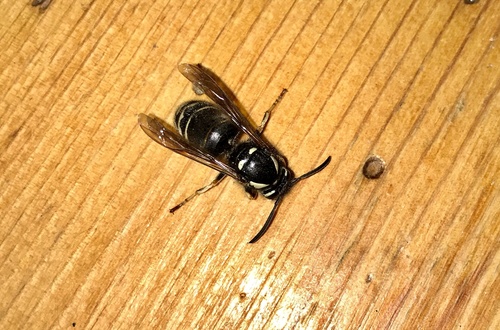
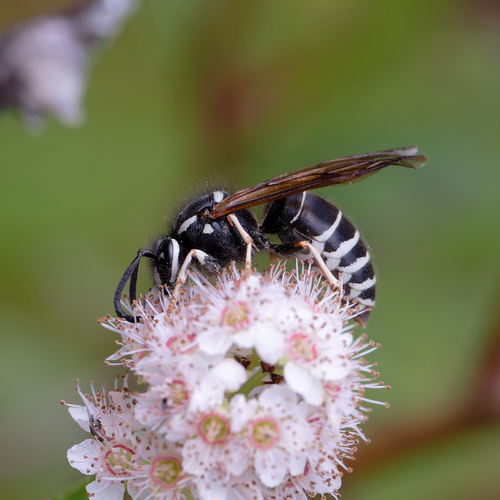
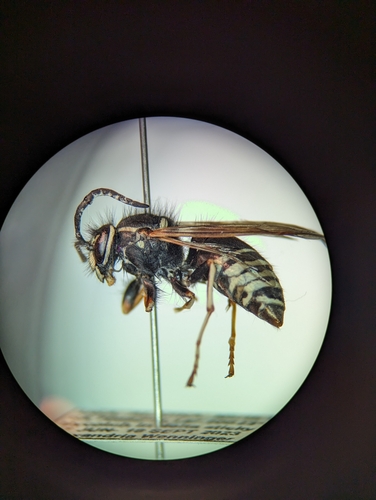
Blackjacket wasps have a black and white striped abdomen and contrasting black-white coloration for easy identification. Queens are about 17 mm long, workers 10 to 12 mm, and males 15 to 16 mm.
Source: Wikipedia
How to recognize it
They are recognized by a distinct black and white striped pattern on the abdomen and overall black-white coloration.
Source: Wikipedia
Size
Queens reach about 17 mm, workers are 10 to 12 mm, and males are 15 to 16 mm long.
Source: Wikipedia
Where it lives
They mostly live in forested areas and seldom come into contact with people.
Source: Wikipedia
Where it comes from
They occur throughout Canada except Nunavut and in the northern United States.
Source: Wikipedia
Lookalikes
Do not confuse them with Dolichovespula maculata, another species also called “blackjacket”.
Source: Wikipedia
Where it is found in the US
Recorded in 33 of 51 states and DC. Most records: Minnesota, Vermont, Maine, New York, Washington, Pennsylvania, Michigan, New Hampshire.
Darker = more records. Counts are museum and citizen-science records, not population size.
Source: GBIF
Status: native in North America; native in Canada; native in United States. Source: iNaturalist
Months it is reported in the US
Source: GBIF
More photos
Same family (Vespidae)


Sources
- Wikipedia: https://en.wikipedia.org/wiki/Vespula_consobrina
Look it up elsewhere: GBIF · iNaturalist · BugGuide · ITIS · Wikipedia
Text written 2026-10-23 from the sources above and checked sentence by sentence against them. Data fetched 2026-10-22.