 Bug FAQ
Black-striped Longhorn Beetle
Stenurella melanura · Order: Coleoptera · Family: Cerambycidae
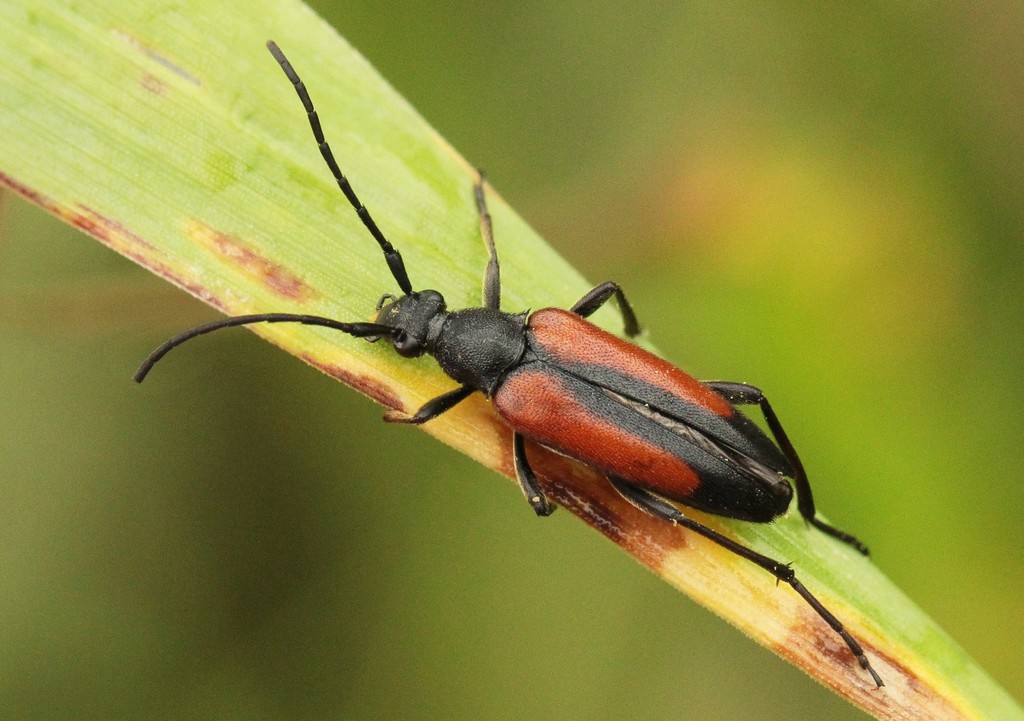
The black-striped longhorn beetle is a small beetle about 6 to 10 mm long that lives on sunny forest edges and mountain pastures in Europe and nearby regions. Adults appear from May to September, visit flowers for pollen and nectar, and the larvae develop in rotting wood of deciduous and coniferous trees.
Source: Wikipedia
How to recognize it
Males have yellow-brown wing covers with a dark tip, while females have reddish wing covers; the head, pronotum and abdomen are black.
Source: Wikipedia
Size
Adults measure between 6 and 10 mm in length.
Source: Wikipedia
What it eats
Larvae grow in decaying wood of both deciduous and coniferous trees, especially sweet chestnut; adults feed on pollen and nectar of flowers, especially Apiaceae.
Source: Wikipedia
Life cycle
Adults are present from May through September and the species completes its life cycle in two years.
Source: Wikipedia
When you see it
You can see adults between May and September.
Source: Wikipedia
Where it comes from
Their range includes most of Europe, the eastern Palearctic, the Oriental realm and the Near East.
Source: Wikipedia
Same family (Cerambycidae)
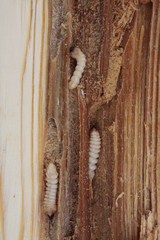 House LonghornHylotrupes bajulusCan damage your home
 Asian Longhorned BeetleAnoplophora glabripennisDamages trees, gardens or crops
 Red Milkweed BeetleTetraopes tetrophthalmus
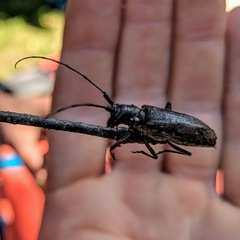 White-spotted SawyerMonochamus scutellatusCan damage your home
 Red Pine Longhorn BeetleStictoleptura rubra
 Spotted Longhorn BeetleRutpela maculataDamages trees, gardens or crops
Sources
- Wikipedia: https://en.wikipedia.org/wiki/Stenurella_melanura
Look it up elsewhere: GBIF · iNaturalist · BugGuide · Wikipedia
Text written 2026-10-22 from the sources above and checked sentence by sentence against them. Data fetched 2026-10-22.