 Bug FAQ
Black-shouldered Shieldbug
Carpocoris purpureipennis · Order: Hemiptera · Family: Pentatomidae
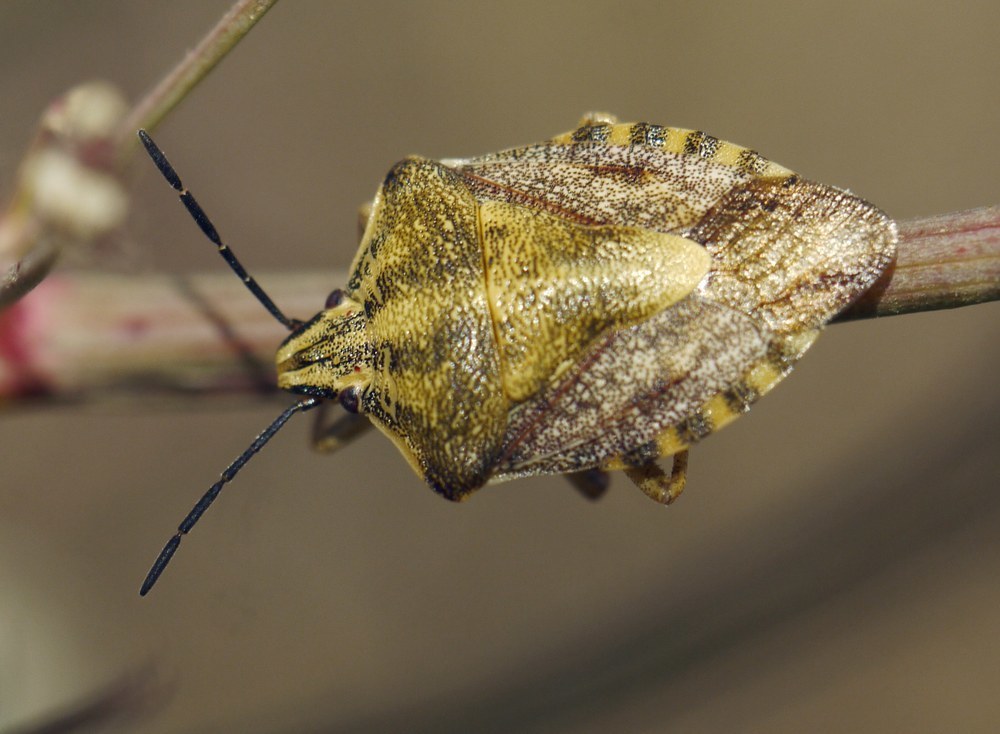
The black-shouldered shieldbug is 11 to 13 mm long and shows a purple to yellowish body with black-angled pronotum and black stripes or spots, while its antennae are black and legs orange. It lives in meadows, roadsides, forest edges and gardens across most of Europe and central Asia, feeding on plant juices and nectar and laying eggs on various herbaceous plants in late May-early June. The species is an agricultural pest that can harm many cultivated plants and may be confused with other Carpocoris species.
Source: Wikipedia
Size
Adults measure about 11 to 13 mm (0.43 to 0.51 in) in length.
Source: Wikipedia
Is it a pest in the house?
They are regarded as agricultural pests.
Source: Wikipedia
Where it lives
They are found in meadows, along roadsides, at forest edges and in gardens.
Source: Wikipedia
What it eats
Both adults and nymphs eat a variety of plant juices; adults especially like the juices of creeping thistle and the nectar of oxeye daisy.
Source: Wikipedia
Life cycle
In late May to early June they lay eggs on herbaceous plants belonging to the grass, legume, crucifer and composite families.
Source: Wikipedia
When you see it
Egg-laying occurs in late May to early June.
Source: Wikipedia
Where it comes from
Their range includes most of Europe and central Asia.
Source: Wikipedia
Lookalikes
They look similar to Carpocoris pudicus, C. fuscispinus and C. mediterraneus and can be mistaken for them.
Source: Wikipedia
Questions people ask
Where are these bugs found?
They occur throughout most of Europe and in central Asia.
Source: Wikipedia
Same family (Pentatomidae)
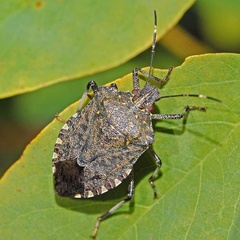 Brown Marmorated Stink BugHalyomorpha halysDamages trees, gardens or crops
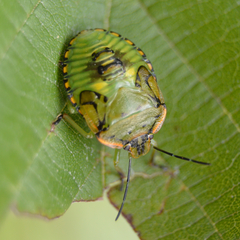 Green Stink BugChinavia hilarisDamages trees, gardens or crops
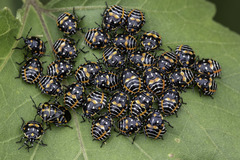 Harlequin BugMurgantia histrionicaDamages trees, gardens or crops
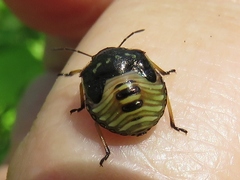 Brown Stink BugEuschistus servusDamages trees, gardens or crops
 Green Shield BugPalomena prasina
 European Striped Shield BugGraphosoma italicum
Sources
- Wikipedia: https://en.wikipedia.org/wiki/Carpocoris_purpureipennis
Look it up elsewhere: GBIF · iNaturalist · BugGuide · Wikipedia
Text written 2026-10-22 from the sources above and checked sentence by sentence against them. Data fetched 2026-10-22.