 Bug FAQ
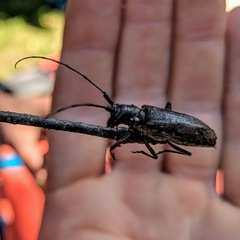
Black Longicorn Beetle
Spondylis buprestoides · Order: Coleoptera · Family: Cerambycidae
Source: Wikipedia
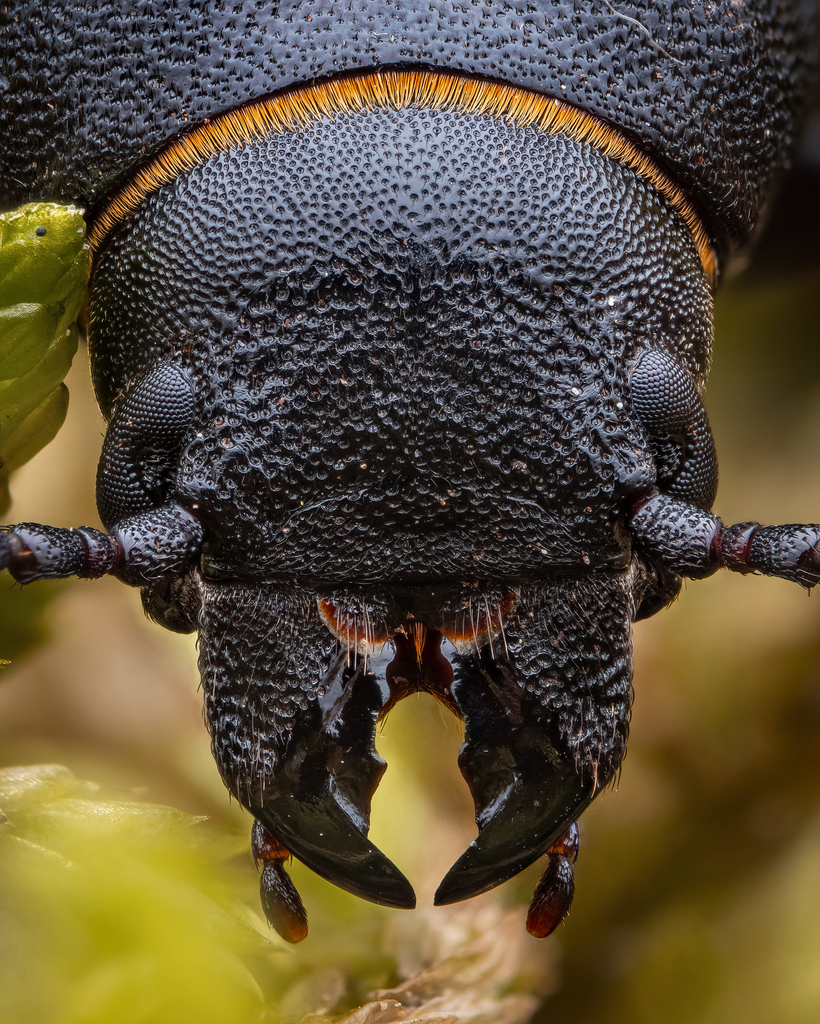
These beetles are shiny black, cylindrical and have large mandibles. They are found across most of Europe and have also been recorded in South Korea and Japan. They feed on bark and wood, so they can harm trees and wooden material.
Source: Wikipedia
How to recognize it
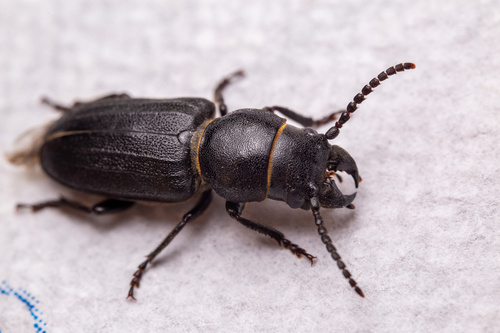
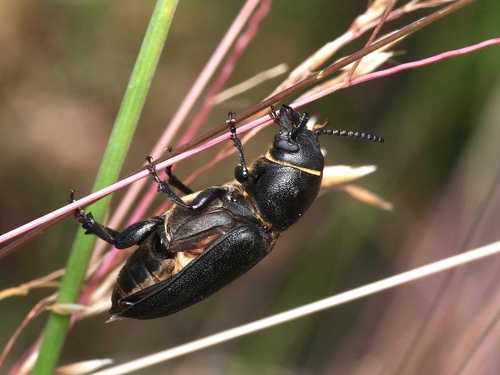
The beetle is shiny black, cylindrical in shape, and has large mandibles.
Source: Wikipedia
What it eats
It is a bark and wood-boring beetle.
Source: Wikipedia
More photos
Questions people ask
Where is this beetle found?
It is present throughout most of Europe and has also been recorded in South Korea and Japan.
Source: Wikipedia
Same family (Cerambycidae)
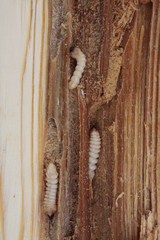 House LonghornHylotrupes bajulusCan damage your home
 Asian Longhorned BeetleAnoplophora glabripennisDamages trees, gardens or crops
 Red Milkweed BeetleTetraopes tetrophthalmus
 White-spotted SawyerMonochamus scutellatusCan damage your home
 Red Pine Longhorn BeetleStictoleptura rubra
 Spotted Longhorn BeetleRutpela maculataDamages trees, gardens or crops
Sources
- Wikipedia: https://en.wikipedia.org/wiki/Spondylis_buprestoides
Look it up elsewhere: GBIF · iNaturalist · BugGuide · ITIS · Wikipedia
Text written 2026-10-22 from the sources above and checked sentence by sentence against them. Data fetched 2026-10-22.