 Bug FAQ
Bird Nest Moth
Monopis crocicapitella · Order: Lepidoptera · Family: Tineidae
Also called: Moth, pale-backed clothes moth
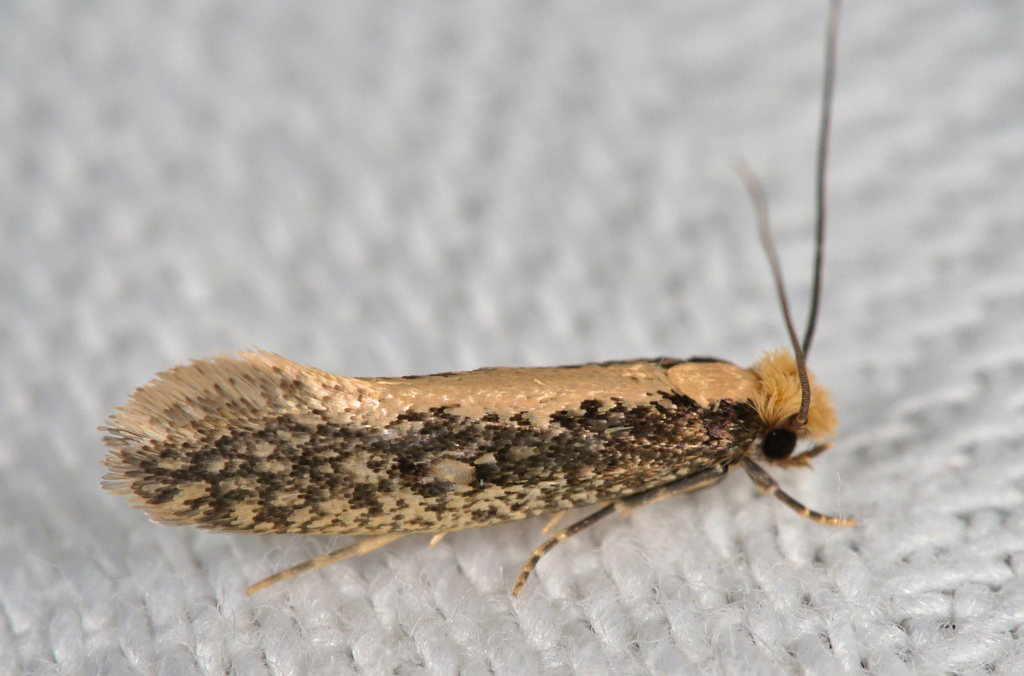
The bird-nest moth has a wingspan of about 10 to 16 mm. In western Europe adults are seen flying from June through October.
Source: Wikipedia
How to recognize it
It looks almost identical to Monopis obviella, making visual separation difficult.
Source: Wikipedia
Size
Adults measure 10 to 16 mm across the wings.
Source: Wikipedia
How to get rid of it
Keeping indoor humidity low (around 50 %) may prevent larval survival, while high humidity (around 90 %) supports them.
Source: Wikipedia
Where it lives
It has a nearly cosmopolitan distribution.
Source: Wikipedia
What it eats
Larvae cannot survive at 51 % relative humidity but thrive at about 93 %.
Source: Wikipedia
Life cycle
In western Europe the moth is on the wing from June to October.
Source: Wikipedia
When you see it
Adults are active during the summer months, roughly June through October, in western Europe.
Source: Wikipedia
Where it comes from
The species was originally described from the eastern United States.
Source: Wikipedia
Lookalikes
It can be confused with Monopis obviella because their markings are nearly indistinguishable.
Source: Wikipedia
Where it is found in the US
Recorded in 30 of 51 states and DC. Most records: California, Massachusetts, Washington, New Jersey, Texas, Oregon, Virginia, Illinois.
Darker = more records. Counts are museum and citizen-science records, not population size.
Source: GBIF
Months it is reported in the US
Source: GBIF
More photos


Questions people ask
When can I see these moths?
In western Europe they are on the wing from June through October.
Source: Wikipedia
What humidity do the larvae need?
They die at about 51 % relative humidity but grow well at 93 %.
Source: Wikipedia
What other moth looks like this one?
It is easily mistaken for Monopis obviella because their markings are almost identical.
Source: Wikipedia
Same family (Tineidae)


Sources
- Wikipedia: https://en.wikipedia.org/wiki/Monopis_crocicapitella
Look it up elsewhere: GBIF · iNaturalist · BugGuide · Wikipedia
Text written 2026-10-25 from the sources above and checked sentence by sentence against them. Data fetched 2026-10-25.