 Bug FAQ
Beehive Honey Moth
Vitula serratilineella · Order: Lepidoptera · Family: Pyralidae
Also called: Honey-comb Knot-horn
Source: Wikipedia
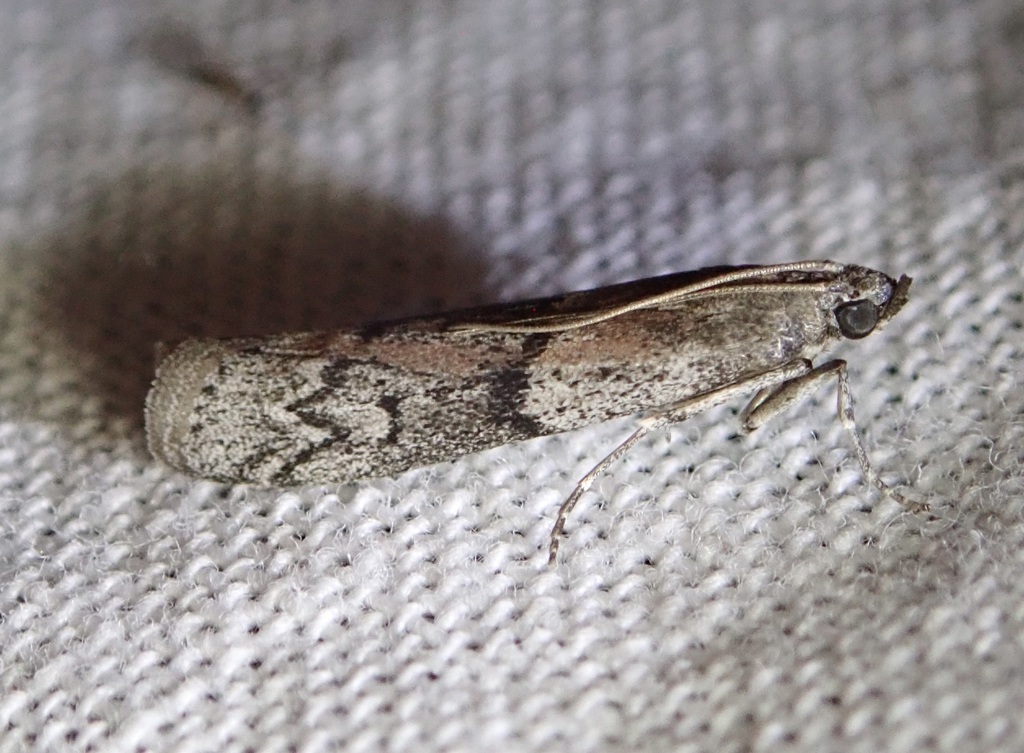
The beehive honey moth has a wingspan of about 20 to 25 mm and can be told apart by its lighter forewings and almost white hindwings. It occurs in the Pacific Northwest and California of North America and has also been recorded in several European countries.
Source: Wikipedia
How to recognize it
The forewings are lighter than those of similar moths, and the hindwings are nearly white rather than brownish.
Source: Wikipedia
Size
Adults have a wingspan of 20 to 25 mm.
Source: Wikipedia
Is it a pest in the house?
It damages pantry goods by feeding on stored dried fruit. It may enter beehives and eat wax, potentially harming the colony.
Source: Wikipedia
Where it lives
It infests stored dried fruit products such as raisins, prunes and dried apples. It can also enter beehives and feed on wax inside bumble-bee nests.
Source: Wikipedia
What it eats
The moth feeds on stored dried fruit such as raisins, prunes and dried apples. It also consumes wax when it invades beehives.
Source: Wikipedia
Where it comes from
It was first described from North America in 1887. Records show it in British Columbia, Oregon, Washington and throughout California. It is also found in Europe, including Germany, Denmark, Fennoscandia and occasionally Great Britain.
Source: Wikipedia
Lookalikes
It has been treated as a subspecies of Vitula edmandsii, so it can be confused with that species. The common name “dried-fruit moth” is also used for Cadra calidella, which can cause further confusion.
Source: Wikipedia
Where it is found in the US
Recorded in 9 of 51 states and DC. Most records: Alaska, Washington, California, Oregon, Nebraska, New Mexico, Colorado, Arizona.
Darker = more records. Counts are museum and citizen-science records, not population size.
Source: GBIF
Status: native in North America; native in Canada; native in United States. Source: iNaturalist
Months it is reported in the US
Source: GBIF
More photos
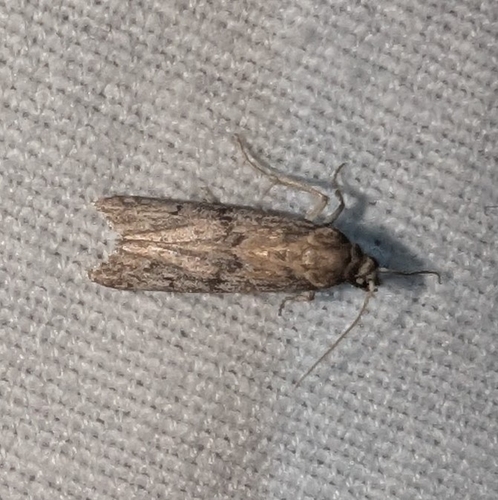
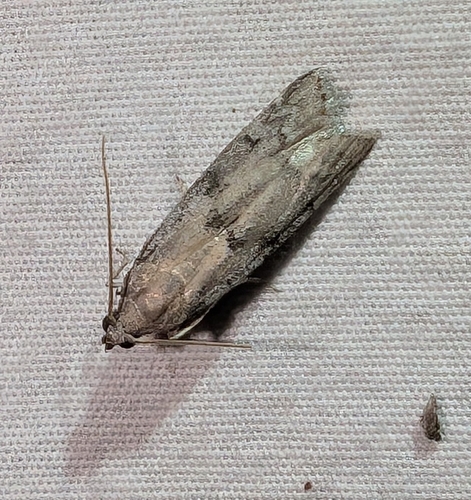
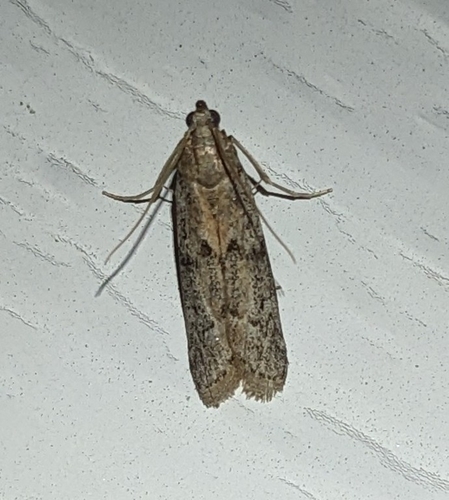
Questions people ask
How can I keep the beehive honey moth out of my pantry?
Store dried fruit in airtight containers and keep the pantry clean to remove food sources the moth needs.
Source: Wikipedia
Can these moths damage my beehives?
Yes, they can enter hives and feed on the wax inside.
Source: Wikipedia
What other moth might I mistake it for?
It can be confused with Vitula edmandsii or with Cadra calidella, which share the name “dried-fruit moth”.
Source: Wikipedia
Same family (Pyralidae)
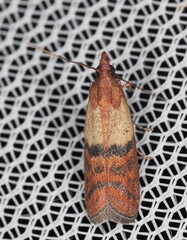 Indian-Meal MothPlodia interpunctellaCan damage your home
 Greater Wax MothGalleria mellonella
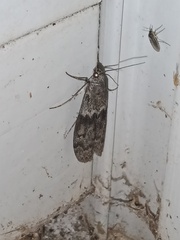 Mediterranean Flour MothEphestia kuehniellaCan damage your home
 Meal mothPyralis farinalisDamages trees, gardens or crops
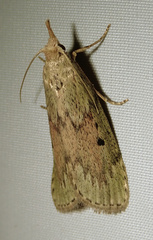 Bee MothAphomia sociellaNuisance, not dangerous
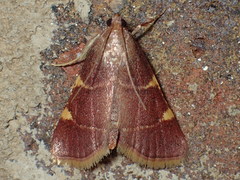 Yellow-fringed Dolichomia MothHypsopygia olinalis
Sources
- Wikipedia: https://en.wikipedia.org/wiki/Vitula_serratilineella
Look it up elsewhere: GBIF · iNaturalist · BugGuide · Wikipedia
Text written 2026-10-27 from the sources above and checked sentence by sentence against them. Data fetched 2026-10-27.