 Bug FAQ
Banded Hickory Borer
Knulliana cincta · Order: Coleoptera · Family: Cerambycidae
Source: Wikipedia
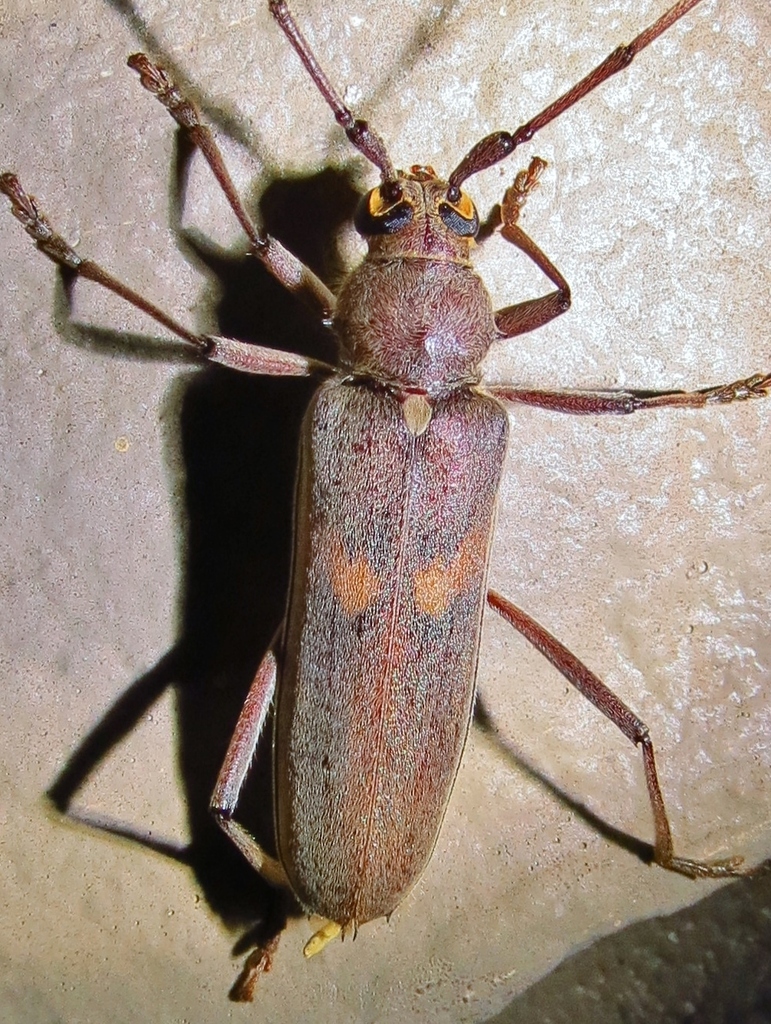
They live on hickory and oak trees, laying eggs in bark crevices or directly in the wood, and the larvae feed under bark before boring deeper.
Source: Wikipedia
How to recognize it
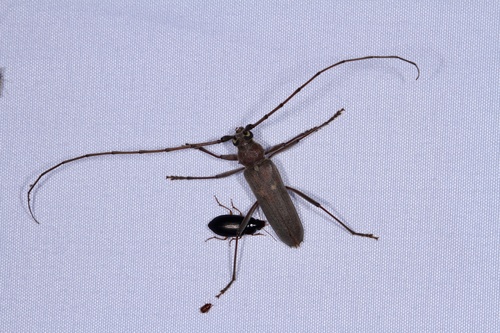
Strong spines are present on the femora, pronotum, and the tips of the elytra.
Source: Wikipedia
Size
Adults range from 15 mm to 35 mm in length (about 0.6 to 1.4 in).
Source: Wikipedia
What it eats
Larvae feed beneath bark in their first season and later bore deeper into the wood.
Source: Wikipedia
Life cycle
During the first season, larvae feed under bark before boring deeper into the wood.
Source: Wikipedia
Where it is found in the US
Recorded in 32 of 51 states and DC. Most records: Texas, Oklahoma, Florida, Alabama, Louisiana, North Carolina, Georgia, Virginia.
Darker = more records. Counts are museum and citizen-science records, not population size.
Source: GBIF
Status: native in North America; native in Canada. Source: iNaturalist
Months it is reported in the US
Source: GBIF
More photos
Questions people ask
How large does a banded hickory borer get?
Adults are between 15 mm and 35 mm long (about 0.6 to 1.4 in).
Source: Wikipedia
Do they damage my trees?
Yes, they can cause significant damage to the trees they infest.
Source: Wikipedia
Same family (Cerambycidae)
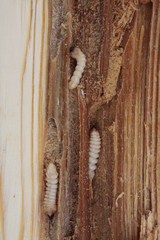 House LonghornHylotrupes bajulusCan damage your home
 Asian Longhorned BeetleAnoplophora glabripennisDamages trees, gardens or crops
 Red Milkweed BeetleTetraopes tetrophthalmus
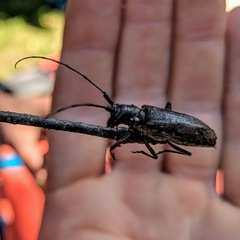 White-spotted SawyerMonochamus scutellatusCan damage your home
 Red Pine Longhorn BeetleStictoleptura rubra
 Spotted Longhorn BeetleRutpela maculataDamages trees, gardens or crops
Sources
- Wikipedia: https://en.wikipedia.org/wiki/Knulliana
Look it up elsewhere: GBIF · iNaturalist · BugGuide · ITIS · Wikipedia
Text written 2026-10-22 from the sources above and checked sentence by sentence against them. Data fetched 2026-10-22.