 Bug FAQ
Bagrada Bug
Bagrada hilaris · Order: Hemiptera · Family: Pentatomidae
Also called: Painted Bug
Source: Wikipedia
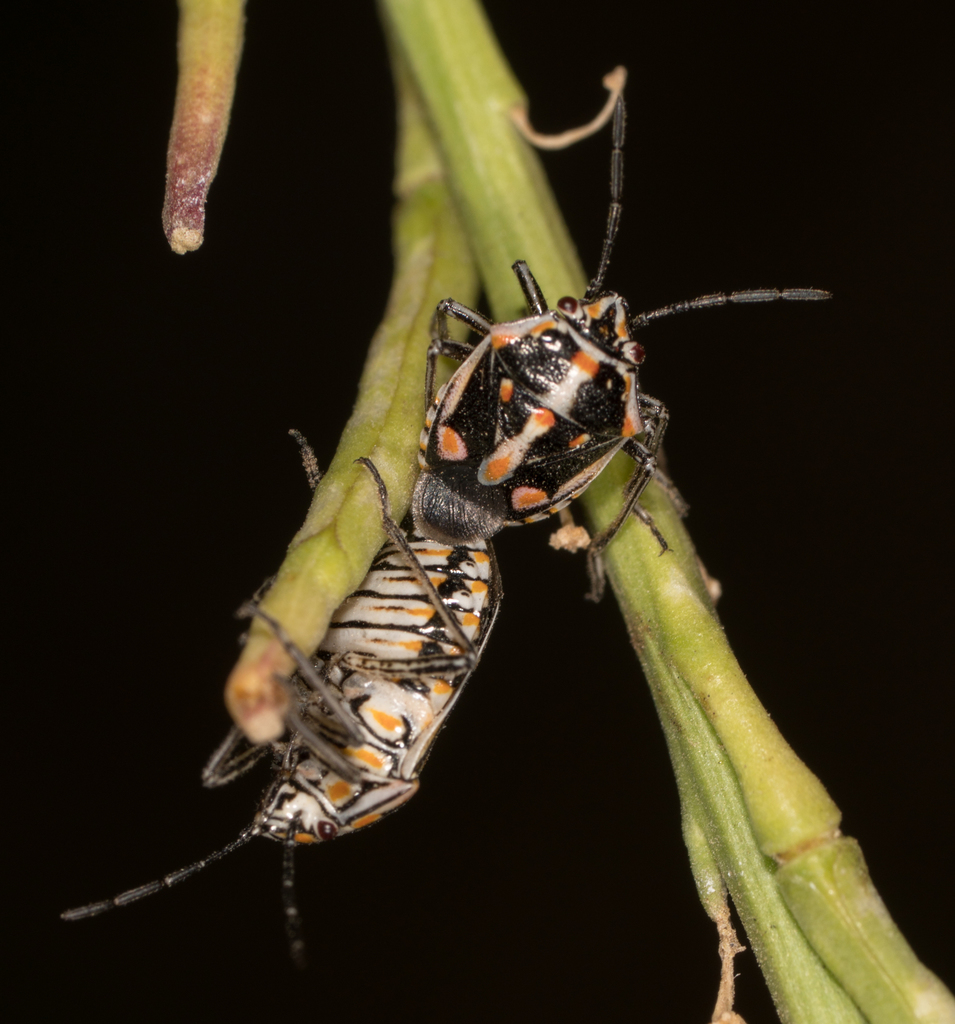
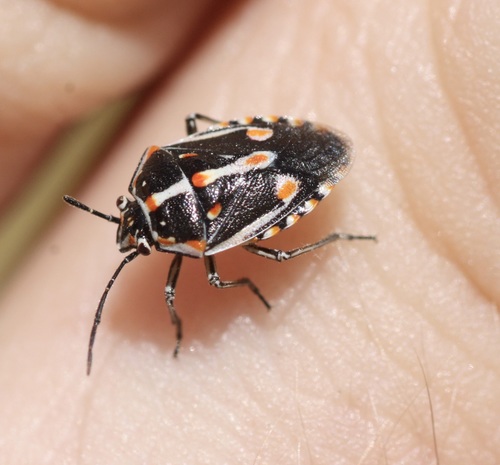
Adult Bagrada bugs are small, shield-shaped insects about 5 to 7 mm long with black bodies marked in white and orange. Both adults and nymphs feed on the sap of many garden plants, especially cabbage family crops, causing wilting, yellowing and stunted growth. They have spread from their native southeastern Africa to California, Arizona and Chile, where they can become abundant in fields and gardens.
Source: Wikipedia
How to recognize it
The bug is 5 to 7 mm long, shield-shaped, black with white and orange markings.
Source: Wikipedia
Size
Adults measure about 5 to 7 millimetres in length.
Source: Wikipedia
Is it a pest in the house?
In Chile the bug not only damages crops but also invades homes in large numbers. Mass gatherings on plants cause extensive damage to the crops.
Source: Wikipedia
How to get rid of it
A parasitoid wasp, Idris elba, has been found parasitizing its eggs and may help control infestations.
Source: Wikipedia
Where it lives
It has been introduced to California and Arizona, first reported there in 2008. It appeared in Chile in 2016, quickly establishing and moving into homes.
Source: Wikipedia
What it eats
Adults and nymphs suck sap from leaves, harming plants like cabbage, kale, broccoli and related crucifers. They also feed on crops such as papaya, sorghum, maize, potato, cotton and some legumes.
Source: Wikipedia
Life cycle
First-instar nymphs emerge in about eight days, starting bright orange-red and darkening to black by the final stage.
Source: Wikipedia
When you see it
The bug was first seen in Los Angeles in June 2008, marking its entry into the Western Hemisphere. By 2020 it had spread as far north as Yolo County in California.
Source: Wikipedia
Where it comes from
The species originates from southeastern Africa.
Source: Wikipedia
Lookalikes
It can be confused with the harlequin bug.
Source: Wikipedia
Where it is found in the US
Recorded in 11 of 51 states and DC. Most records: California, Arizona, Texas, New Mexico, Hawaii, Nevada, Kansas, Minnesota.
Darker = more records. Counts are museum and citizen-science records, not population size.
Source: GBIF
Status: introduced in United States. Source: iNaturalist
Months it is reported in the US
Source: GBIF
More photos
Questions people ask
What does a Bagrada bug look like?
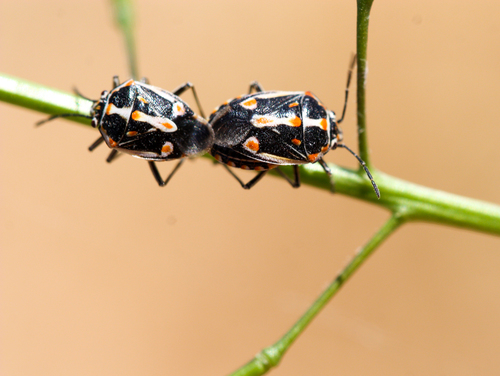
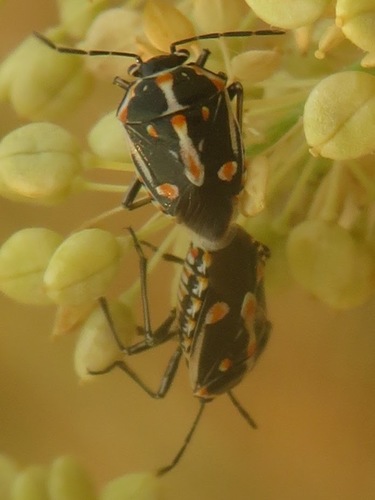
It is a tiny, shield-shaped insect about 5 to 7 mm long, black with white and orange markings.
Source: Wikipedia
Which plants does it damage?
It feeds on cabbage family vegetables and also on papaya, sorghum, maize, potato, cotton and some legumes.
Source: Wikipedia
How does it reproduce?
Females lay up to a hundred eggs on leaves or in the soil, and nymphs hatch in about eight days.
Source: Wikipedia
Where has it spread in the United States?
It first appeared in Los Angeles in 2008 and by 2020 had reached as far north as Yolo County, California.
Source: Wikipedia
Same family (Pentatomidae)
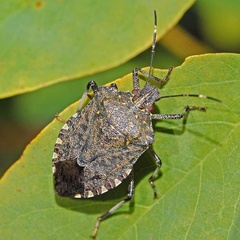 Brown Marmorated Stink BugHalyomorpha halysDamages trees, gardens or crops
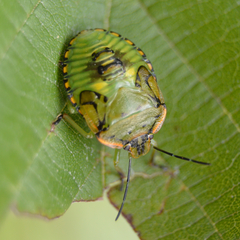 Green Stink BugChinavia hilarisDamages trees, gardens or crops
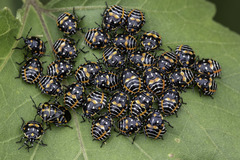 Harlequin BugMurgantia histrionicaDamages trees, gardens or crops
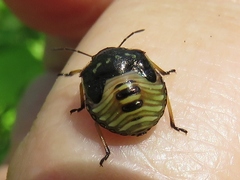 Brown Stink BugEuschistus servusDamages trees, gardens or crops
 Green Shield BugPalomena prasina
 European Striped Shield BugGraphosoma italicum
Sources
- Wikipedia: https://en.wikipedia.org/wiki/Bagrada_hilaris
Look it up elsewhere: GBIF · iNaturalist · BugGuide · Wikipedia
Text written 2026-10-22 from the sources above and checked sentence by sentence against them. Data fetched 2026-10-22.