 Bug FAQ
Australian Golden Orbweaver
Trichonephila edulis · Order: Araneae · Family: Araneidae
Also called: Australian Golden Orb-weaver, Edible Golden Silk Spider, Golden Orbweb Spider
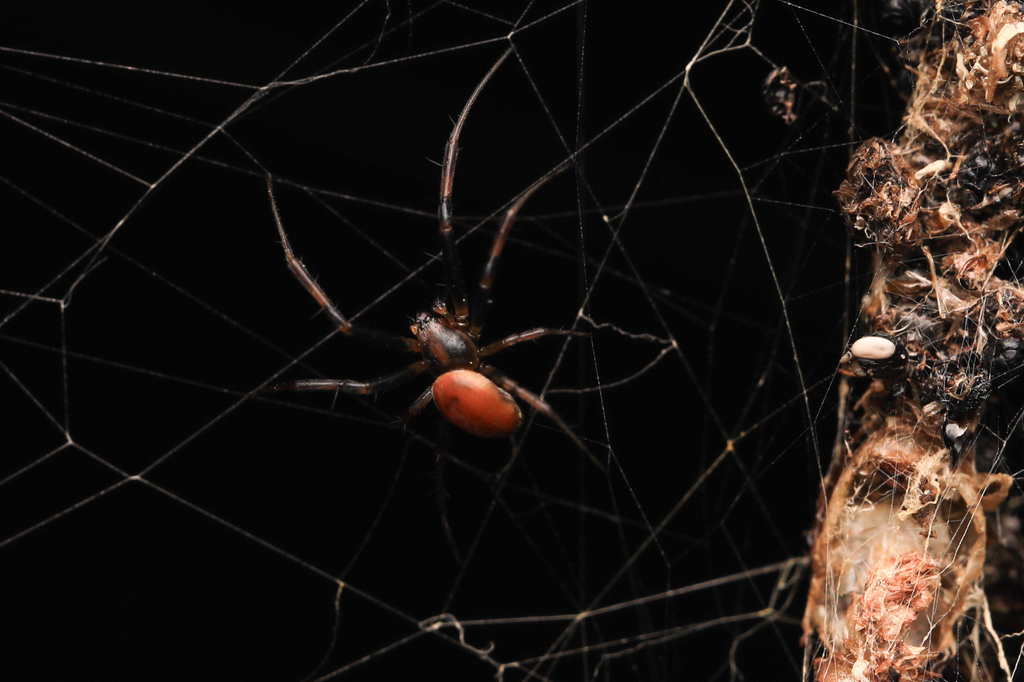
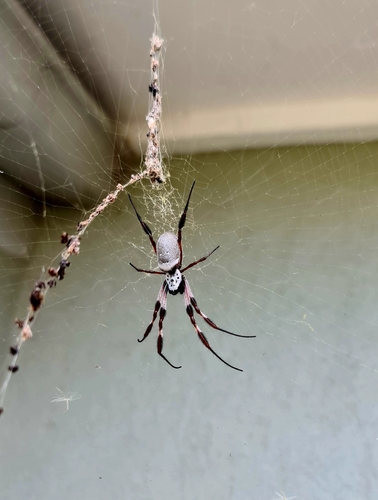
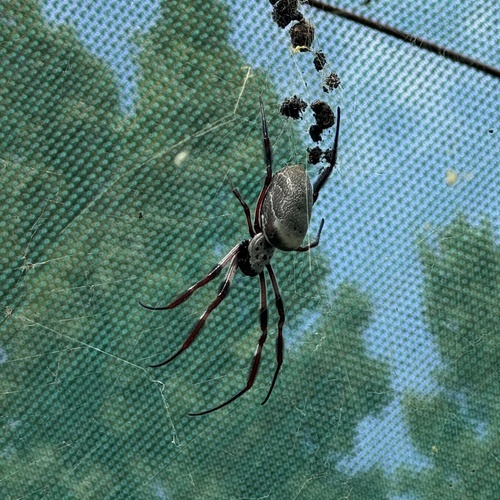
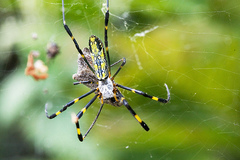
Females can grow up to 40 mm long while males stay around 7 mm. The spider has a black cephalothorax with white markings, a yellow underside, and a grey-brown abdomen. It breeds from February to May and lays about 380 eggs. Related tiger spiders (Trichonephila plumipes) are also common in Australia.
Source: Wikipedia
What it eats
The species is edible and is considered a delicacy in New Guinea, where it is plucked from its web and lightly roasted.
Source: Wikipedia
Life cycle
Breeding occurs from February to May, producing an average of about 380 eggs.
Source: Wikipedia
When you see it
The breeding season runs from February through May.
Source: Wikipedia
Lookalikes
It is closely related to the tiger spider, Trichonephila plumipes, which also occurs in Australia.
Source: Wikipedia
More photos
Same family (Araneidae)


Sources
- Wikipedia: https://en.wikipedia.org/wiki/Trichonephila_edulis
Look it up elsewhere: GBIF · iNaturalist · BugGuide · ITIS · Wikipedia
Text written 2026-10-22 from the sources above and checked sentence by sentence against them. Data fetched 2026-10-22.