 Bug FAQ
Ashy Gray Lady Beetle
Olla v-nigrum · Order: Coleoptera · Family: Coccinellidae
Also called: Ashy Gray Ladybug, Ashy-grey Ladybug
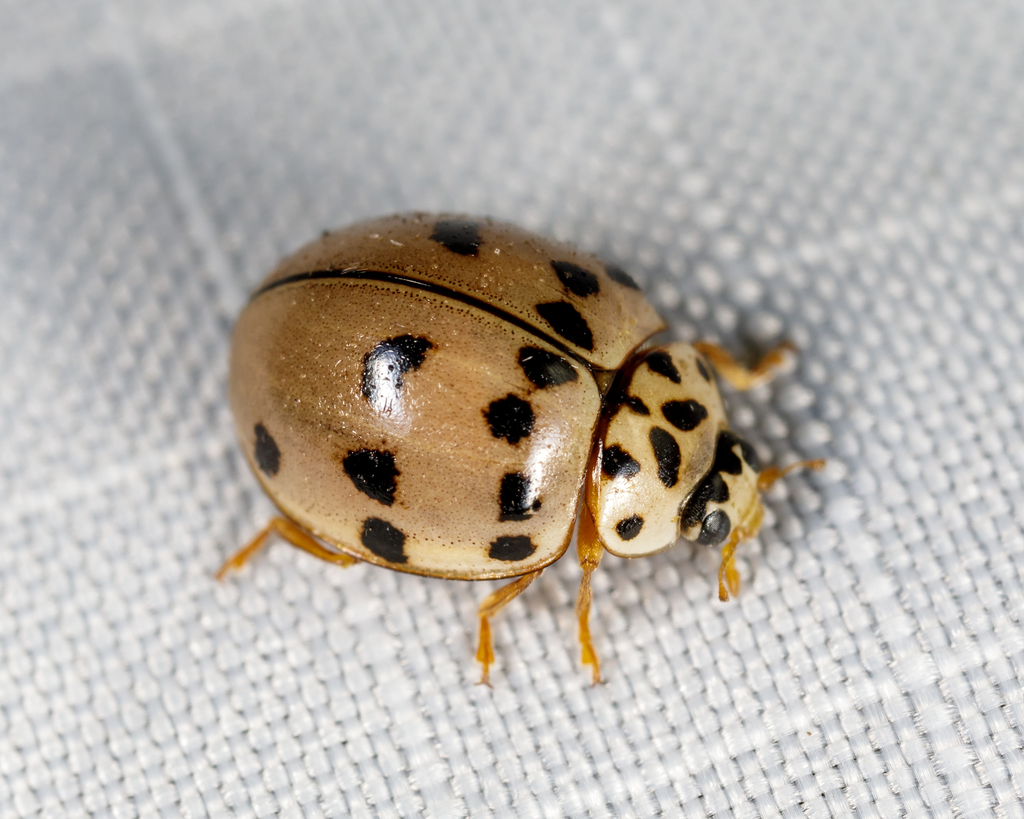
It lives in trees and on the ground, especially when aphids are abundant, and is found across the United States, Central America, and as far south as Argentina.
Source: Wikipedia
How to recognize it
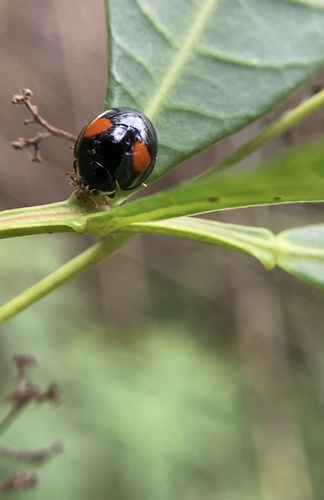
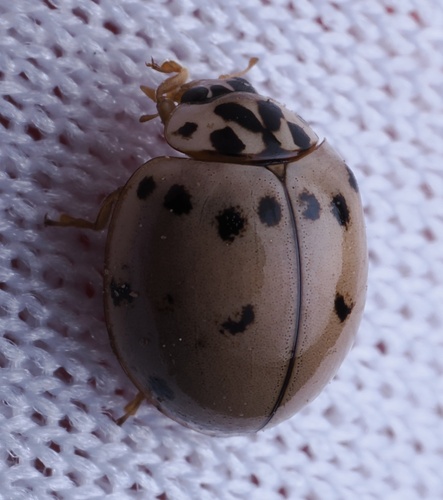
Its color is usually gray or pale tan with tiny black spots on the elytra and thorax. Some individuals look similar to the lady beetle Chilocorus orbus.
Source: Wikipedia
Size
It can be mistaken for Chilocorus species, which have more flared wing covers and a different shape. It does not have the white head markings that Olla v-nigrum lacks.
Source: Wikipedia
How to get rid of it
It has been employed in biological control programs for pecan aphids.
Source: Wikipedia
Where it lives
You’ll find it both in the canopy of trees and on the ground. It appears in large numbers when aphids are plentiful, since they are a main food source.
Source: Wikipedia
What it eats
Aphids are a primary food, especially during peak aphid seasons. It has been used together with pesticides to control pecan aphids on Carya illinoensis.
Source: Wikipedia
Life cycle
Eggs hatch in about one to two days. From larva to adult takes roughly 25 days.
Source: Wikipedia
When you see it
Numbers are highest early spring and late summer at ground level. In the canopy, they peak late summer but never as many as on the ground.
Source: Wikipedia
Where it comes from
It is native to Florida but occurs throughout the continental U.S. and down to Argentina. Its range also includes Central America, North America, and Oceania.
Source: Wikipedia
Lookalikes
Some variants can look like Chilocorus orbus.
Source: Wikipedia
Where it is found in the US
Recorded in 36 of 51 states and DC. Most records: Texas, California, Arizona, Hawaii, New Mexico, Florida, Oklahoma, Kentucky.
Darker = more records. Counts are museum and citizen-science records, not population size.
Source: GBIF
Months it is reported in the US
Source: GBIF
More photos


Questions people ask
Are they a pest for homes or gardens?
They are not reported to damage structures, food, or fabrics; they mainly feed on aphids.
Source: Wikipedia
How can I tell this beetle apart from similar species?
Look for a gray or pale tan body with small black spots and note that Chilocorus species have more flared wing covers.
Source: Wikipedia
Same family (Coccinellidae)

Sources
- Wikipedia: https://en.wikipedia.org/wiki/Olla_v-nigrum
Look it up elsewhere: GBIF · iNaturalist · BugGuide · ITIS · Wikipedia
Text written 2026-10-22 from the sources above and checked sentence by sentence against them. Data fetched 2026-10-22.