 Bug FAQ
Arabesque Orbweaver
Neoscona arabesca · Order: Araneae · Family: Araneidae
Also called: Orb Weavers
Source: Wikipedia
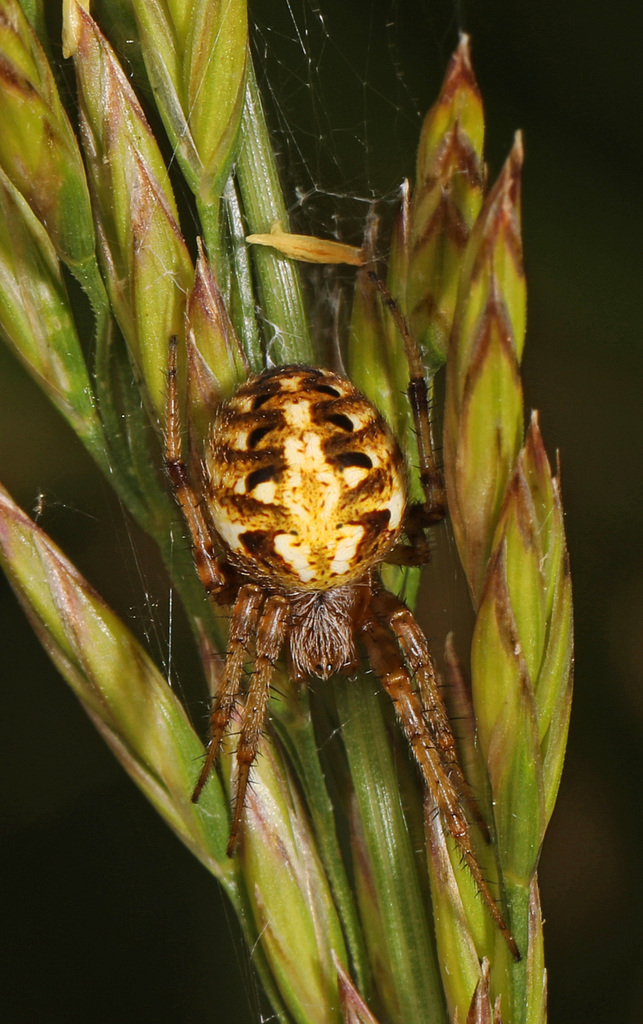
The Arabesque Orbweaver is a small spider, females 5 to 7 mm and males 5 to 6 mm in length. Its abdomen has bright, swirling patterns that give the spider its name.
Source: Wikipedia
How to recognize it
The spider’s abdomen shows bright, swirling markings that look like arabesque designs.
Source: Wikipedia
Size
Females are 5 to 7 mm long and males are 5 to 6 mm long.
Source: Wikipedia
Does it bite or sting?
Bites are rare and only happen when the spider feels threatened. The bite is not medically significant and feels like a short bee sting.
Source: Wikipedia
Where it comes from
This species is common throughout North America.
Source: Wikipedia
Where it is found in the US
Recorded in 49 of 51 states and DC. Most records: Texas, Florida, Ohio, North Carolina, Virginia, Maryland, New York, Maine.
Darker = more records. Counts are museum and citizen-science records, not population size.
Source: GBIF
Status: native in North America; native in Canada; native in United States. Source: iNaturalist
Months it is reported in the US
Source: GBIF
More photos


Questions people ask
Do Arabesque Orbweavers bite people?
They bite only rarely when threatened, and the bite is mild, similar to a bee sting.
Source: Wikipedia
Where can I find an Arabesque Orbweaver?
They live in fields, forests, gardens and on buildings across North America.
Source: Wikipedia
Same family (Araneidae)


Sources
- Wikipedia: https://en.wikipedia.org/wiki/Neoscona_arabesca
Look it up elsewhere: GBIF · iNaturalist · BugGuide · ITIS · Wikipedia
Text written 2026-10-22 from the sources above and checked sentence by sentence against them. Data fetched 2026-10-22.