 Bug FAQ
Antigua Stink Bug
Cyptocephala antiguensis · Order: Hemiptera · Family: Pentatomidae
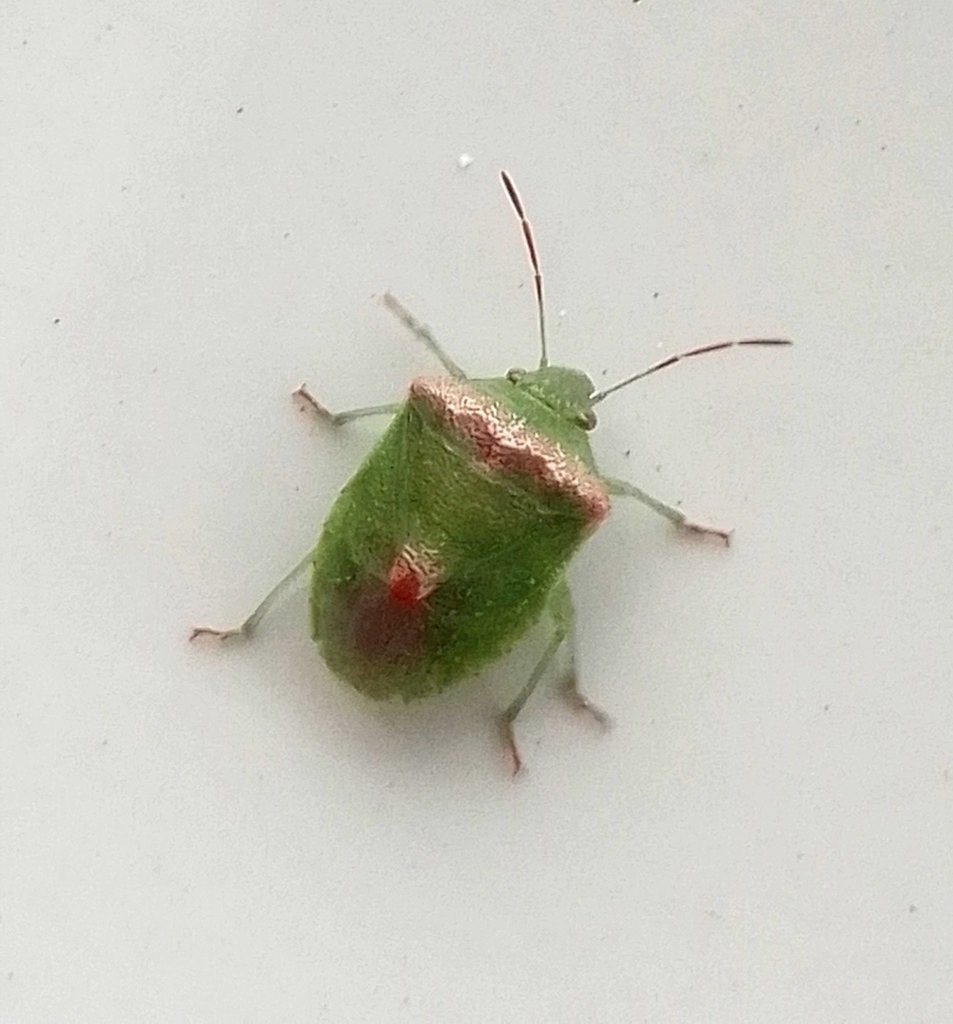
The Antigua Stink Bug measures about 5.5 to 7.8 mm long, not counting its wings. Its color ranges from light tan to rich green and often shows ivory, reddish-brown and black markings, including a multicolored band across the back and a spot on the triangular scutellum. It occurs in the southern United States (California, Arizona, Texas, Florida), throughout Mexico, Central America, the Caribbean, and reaches northern South America as far south as northern Peru.
Source: Wikipedia
How to recognize it
A distinctive multicolored band runs across the back and a spot appears at the tip of the triangular scutellum.
Source: Wikipedia
Where it comes from
Native to southern California, Arizona, Texas, and Florida in the U.S. Its range also includes Mexico, Central America, the Caribbean, and extends into northern South America down to northern Peru.
Source: Wikipedia
Where it is found in the US
Recorded in 2 of 51 states and DC. Most records: Texas, California.
Darker = more records. Counts are museum and citizen-science records, not population size.
Source: GBIF
Months it is reported in the US
Source: GBIF
More photos
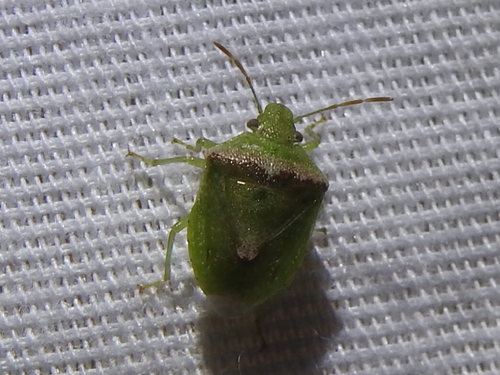
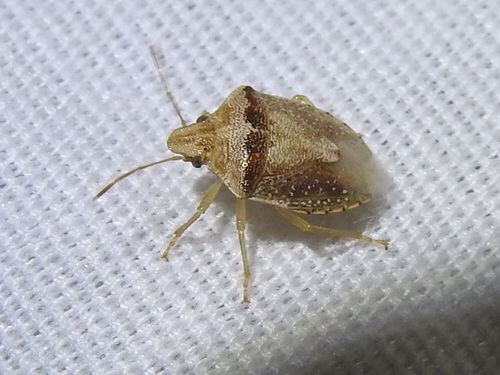

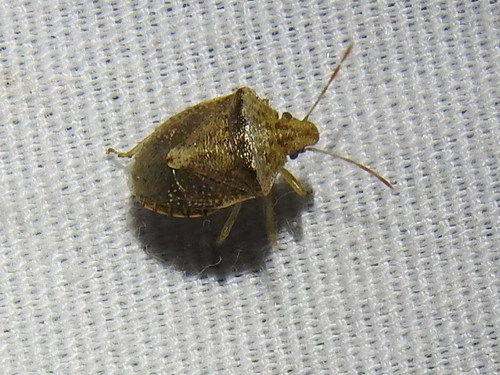
Same family (Pentatomidae)
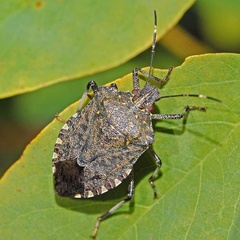 Brown Marmorated Stink BugHalyomorpha halysDamages trees, gardens or crops
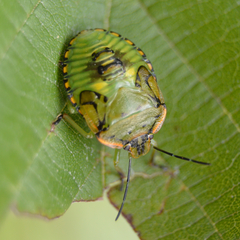 Green Stink BugChinavia hilarisDamages trees, gardens or crops
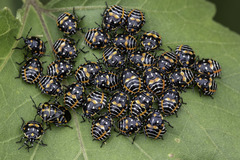 Harlequin BugMurgantia histrionicaDamages trees, gardens or crops
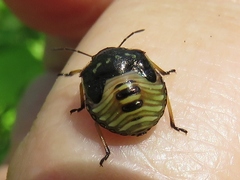 Brown Stink BugEuschistus servusDamages trees, gardens or crops
 Green Shield BugPalomena prasina
 European Striped Shield BugGraphosoma italicum
Sources
- Wikipedia: https://en.wikipedia.org/wiki/Cyptocephala_antiguensis
Look it up elsewhere: GBIF · iNaturalist · BugGuide · ITIS · Wikipedia
Text written 2026-10-29 from the sources above and checked sentence by sentence against them. Data fetched 2026-10-29.