 Bug FAQ
Angular Orbweaver Spider
Araneus angulatus · Order: Araneae · Family: Araneidae
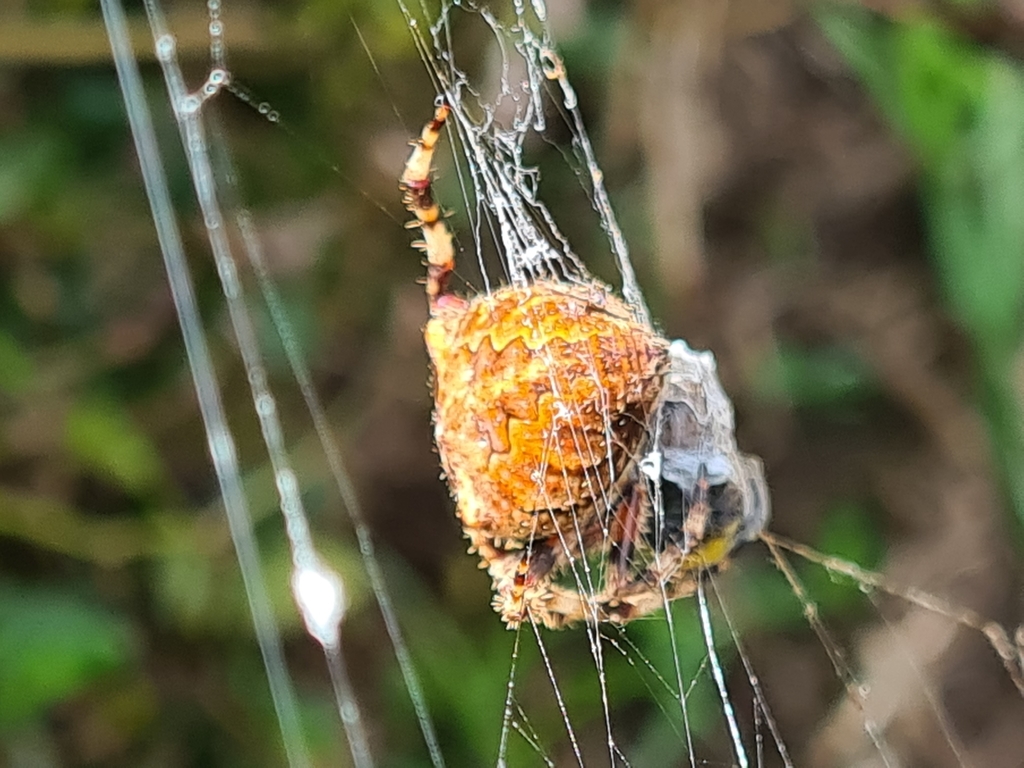
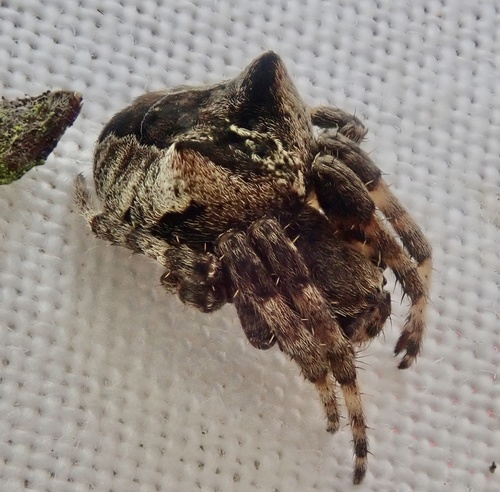
It looks like the common European garden spider but can be told apart by angular tubercles on its abdomen. It lives across much of the Palearctic region, being common in Europe but less frequent in the north.
Source: Wikipedia
How to recognize it
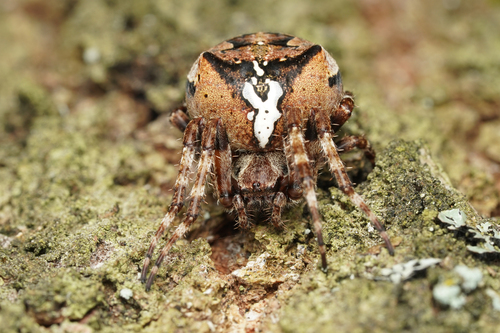
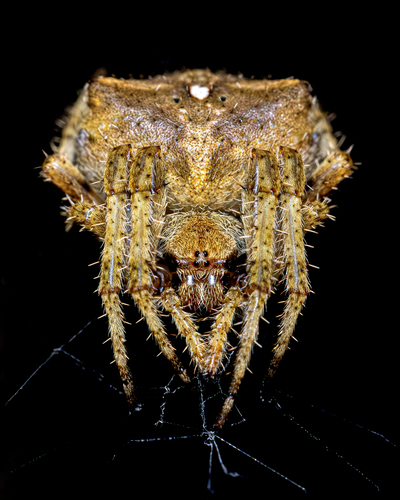
It resembles the European garden spider but has distinctive angular tubercles on its abdomen.
Source: Wikipedia
Where it lives
It constructs a large orb web hanging from bushes and trees, sometimes with support lines to the ground. It can be seen at events like country fairs and does not seem disturbed by crowds, music, or fireworks.
Source: Wikipedia
What it eats
It catches prey by sensing vibrations in its web.
Source: Wikipedia
Life cycle
It was the first species described with a scientific name still in use, dating back to 1757.
Source: Wikipedia
Where it comes from
It is found throughout the Palearctic realm, widespread in Europe but rarer in northern parts.
Source: Wikipedia
Lookalikes
It is an orb-weaving spider that can be confused with the European garden spider.
Source: Wikipedia
Where it is found in the US
Recorded in 1 of 51 states and DC. Most records: California.
Darker = more records. Counts are museum and citizen-science records, not population size.
Source: GBIF
More photos
Questions people ask
How can I tell this spider apart from the European garden spider?
Look for angular tubercles on the abdomen; the garden spider lacks these bumps.
Source: Wikipedia
Where does the angular orbweaver live?
It builds its large orb web in bushes and trees, often with lines reaching the ground.
Source: Wikipedia
Same family (Araneidae)


Sources
- Wikipedia: https://en.wikipedia.org/wiki/Araneus_angulatus
Look it up elsewhere: GBIF · iNaturalist · BugGuide · ITIS · Wikipedia
Text written 2026-10-22 from the sources above and checked sentence by sentence against them. Data fetched 2026-10-22.