 Bug FAQ
American Five-spotted Lady Beetle
Hippodamia quinquesignata · Order: Coleoptera · Family: Coccinellidae
Also called: American Five-spotted Ladybird Beetle, Five-spotted Lady Beetle, Five-spotted Ladybird Beetle
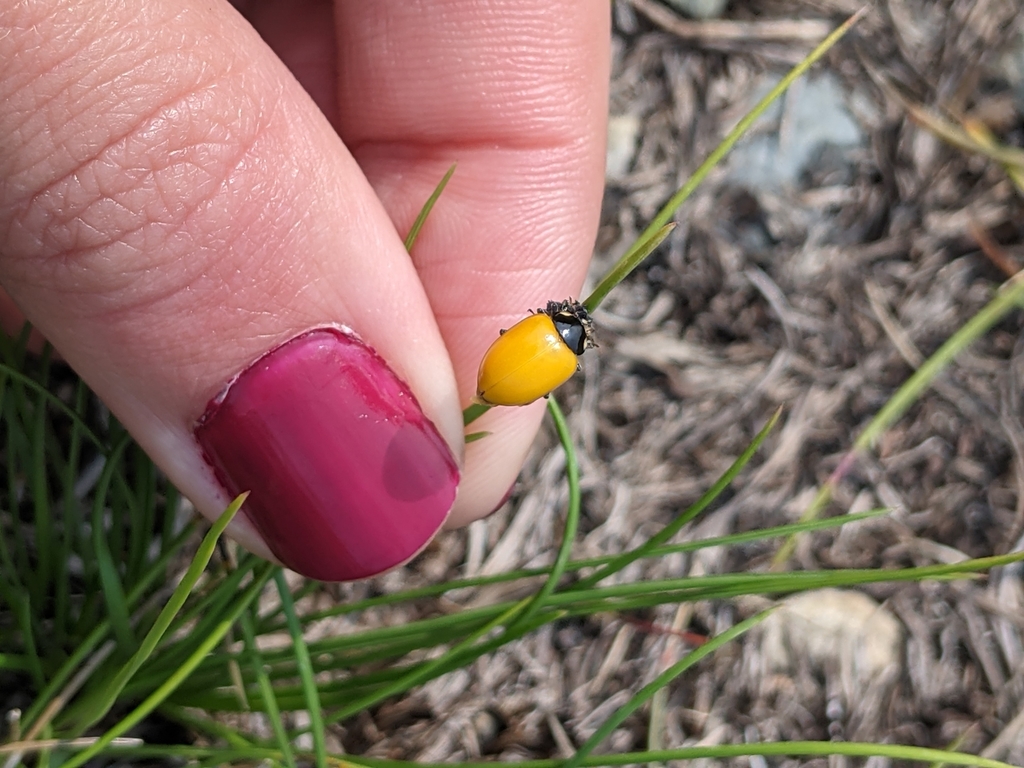
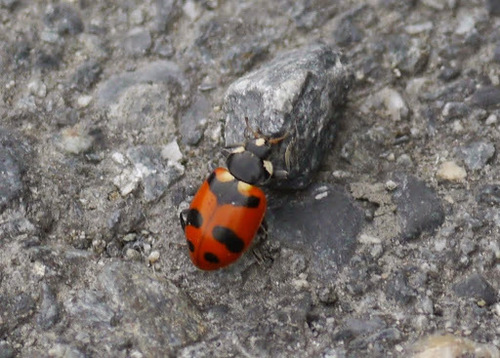
Adults are small, measuring about 4 to 7 mm in length. Their wing-cover patterns vary a lot, and some subspecies may lack spots. They are native to North America.
Source: Wikipedia
How to recognize it
The elytra show a highly variable colour pattern. Subspecies ambigua is often, but not always, without spots.
Source: Wikipedia
Size
Adults reach about 4 to 7 mm long.
Source: Wikipedia
Where it comes from
It occurs in North America.
Source: Wikipedia
Lookalikes
In subspecies quinquesignata, the pronotum can have pale spots that converge.
Source: Wikipedia
Where it is found in the US
Recorded in 19 of 51 states and DC. Most records: California, Alaska, Oregon, Idaho, Montana, Utah, Washington, New Mexico.
Darker = more records. Counts are museum and citizen-science records, not population size.
Source: GBIF
Status: native in North America; native in Canada; native in United States. Source: iNaturalist
Months it is reported in the US
Source: GBIF
More photos
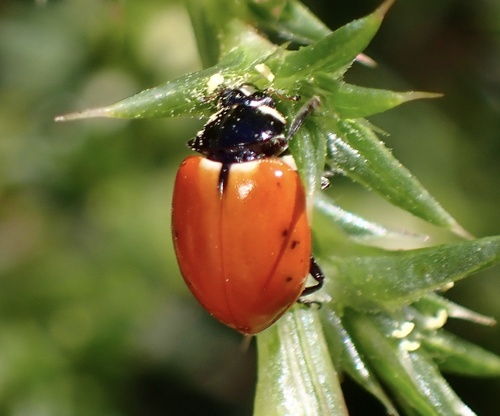
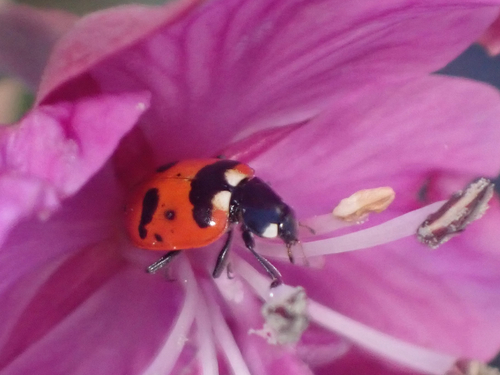
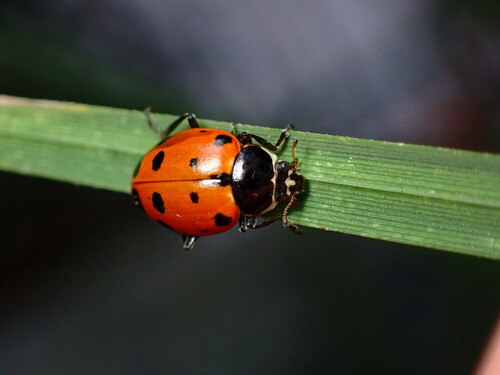
Same family (Coccinellidae)

Sources
- Wikipedia: https://en.wikipedia.org/wiki/Hippodamia_quinquesignata
Look it up elsewhere: GBIF · iNaturalist · BugGuide · ITIS · Wikipedia
Text written 2026-10-23 from the sources above and checked sentence by sentence against them. Data fetched 2026-10-23.