 Bug FAQ
Alpine longhorn Rosalia
Rosalia alpina · Order: Coleoptera · Family: Cerambycidae
Also called: Rosalia Longicorn
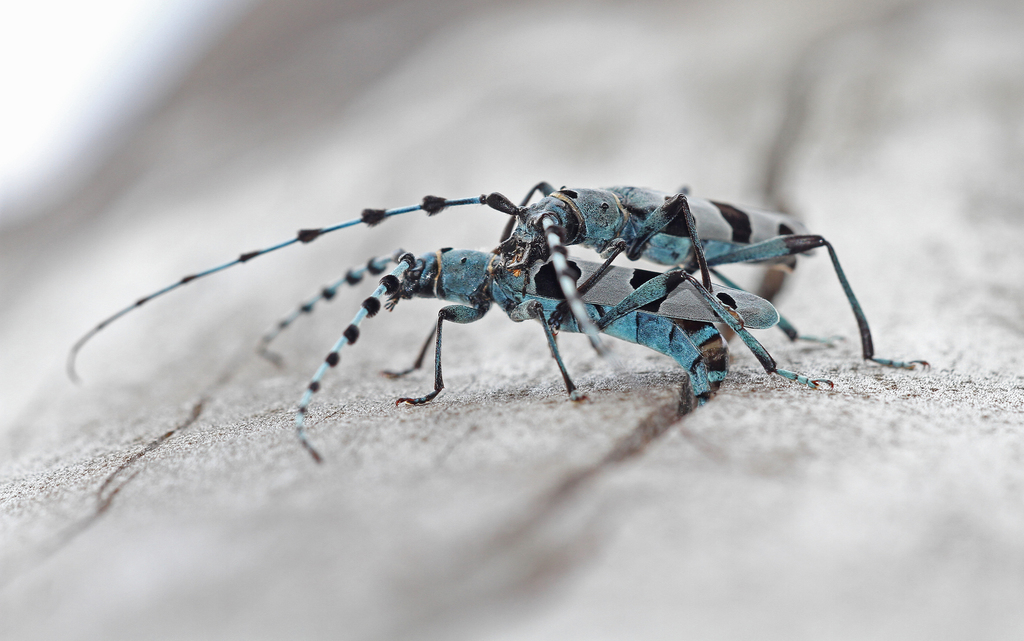
The Alpine longhorn Rosalia is a beetle 15 to 38 mm long with flat, blue-gray wing covers marked by black spots, including a distinct spot on the thorax, and its antennae and legs match the body colour. It lives in sunny beech forests and clearings across the Euro-Caucasian region, especially where beech timber is stored, and adults are seen from June to September. Adults feed on flower pollen by day, while larvae develop inside beech bark for about three years before emerging as adults that live three to six weeks.
Source: Wikipedia
Size
The beetle measures between 15 and 38 mm (0.59 to 1.50 in) in length.
Source: Wikipedia
Does it bite or sting?
They can produce a chirping sound by rubbing their rear legs against the wing covers.
Source: Wikipedia
Where it lives
It inhabits beech forests that receive sun and have clearings, often laying eggs on stacked beech timber.
Source: Wikipedia
What it eats
Adults feed on pollen from flowers during the day. Larvae eat the bark of beech trees where they also pupate.
Source: Wikipedia
Life cycle
After mating, females deposit eggs in cracks of beech bark. Larvae feed on bark for about three years, then pupate and emerge as adults that live three to six weeks.
Source: Wikipedia
When you see it
Adults are active from June through September.
Source: Wikipedia
Where it comes from
Its range extends from the Cantabrian Mountains eastward to the Caucasus.
Source: Wikipedia
More photos


Questions people ask
When are Alpine longhorn Rosalia beetles active?
Adults are seen from June to September.
Source: Wikipedia
Where does the Rosalia lay its eggs?
Females lay eggs in cracks of beech bark, often on stored beech timber.
Source: Wikipedia
How long does the larval stage last?
The larva lives inside beech bark for about three years before pupating.
Source: Wikipedia
Same family (Cerambycidae)
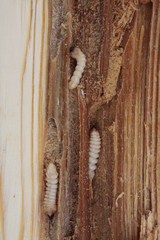 House LonghornHylotrupes bajulusCan damage your home
 Asian Longhorned BeetleAnoplophora glabripennisDamages trees, gardens or crops
 Red Milkweed BeetleTetraopes tetrophthalmus
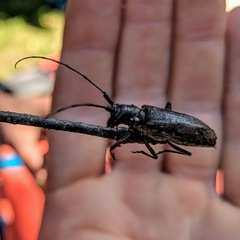 White-spotted SawyerMonochamus scutellatusCan damage your home
 Red Pine Longhorn BeetleStictoleptura rubra
 Spotted Longhorn BeetleRutpela maculataDamages trees, gardens or crops
Sources
- Wikipedia: https://en.wikipedia.org/wiki/Rosalia_longicorn
Look it up elsewhere: GBIF · iNaturalist · BugGuide · ITIS · Wikipedia
Text written 2026-10-22 from the sources above and checked sentence by sentence against them. Data fetched 2026-10-22.