 Bug FAQ
Agelaia multipicta
Agelaia multipicta · Order: Hymenoptera · Family: Vespidae
Source: Wikipedia
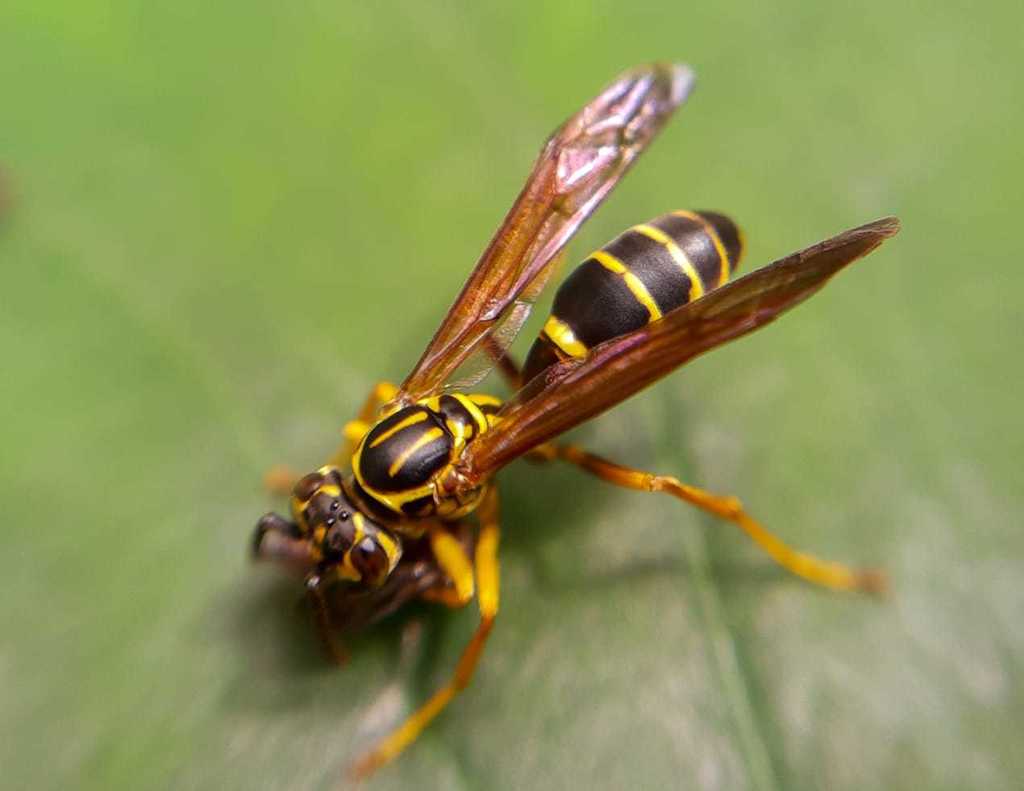
Queens have a larger, hairier petiole and gaster with yellow mid-tibia and face, while workers show reduced ovaries and brown coloration on the middle tibia and face. They build nests in forest and rural areas across Mexico, Argentina, Trinidad and southern Brazil and act as scavengers on carrion.
Source: Wikipedia
How to recognize it
Workers have reduced ovaries and brown middle tibia and face; queens have larger, hairier petioles and gasters with yellow mid-tibia and face.
Source: Wikipedia
Does it bite or sting?
They can sting, though attacks by birds, bats and monkeys on their nests are more common than predation.
Source: Wikipedia
Where it lives
Nests are usually found in forest and rural habitats.
Source: Wikipedia
What it eats
It scavenges carrion, playing a necrophagous role in the ecosystem.
Source: Wikipedia
Life cycle
It is a swarm-founding, highly eusocial wasp. Queens are highly related, a condition called oligogyny.
Source: Wikipedia
Where it comes from
It occurs in Mexico, Argentina, Trinidad and southern Brazil.
Source: Wikipedia
More photos
Questions people ask
Same family (Vespidae)


Sources
- Wikipedia: https://en.wikipedia.org/wiki/Agelaia_multipicta
Look it up elsewhere: GBIF · iNaturalist · BugGuide · Wikipedia
Text written 2026-10-23 from the sources above and checked sentence by sentence against them. Data fetched 2026-10-23.