 Bug FAQ
Acmaeodera acuta
Acmaeodera acuta · Order: Coleoptera · Family: Buprestidae
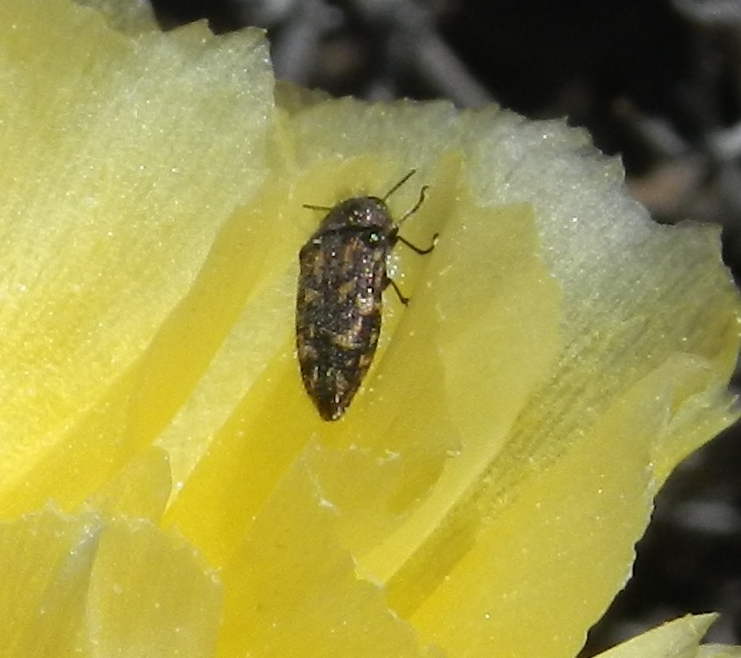
It lives along riparian habitats in the western United States and Mexico. Larvae likely develop in willow, while adults are seen on yarrow, Encelia, rose, willow and Sphaeralcea, and it is often confused with A. retifera.
Source: Wikipedia
Where it lives
It lives mainly along riverbanks and other riparian areas.
Source: Wikipedia
What it eats
The larvae probably develop in willow (Salix) and adults are found on plants such as yarrow, Encelia, rose, willow and Sphaeralcea.
Source: Wikipedia
Where it comes from
It occurs in the western United States and Mexico.
Source: Wikipedia
Lookalikes
In collections it is often mistaken for Acmaeodera retifera.
Source: Wikipedia
Where it is found in the US
Recorded in 4 of 51 states and DC. Most records: California, Idaho, Nevada, Oregon.
Darker = more records. Counts are museum and citizen-science records, not population size.
Source: GBIF
Status: native in North America. Source: iNaturalist
Months it is reported in the US
Source: GBIF
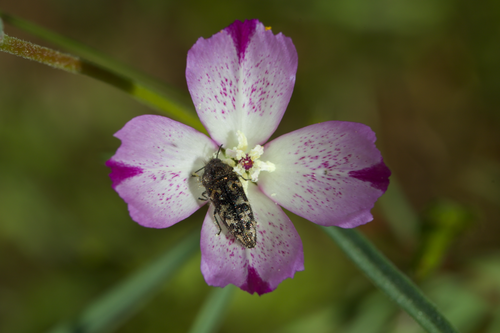
More photos
Questions people ask
What habitat does Acmaeodera acuta prefer?
It is mainly restricted to riparian habitats.
Source: Wikipedia
What plants do the adults of Acmaeodera acuta visit?
Adults are seen on Achillea, Encelia, Rosa, Salix and Sphaeralcea.
Source: Wikipedia
Which beetle is Acmaeodera acuta often confused with?
It is often confused with Acmaeodera retifera in collections.
Source: Wikipedia
Same family (Buprestidae)
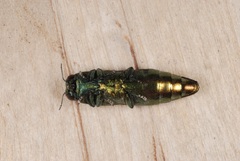 Emerald Ash BorerAgrilus planipennisDamages trees, gardens or crops
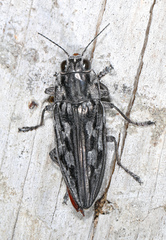 Sculptured Pine BorerChalcophora virginiensisDamages trees, gardens or crops
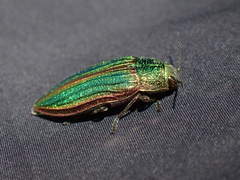 Golden Buprestid BeetleBuprestis aurulenta
 Anthaxia nitidulaDamages trees, gardens or crops
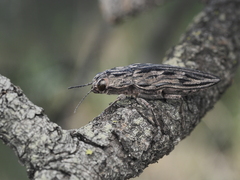 Western Sculptured Pine BorerChalcophora angulicollis
 Anthaxia quadripunctata
Sources
- Wikipedia: https://en.wikipedia.org/wiki/Acmaeodera_acuta
Look it up elsewhere: GBIF · iNaturalist · BugGuide · ITIS · Wikipedia
Text written 2026-10-27 from the sources above and checked sentence by sentence against them. Data fetched 2026-10-27.