 Bug FAQ
16-spot Ladybird
Tytthaspis sedecimpunctata · Order: Coleoptera · Family: Coccinellidae

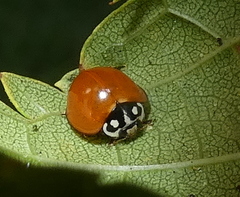
The 16-spot ladybird is a tiny beetle about 2 to 3 mm long and usually cream- or beige-colored with a dark line down the middle of its wing covers, often showing fused spots that form lines on each side. It lives in dry, sandy habitats such as dunes, dry meadows and wastelands across much of Europe, North Africa and parts of Asia, and it gathers in large groups on tree trunks and other surfaces in winter.
Source: Wikipedia
How to recognize it
The beetle’s elytra are typically cream or beige with a dark central line, and the 16 spots are often fused, forming a line of three spots on each side.
Source: Wikipedia
Size
Adults measure about 2 to 3 mm in length.
Source: Wikipedia
Where it lives
It is found in the grass layer of dunes, inland dunes, sandy shores, steppe, dry meadows, wastelands and occasionally marshy meadows.
Source: Wikipedia
What it eats
It feeds on aphids, powdery mildew, pollen from grasses, daisies and morning glories, as well as mites and thrips.
Source: Wikipedia
When you see it
Large winter aggregations are a characteristic seasonal behavior.
Source: Wikipedia
More photos


Questions people ask
Are they a garden pest?
They are not a pest; they actually eat aphids and other small insects that can harm plants.
Source: Wikipedia
Why do they gather in huge numbers on trees in winter?
The species forms large overwintering groups on tree trunks, fence posts and logs.
Source: Wikipedia
Same family (Coccinellidae)

Sources
- Wikipedia: https://en.wikipedia.org/wiki/Tytthaspis_sedecimpunctata
Look it up elsewhere: GBIF · iNaturalist · BugGuide · Wikipedia
Text written 2026-10-22 from the sources above and checked sentence by sentence against them. Data fetched 2026-10-22.