 Bug FAQ
12-spot ladybird
Vibidia duodecimguttata · Order: Coleoptera · Family: Coccinellidae
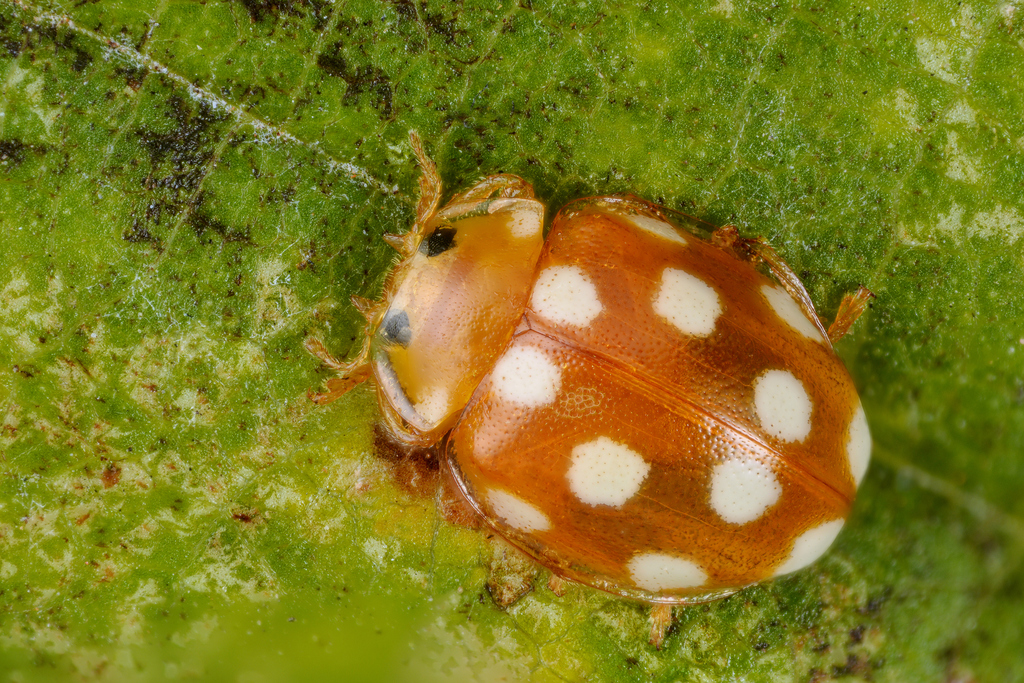
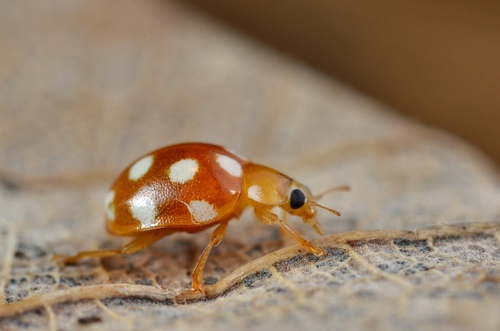
The 12-spot ladybird is a small beetle about 4 mm long with a light brown body and twelve white spots on its wing covers. It lives on trees and shrubs that have powdery mildew, where it feeds on the fungus and pupates under the infected leaves. Adults are seen from April through September across most of Europe, the eastern Palearctic, and the Near East.
Source: Wikipedia
How to recognize it
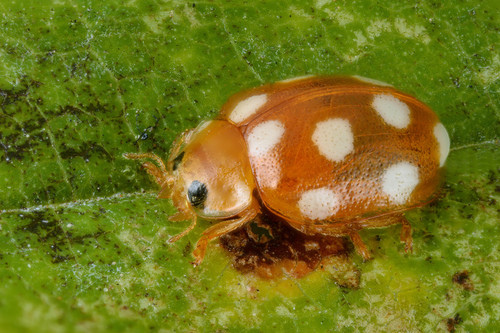
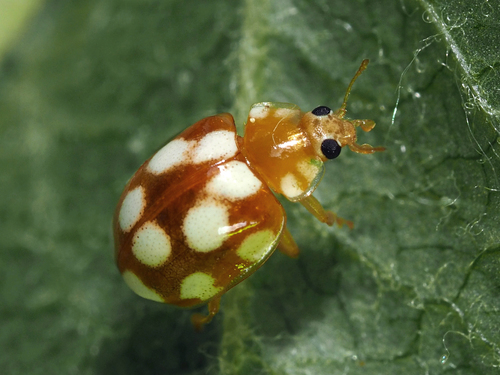
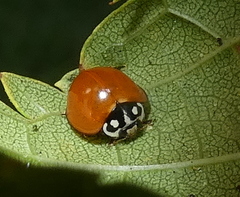
The beetle has an oval shape, long light-brown antennae, and black eyes. Each elytron bears six whitish spots, making twelve in total, and there are also white spots on both sides of the throat.
Source: Wikipedia
Size
It grows to about 4 mm (0.16 in) in length.
Source: Wikipedia
Where it lives
Pupae are formed only under leaves that are infected with powdery mildew.
Source: Wikipedia
What it eats
It is mycophagous, feeding mainly on powdery mildew that grows on trees such as oak, hazel and alder.
Source: Wikipedia
Life cycle
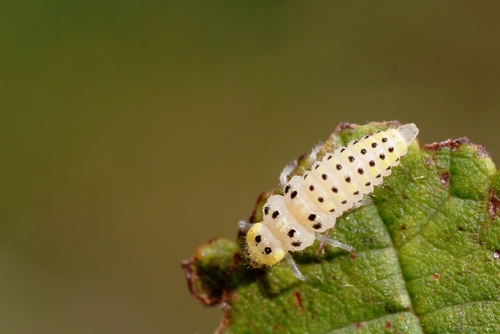
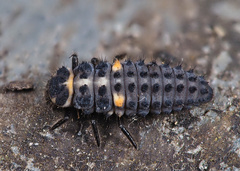
Eggs are laid about a week after mating, and the first larval instar appears within 24 hours of hatching. The fourth larval instar lasts only three days before the larva seeks a fungus-infected leaf to pupate.
Source: Wikipedia
When you see it
Adults can be found from April through September.
Source: Wikipedia
Where it comes from
The species occurs throughout most of Europe, the eastern Palearctic realm, and the Near East.
Source: Wikipedia
Lookalikes
It looks similar to Calvia decemguttata and Halyzia sedecimguttata.
Source: Wikipedia
More photos
Questions people ask
What do 12-spot ladybirds eat?
They feed on powdery mildew that grows on the leaves of trees such as oak, hazel and alder.
Source: Wikipedia
When can I see adult 12-spot ladybirds?
Adults are active from April through September.
Source: Wikipedia
Where are 12-spot ladybirds found?
They are present across most of Europe, the eastern Palearctic, and the Near East.
Source: Wikipedia
How can I tell a 12-spot ladybird apart from similar species?
It has twelve white spots on its wing covers, six on each side, and white spots on both sides of the throat, which distinguishes it from look-alikes.
Source: Wikipedia
Same family (Coccinellidae)

Sources
- Wikipedia: https://en.wikipedia.org/wiki/Vibidia_duodecimguttata
Look it up elsewhere: GBIF · iNaturalist · BugGuide · Wikipedia
Text written 2026-10-22 from the sources above and checked sentence by sentence against them. Data fetched 2026-10-22.