 Bug FAQ
Zebra Blue
Leptotes plinius · Order: Lepidoptera · Family: Lycaenidae
Also called: Plumbago Blue
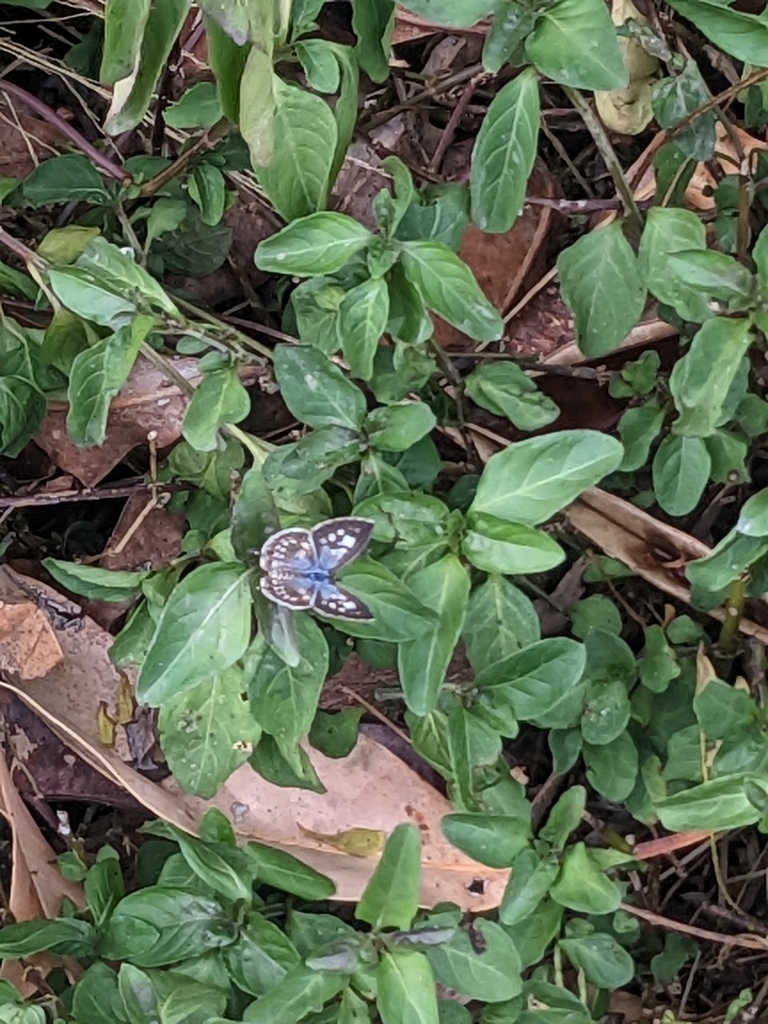
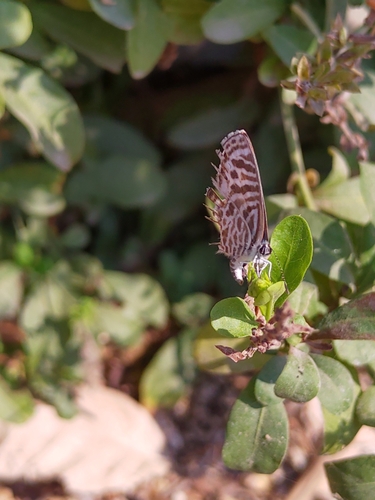
Males have dark violet upper wings that can look blue in certain light, while the underside of both sexes is white. It lives across a wide area from the Ethiopian region through the Himalayas, India, Sri Lanka, Myanmar, China and down to Java. The butterfly feeds on flowers of legumes, plumbago, and some citrus plants, and its pupa is yellowish with brown spots.
Source: Wikipedia
How to recognize it
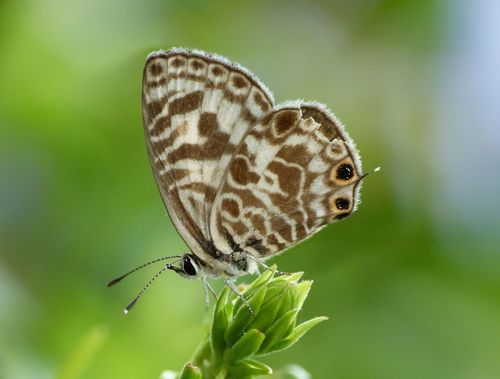
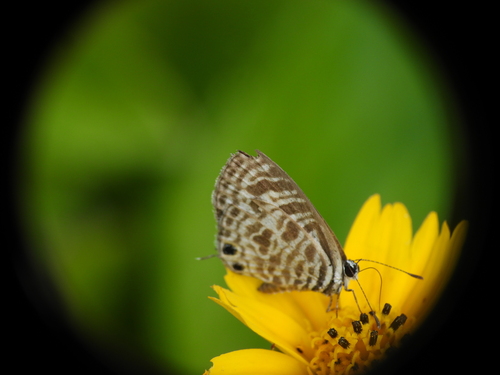
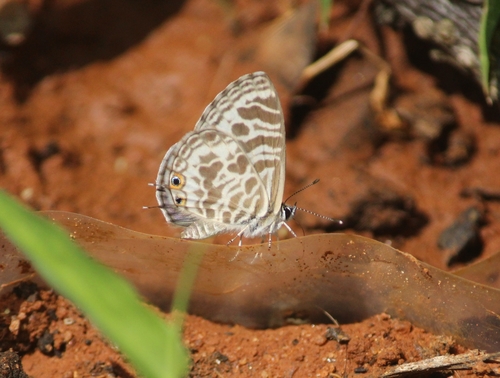
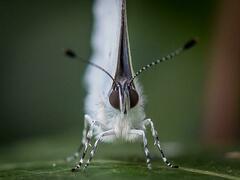
Males show dark violet upper wings that may appear richly blue in certain light, and both sexes have a white underside.
Source: Wikipedia
What it eats
Adults feed on flowers of legume family plants, plumbago, and some citrus (Rutaceae) species.
Source: Wikipedia
Life cycle
Wet-season forms are as described; dry-season butterflies are paler on the upperside, with males showing black lines near the wing edges. The pupa is dull yellowish and heavily mottled with brown spots.
Source: Wikipedia
When you see it
Wet-season broods have the typical coloration, while dry-season broods are paler and males have anteciliary black lines.
Source: Wikipedia
Lookalikes
It resembles the butterfly Tarucus theophrastus on the upperside, but the underside markings are completely different.
Source: Wikipedia
More photos
Questions people ask
What does the male Zebra Blue butterfly look like?
Males have dark violet upper wings that can look richly blue in certain light, while the underside of both sexes is white.
Source: Wikipedia
Where can I find Zebra Blue butterflies?
They occur from the Ethiopian region through the Himalayas, across India, Sri Lanka, Myanmar, China and down to Java.
Source: Wikipedia
What plants do Zebra Blue butterflies feed on?
They feed on flowers of legume plants, plumbago, and some citrus species.
Source: Wikipedia
How does the appearance differ between wet-season and dry-season forms?
Dry-season butterflies are paler on the upperside, and males have black lines near the wing edges, unlike the brighter wet-season forms.
Source: Wikipedia
Same family (Lycaenidae)

Sources
- Wikipedia: https://en.wikipedia.org/wiki/Leptotes_plinius
Look it up elsewhere: GBIF · iNaturalist · BugGuide · Wikipedia
Text written 2026-10-22 from the sources above and checked sentence by sentence against them. Data fetched 2026-10-22.