 Bug FAQ
Yellow Wig Gall Wasp
Druon fullawayi · Order: Hymenoptera · Family: Cynipidae
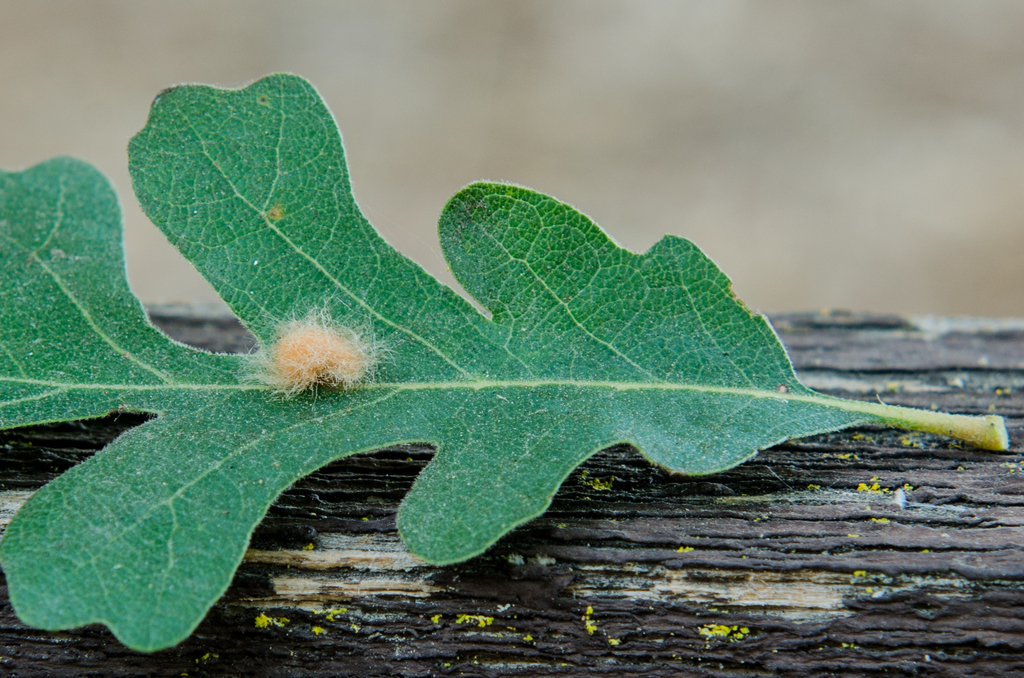
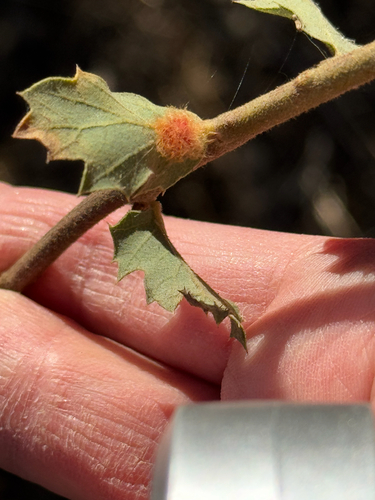
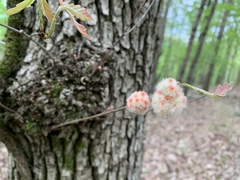
Female yellow wig gall wasps are tiny, measuring about 1.5 to 2.25 mm long. They are black with brown mouthparts and brown legs. These wasps make galls on oak trees in California, especially on valley oak (Quercus lobata).
Source: Wikipedia
How to recognize it
The wasp’s body is black and its mouthparts and legs are brown.
Source: Wikipedia
Size
Adults are 1.5 to 2.25 mm long.
Source: Wikipedia
Where it lives
Found on oak trees in California, especially Quercus lobata.
Source: Wikipedia
What it eats
Each gall contains a single chamber that houses the larva.
Source: Wikipedia
Life cycle
Each gall holds a single chamber for the developing larva.
Source: Wikipedia
Lookalikes
It was formerly placed in the genus Andricus.
Source: Wikipedia
Where it is found in the US
Recorded in 2 of 51 states and DC. Most records: California, Oregon.
Darker = more records. Counts are museum and citizen-science records, not population size.
Source: GBIF
Status: native in North America; native in United States. Source: iNaturalist
Months it is reported in the US
Source: GBIF
More photos
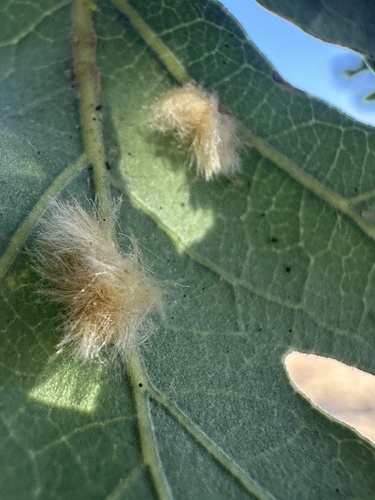
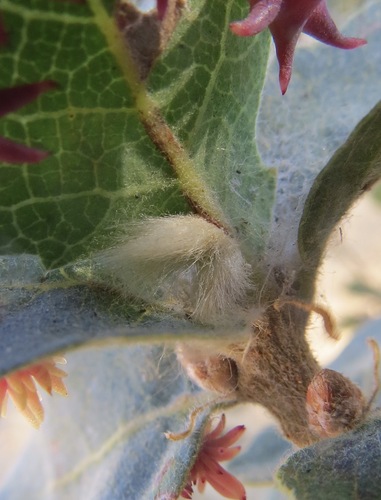
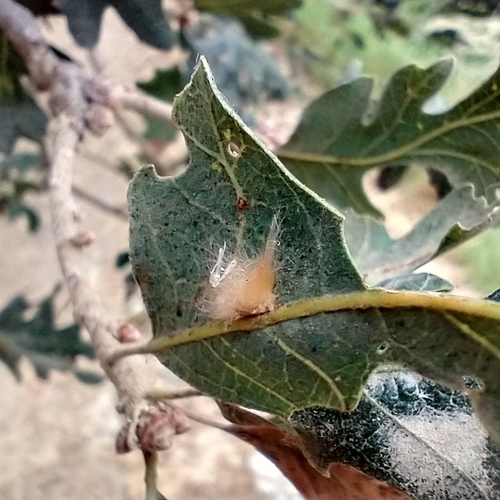
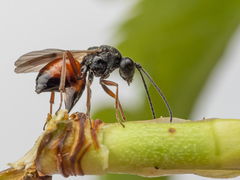
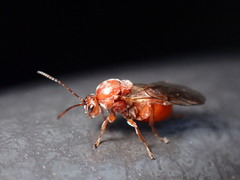
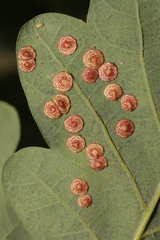
Same family (Cynipidae)


Sources
- Wikipedia: https://en.wikipedia.org/wiki/Druon_fullawayi
Look it up elsewhere: GBIF · iNaturalist · BugGuide · Wikipedia
Text written 2026-10-23 from the sources above and checked sentence by sentence against them. Data fetched 2026-10-22.