 Bug FAQ
Yellow Poplar Weevil
Odontopus calceatus · Order: Coleoptera · Family: Curculionidae
Source: Wikipedia
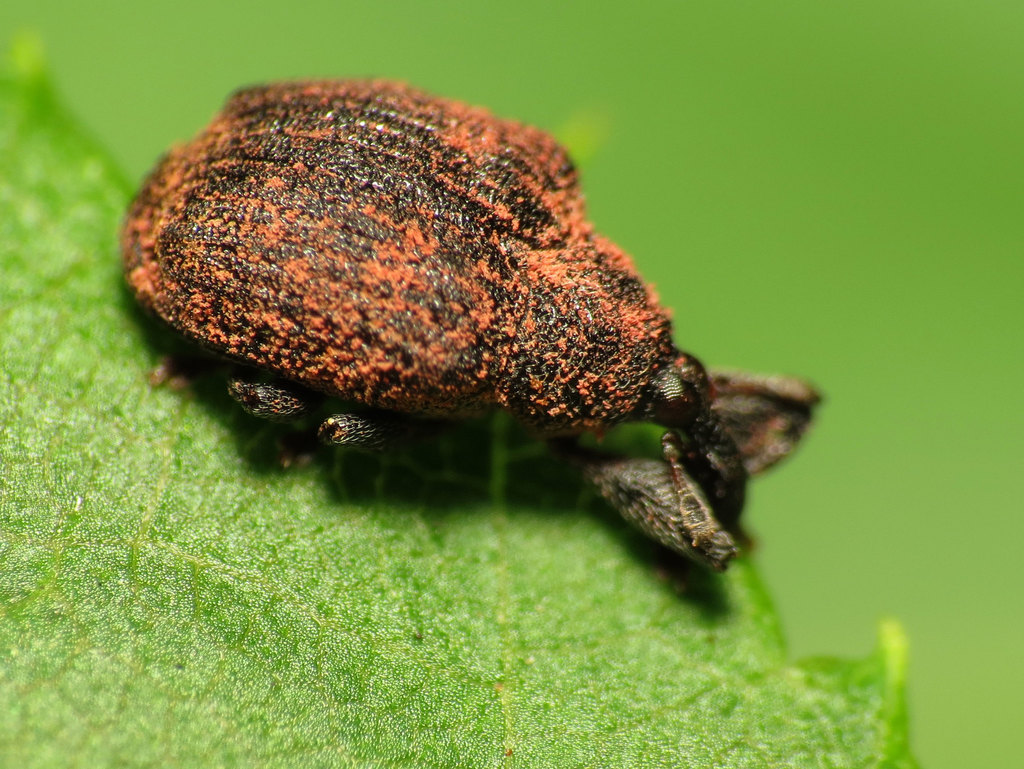
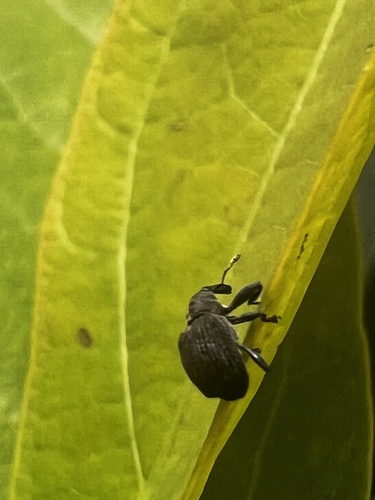
Adult weevils are tiny (about 0.2 cm), black or dark brown, and sometimes have yellow antennae. They feed on leaf surfaces in spring, making small brown pits, while larvae mine inside leaves and eat the midrib. Control includes contact or stomach insecticides for adults and systemic products for larvae when eggs are laid or mines are green.
Source: Wikipedia
How to recognize it
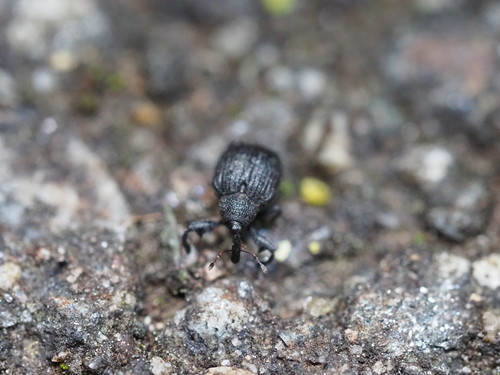
They have a small black snout that can look like a tick. Some southern populations show yellow antennae.
Source: Wikipedia
Size
Adults are about 1⁄16 inch (0.2 cm) long.
Source: Wikipedia
Is it a pest in the house?
They damage foliage but do not usually affect the overall health of established trees.
Source: Wikipedia
How to get rid of it
Use systemic insecticides for larvae when eggs have just been laid or mines are still green.
Source: Wikipedia
Where it lives
They are found on yellow-poplar, sassafras and magnolia trees, preferring yellow-poplar.
Source: Wikipedia
What it eats
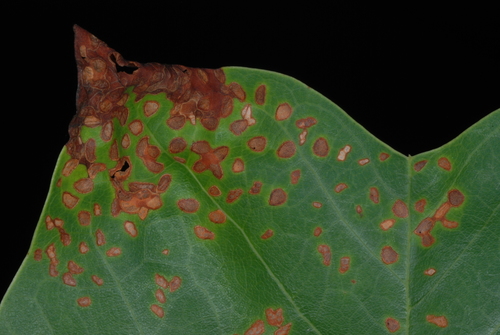
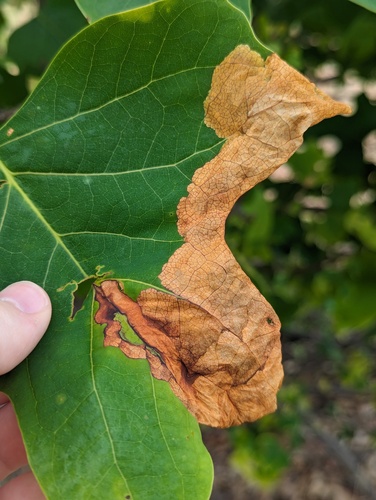
Adults chew the leaf epidermis, leaving brown, rice-sized pits. Larvae mine inside leaves and eat the leaf midrib as they grow.
Source: Wikipedia
Life cycle
They have one generation per year. When ready to pupate, larvae spin reddish-brown cocoons in their mines and emerge as adults in the second week of June.
Source: Wikipedia
When you see it
Adults overwinter in leaf litter and become active in late April to early May. Feeding and movement continue from April through early June.
Source: Wikipedia
Where it comes from
Their range covers the eastern and southeastern United States, from Massachusetts to the Gulf of Mexico and west to the Mississippi River.
Source: Wikipedia
Lookalikes
Their protruding snout can cause them to be mistaken for a tick.
Source: Wikipedia
Where it is found in the US
Recorded in 26 of 51 states and DC. Most records: Virginia, Ohio, North Carolina, Maryland, Pennsylvania, West Virginia, Tennessee, Kentucky.
Darker = more records. Counts are museum and citizen-science records, not population size.
Source: GBIF
Status: native in North America; native in United States; native in Canada. Source: iNaturalist
Months it is reported in the US
Source: GBIF
More photos
Questions people ask
How do I get rid of yellow poplar weevil?
Treat the leaves with a contact or stomach insecticide as soon as you see the small brown feeding pits, and apply a systemic product when eggs are laid or the larval mines are still green.
Source: Wikipedia
When are adult yellow poplar weevils active?
Adults emerge from their cocoons in the second week of June and are active from late April through early June, feeding on leaf surfaces.
Source: Wikipedia
What trees do yellow poplar weevils infest?
They are found on yellow-poplar, sassafras and magnolia trees, with a preference for yellow-poplar.
Source: Wikipedia
Same family (Curculionidae)
 Green Immigrant Leaf WeevilPolydrusus formosusDamages trees, gardens or crops
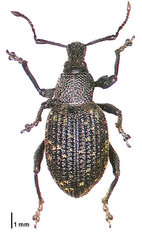 Black Vine WeevilOtiorhynchus sulcatusDamages trees, gardens or crops
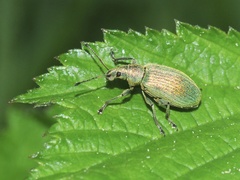 Nettle weevilPhyllobius pomaceusDamages trees, gardens or crops
 Asian Oak WeevilCyrtepistomus castaneusDamages trees, gardens or crops
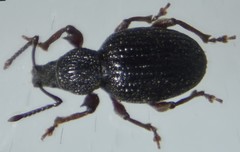 Strawberry Root WeevilOtiorhynchus ovatusDamages trees, gardens or crops
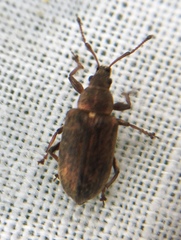 Common Leaf WeevilPhyllobius pyriDamages trees, gardens or crops
Sources
- Wikipedia: https://en.wikipedia.org/wiki/Odontopus_calceatus
Look it up elsewhere: GBIF · iNaturalist · BugGuide · ITIS · Wikipedia
Text written 2026-10-22 from the sources above and checked sentence by sentence against them. Data fetched 2026-10-22.