 Bug FAQ
Strawberry Root Weevil
Otiorhynchus ovatus · Order: Coleoptera · Family: Curculionidae
Source: Wikipedia
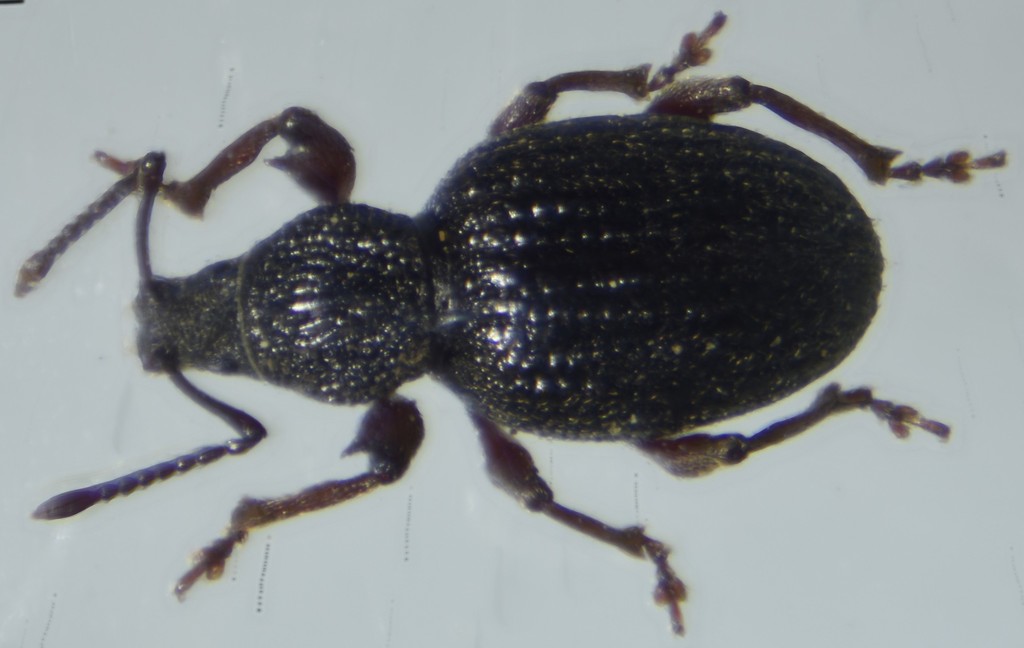
Adults are small, dark brown beetles that do not fly, while larvae are white, legless, C-shaped grubs that live in soil. They are found across Canada and the northern United States on strawberry foliage and in the soil around the plants. Control methods include insecticides, crop rotation, plowing old crops, cleaning equipment and using entomopathogenic nematodes.
Source: Wikipedia
How to recognize it
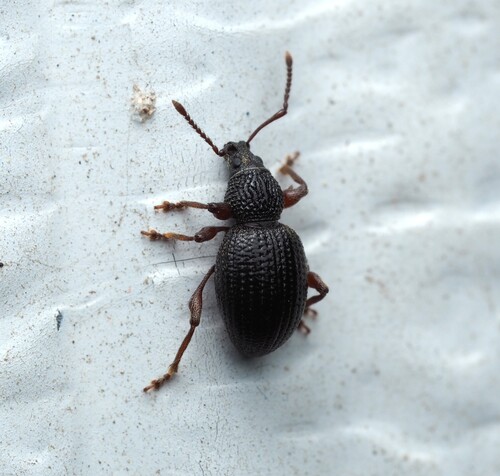
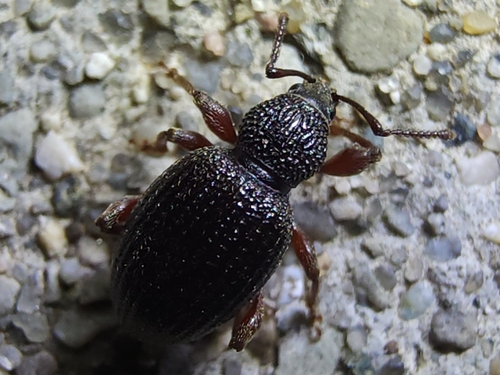
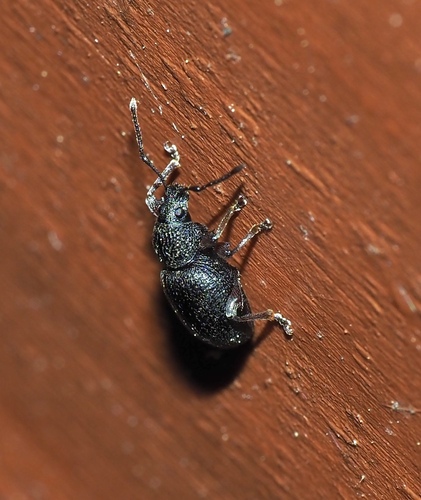
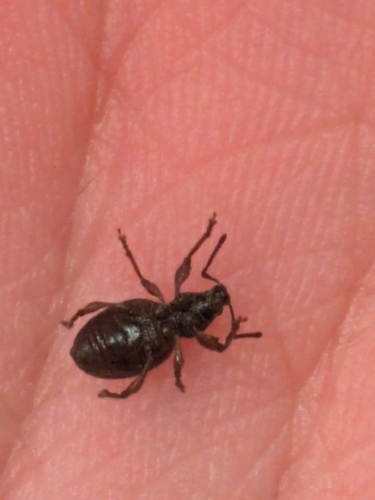
The adult beetle is dark brown to black in color. Larvae are white, legless, have a darker head and are usually C-shaped.
Source: Wikipedia
Size
An adult strawberry root weevil is about six millimetres long. Fully grown larvae can reach up to thirteen millimetres, though they are typically around eight millimetres long.
Source: Wikipedia
How to get rid of it
Control options include insecticides, plowing under old crops, crop rotation, cleaning farm equipment before moving fields, and fall plowing infested beds. Entomopathogenic nematodes can also be used, though results vary.
Source: Wikipedia
Where it lives
They occur across Canada and the northern United States.
Source: Wikipedia
What it eats
Strawberries are a major part of its diet, giving the weevil its common name. Adults feed at night on leaves and stems, making notches, while larvae feed on roots and crowns, causing far more damage.
Source: Wikipedia
Life cycle
Larvae feed on roots, pupate in the upper soil layers in spring and emerge as adults later in spring or summer. Eggs are laid randomly in the soil in summer; after hatching, larvae feed on roots until late fall when they hibernate. Reproduction is asexual; no male specimens have ever been observed.
Source: Wikipedia
When you see it
Adults lack functional wings and cannot fly.
Source: Wikipedia
Where it comes from
The species is native to Canada and the northern United States. It was first described by Carl Linnaeus in the 1758 10th edition of Systema Naturae.
Source: Wikipedia
Where it is found in the US
Recorded in 42 of 51 states and DC. Most records: Colorado, Minnesota, Michigan, New York, Massachusetts, Wisconsin, Illinois, Washington.
Darker = more records. Counts are museum and citizen-science records, not population size.
Source: GBIF
Status: introduced in North America; introduced in United States; introduced in Canada. Source: iNaturalist
Months it is reported in the US
Source: GBIF
More photos
Questions people ask
How can I get rid of strawberry root weevils in my garden?
Use insecticides, rotate crops, plow under old crops, clean equipment before moving to new fields, and consider applying entomopathogenic nematodes.
Source: Wikipedia
What damage do the larvae cause?
Larvae feed on plant roots and crowns, which can weaken or kill strawberry plants.
Source: Wikipedia
Same family (Curculionidae)
 Green Immigrant Leaf WeevilPolydrusus formosusDamages trees, gardens or crops
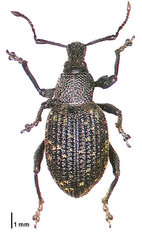 Black Vine WeevilOtiorhynchus sulcatusDamages trees, gardens or crops
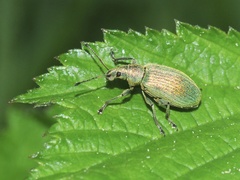 Nettle weevilPhyllobius pomaceusDamages trees, gardens or crops
 Asian Oak WeevilCyrtepistomus castaneusDamages trees, gardens or crops
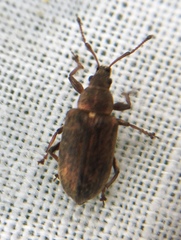 Common Leaf WeevilPhyllobius pyriDamages trees, gardens or crops
 Large Pine WeevilHylobius abietisDamages trees, gardens or crops
Sources
- Wikipedia: https://en.wikipedia.org/wiki/Otiorhynchus_ovatus
Look it up elsewhere: GBIF · iNaturalist · BugGuide · ITIS · Wikipedia
Text written 2026-10-22 from the sources above and checked sentence by sentence against them. Data fetched 2026-10-22.