 Bug FAQ
Common Leaf Weevil
Phyllobius pyri · Order: Coleoptera · Family: Curculionidae
Source: Wikipedia
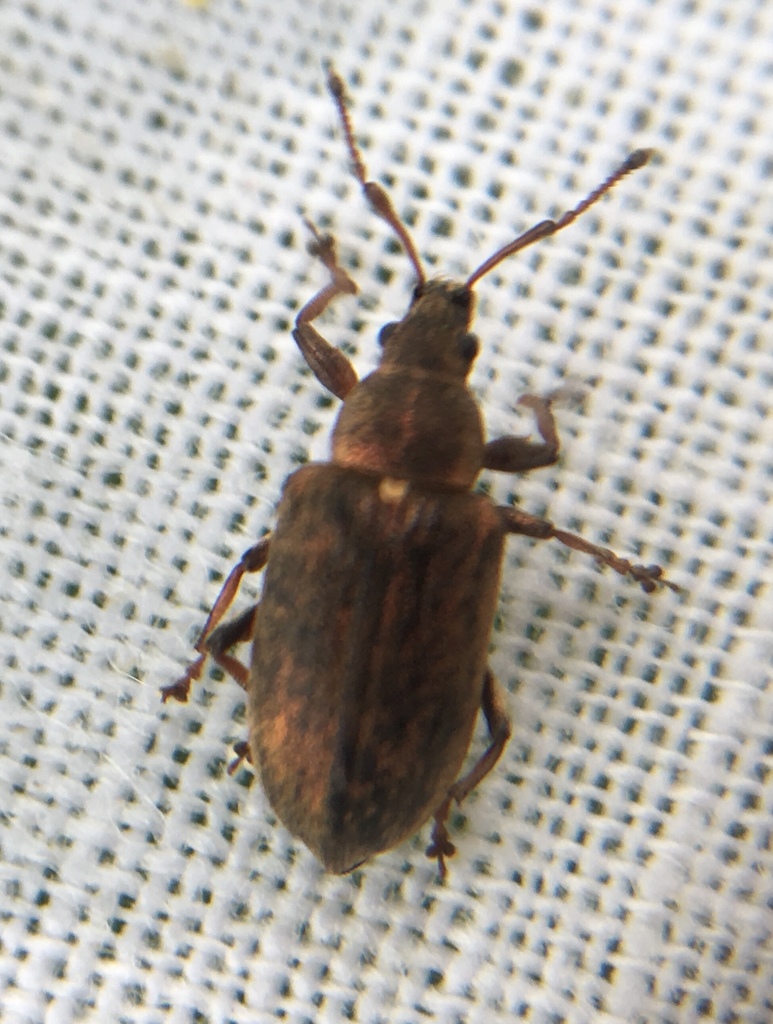
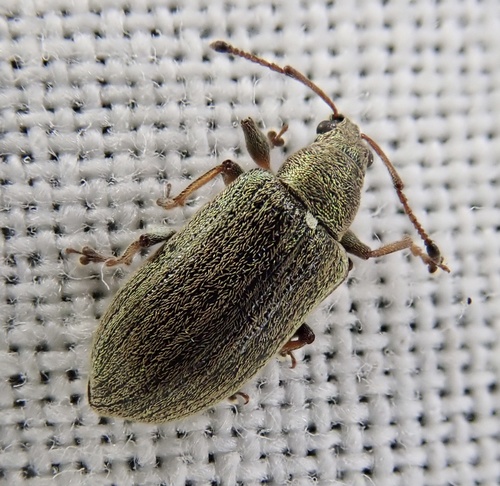
The common leaf weevil is a small, stocky beetle about 5-6.5 mm long with broad, ribbed elytra covered in shiny grey, gold or copper scales. Adults appear from March through July and are found in thickets, forest edges, orchards, parks and gardens across most of Europe, the eastern Palearctic and the Near East.
Source: Wikipedia
How to recognize it
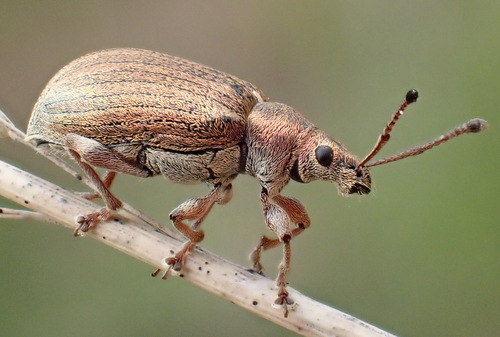
Its antennae and legs are reddish or brown, with darker or black clubs; sometimes the whole antennae and legs are black.
Source: Wikipedia
Size
It reaches a length of about 5 to 6.5 mm.
Source: Wikipedia
Life cycle
Adults are present from March to July.
Source: Wikipedia
When you see it
You can see adults between March and July.
Source: Wikipedia
Where it comes from
It is found throughout most of Europe, the eastern Palearctic realm and the Near East.
Source: Wikipedia
Lookalikes
It belongs to the broad-nosed weevils in the family Curculionidae, subfamily Entiminae.
Source: Wikipedia
More photos
Questions people ask
When are adult common leaf weevils active?
Adults are active from March through July.
Source: Wikipedia
What trees can be damaged by the common leaf weevil?
It feeds on the leaves of pears, oak, beech and other deciduous trees, potentially harming orchard and garden plants.
Source: Wikipedia
Where is the common leaf weevil usually found?
It lives in thickets, forest edges, orchards, parks and gardens across most of Europe, the eastern Palearctic and the Near East.
Source: Wikipedia
Same family (Curculionidae)
 Green Immigrant Leaf WeevilPolydrusus formosusDamages trees, gardens or crops
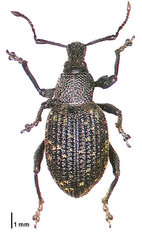 Black Vine WeevilOtiorhynchus sulcatusDamages trees, gardens or crops
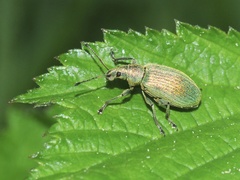 Nettle weevilPhyllobius pomaceusDamages trees, gardens or crops
 Asian Oak WeevilCyrtepistomus castaneusDamages trees, gardens or crops
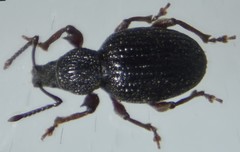 Strawberry Root WeevilOtiorhynchus ovatusDamages trees, gardens or crops
 Large Pine WeevilHylobius abietisDamages trees, gardens or crops
Sources
- Wikipedia: https://en.wikipedia.org/wiki/Phyllobius_pyri
Look it up elsewhere: GBIF · iNaturalist · BugGuide · Wikipedia
Text written 2026-10-22 from the sources above and checked sentence by sentence against them. Data fetched 2026-10-22.